
US military direct laser weapon systems in Strait of Hormuz using Xbox-style controller: Report
The United States military is now moving directed-energy weapons from experimentation toward regular battlefield use...
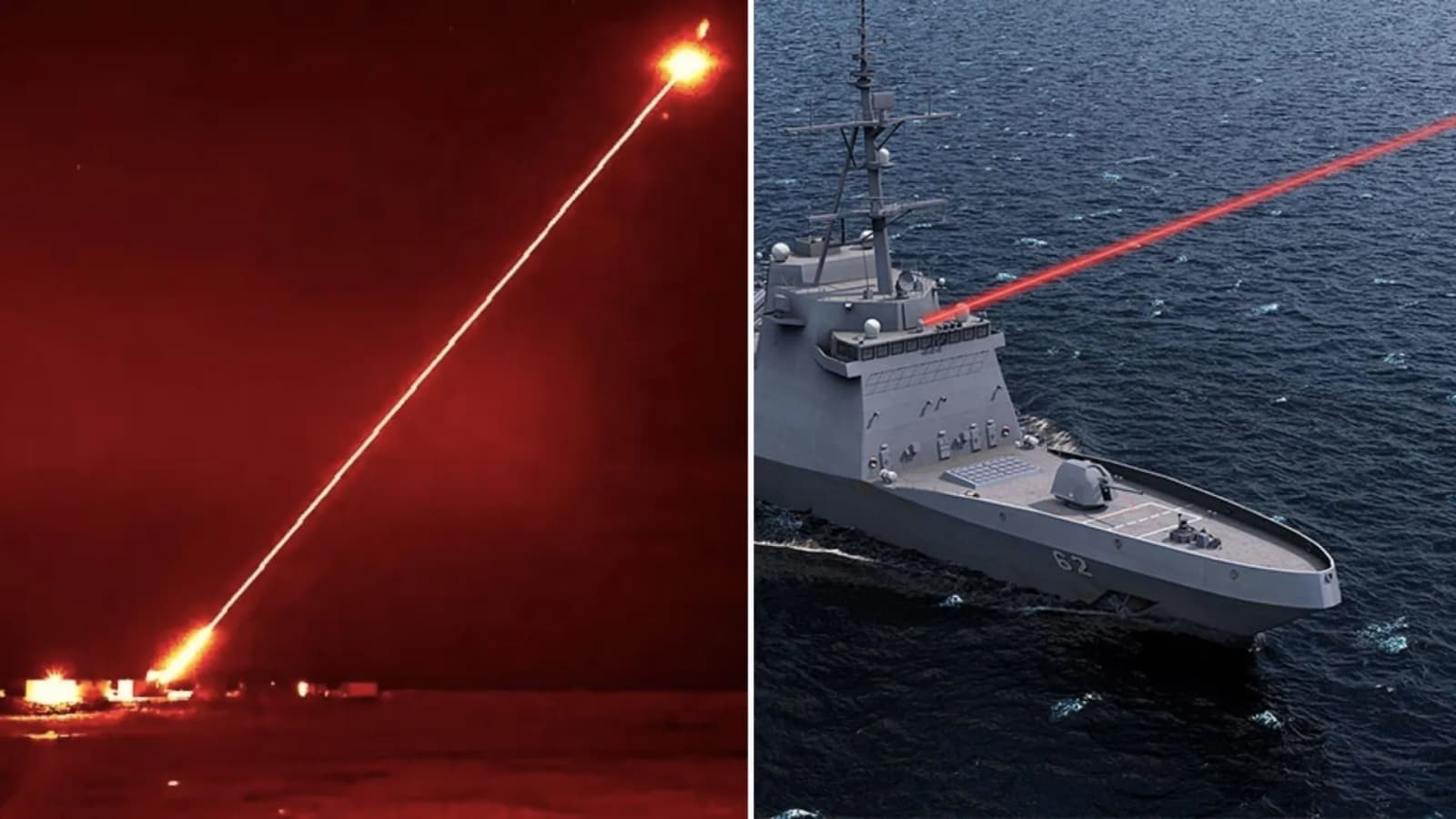
The United States military is now moving directed-energy weapons from experimentation toward regular battlefield use in the Strait of Hormuz. Laser systems are being deployed against drones and other aerial threats and the U.S. Army has also committed nearly half a billion dollars to put a new generation of high-energy laser weapons into production.
The development marks an important shift in the way modern militaries could defend against the growing threat posed by inexpensive drones.
Operators use modified Xbox-style controllers to control laser systems
Some operators use modified Xbox-style controllers to control the laser systems. The concept is less futuristic than it sounds: modern gaming controllers are already designed for precise movement, rapid inputs and targeting, while many military personnel are familiar with their basic layout.
The idea is essentially to use an interface that already works well rather than designing an entirely new control system.
The comparison to video games has inevitably attracted attention, but behind the novelty is a practical consideration: sophisticated weapons still need intuitive human-machine interfaces.
High-energy laser works very differently from a conventional missile
A high-energy laser works very differently from a conventional gun or missile. The system generates electrical power and converts it into a highly concentrated beam. Sensors first detect and track the target. The laser is then aimed at a selected point and kept on that location for a period known as “dwell time.”
Instead of striking the target with an explosive warhead, the laser transfers energy into the target’s surface. Depending on the system and target, the heat can damage sensors, electronics, structural components or other critical parts.
That makes the technology particularly interesting for counter-drone missions, where disabling an aircraft’s sensors or critical components may be sufficient to bring it down.
Advances in electrical power systems, tracking technology, beam control and compact high-energy lasers are making the concept increasingly practical.
The United States is now demonstrating the technology in operational environments, while simultaneously placing substantial contracts for production systems.
That does not mean the era of missile warfare is ending. Instead, the battlefield may be entering a period in which missiles, guns, electronic warfare and directed-energy weapons operate together.
The most important change may therefore be less dramatic than the image of a laser beam shooting down a drone.
It is the emergence of a new calculation in air defense: when electricity can replace a missile for some engagements, the cost, speed and sustainability of defending against large numbers of drones can change substantially.
“It’s weaponized light that spends several seconds of what we call ‘dwell time’ on the target to bring it down,” said Jared Keller who puts out the newsletter Laser Wars.
“It now makes sense to actually take them outside of a laboratory and into real-world environments. The most significant [development] is the Army awarding a half-billion-dollar contract for building war-ready lasers [which] focus photons on a target to deliver catastrophic, destructive effects,” he added, according to NY Post.
Related articles

Mapped: The World’s Digital Leaders in 2026
Which economies are the most digitally connected? See how 159 economies rank in the ITU’s 2026 ICT Development Index.

Breaking up (with Elon Musk) is hard to do
In a throwback to MySpace-style internet drama, Shivon Zilis announced that she and the father of four of her children, Elon Musk, had broken up on X.

OpenAI’s Dot agent is enterprise software that can also order your dinner
It's a tale as old as last week: OpenAI's new agent platform, called Dots, is full of cute little guys who can do your bidding.


Nacon’s new PS5 controller can mix audio from your phone and console
Nacon announced what the company is claiming is the world's first officially licensed PlayStation 5 controller with a built-in screen for adjusting settings like joystick sensitivity or remapping…

Beehiiv creators are buzzing about a new price increase
Beehiiv, a creator platform that has risen in popularity as an alternative to Substack, is increasing its prices - and many users aren't happy.