
US Navy weighs MQ-9B SeaGuardian drone as maritime patrol force multiplier
The U.S. Navy recently evaluated General Atomics’ MQ-9B SeaGuardian drone at a tactical symposium held...
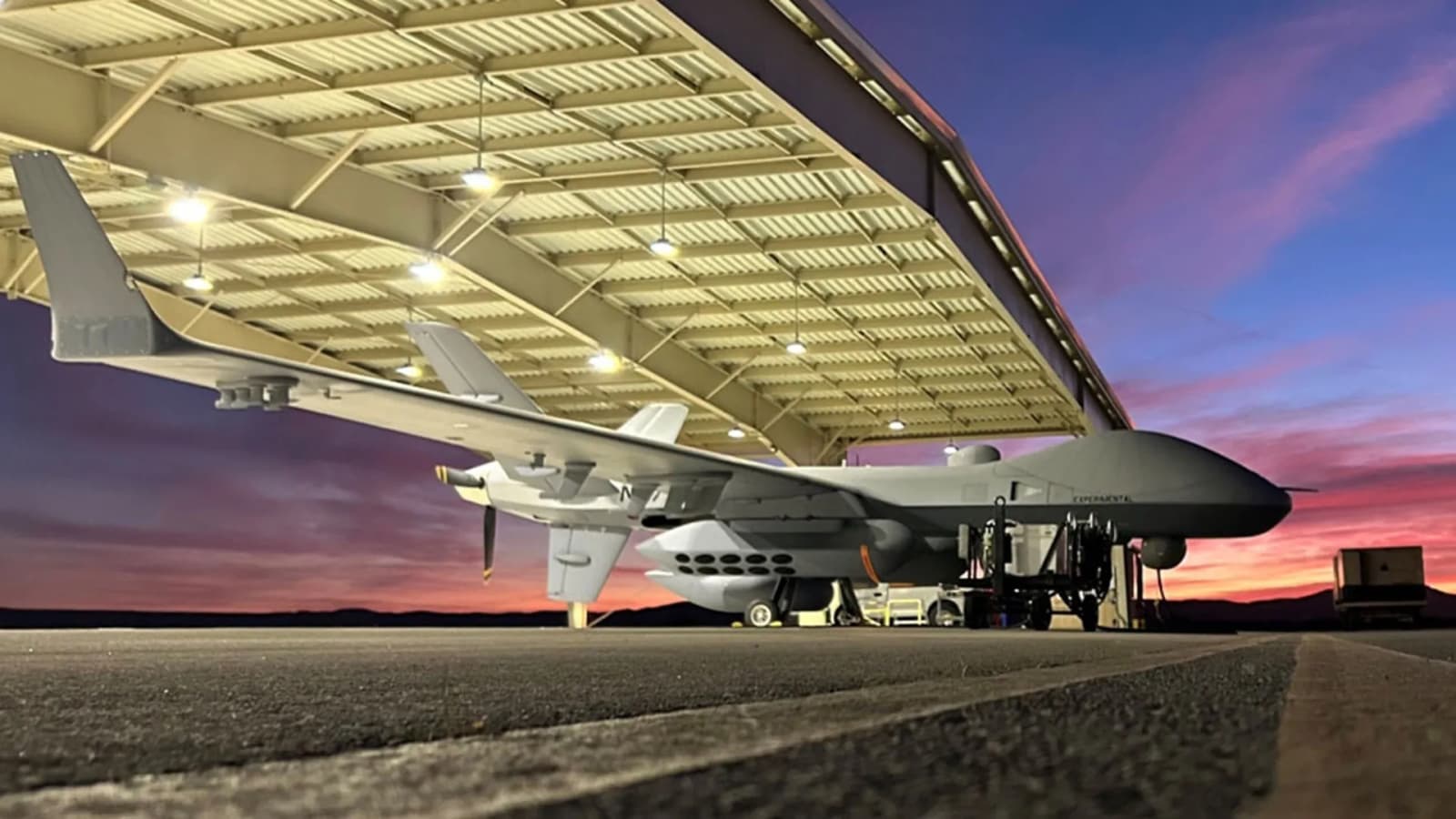
The U.S. Navy recently evaluated General Atomics’ MQ-9B SeaGuardian drone at a tactical symposium held at Naval Air Station Whidbey Island in Oak Harbor, Washington. The aircraft is the maritime variant of the MQ-9B uncrewed aircraft system and is currently operated by the Navy under a company-owned, company-operated contract supporting an ongoing capability assessment for the 7th Fleet.
The event, known as the Maritime Patrol and Reconnaissance Force Commander’s Operational Group, brings together senior Navy leaders, tacticians and industry partners to discuss emerging naval aviation technology and review tactics used in anti-submarine warfare across the fleet.
A close-up look
At the request of the Commander, Patrol and Reconnaissance Group, General Atomics brought the SeaGuardian to the symposium so attendees could examine the maritime-optimized, Group 5 remotely piloted aircraft firsthand. The aircraft is already in service with the U.S. Navy and several foreign partners, and it previously appeared at the 2025 Whidbey Island Open House.
Patrick Shortsleeve, General Atomics’ vice president of defense strategic development, said the company is glad toshowcase SeaGuardian at these symposiums alongside the Navy’s P-8A Poseidon aircraft, since it helps illustrate a capability that is ready for use now rather than years away.
A potential force multiplier
The Navy has been evaluating SeaGuardian as a potential force multiplier for the Maritime Patrol and Reconnaissance Force across a range of missions. Whidbey Island has previously served as a base for SeaGuardian operations during Navy exercises, including Northern Edge and Integrated Battle Problem, and the aircraft has also supported aircraft carrier pre-deployment workups.
Built for endurance
According to earlier reporting on the same aircraft family, the SeaGuardian measures about 38 feet (11.7 meters) long with a wingspan of roughly 79 feet (24 meters). It carries a maximum takeoff weight near 12,500 pounds (5,670 kilograms) and can haul up to 4,750 pounds (2,155 kilograms) of external payload, while flying at altitudes up to 40,000 feet and speeds near 240 mph (210 knots). The aircraft’s endurance stretches up to 30 hours per flight, with a maximum range of roughly 6,900 miles (6,000 nautical miles).
General Atomics’ broader Predator family, which includes the MQ-9A Reaper, MQ-1C Gray Eagle and MQ-9B SkyGuardian and SeaGuardian variants, has logged more than 9 million flight hours across more than three decades of operation.
Related articles

Frontline Robotics unveils Frodo, its new 6×6 UGV with 93-mile range and 25 mph top speed
Ukrainian defense company Frontline Robotics has unveiled Frodo, a universal 6×6 unmanned ground vehicle built...

Pewdiepie builds smaller, local AJAX AI model after OpenAI ban controversy
YouTube creator Felix Kjellberg, better known as PewDiePie, has unveiled Ajax, a small language model...

Pentagon backs Supra Technology to recover high-purity Scandium in U.S.
Supra Elemental Recovery, an Austin-based firm, has received the U.S. Department of Defense (DoD) contract...

Capcom is preparing for a ‘future where we create games together with AI’
Capcom's Pragmata might be all about the horrors of AI, but in practice the studio doesn't seem so down on the tech.
180 mph over water: US Seaglider program advances toward operational demonstrations
The US Marine Corps Warfighting Lab has expanded its collaboration with electric Seaglider developer REGENT...
US Task Force 401 taps drone defenses that autonomously classify threats
Digital Force Technologies (DFT) has secured a US contract to supply counter-drone systems that combine...