US nuclear reactor pushes toward commercial debut with meltdown-proof TRISO fuel supply
Nuclear power developer Antares has signed a multi-year deal to buy advanced fuel from BWXT....
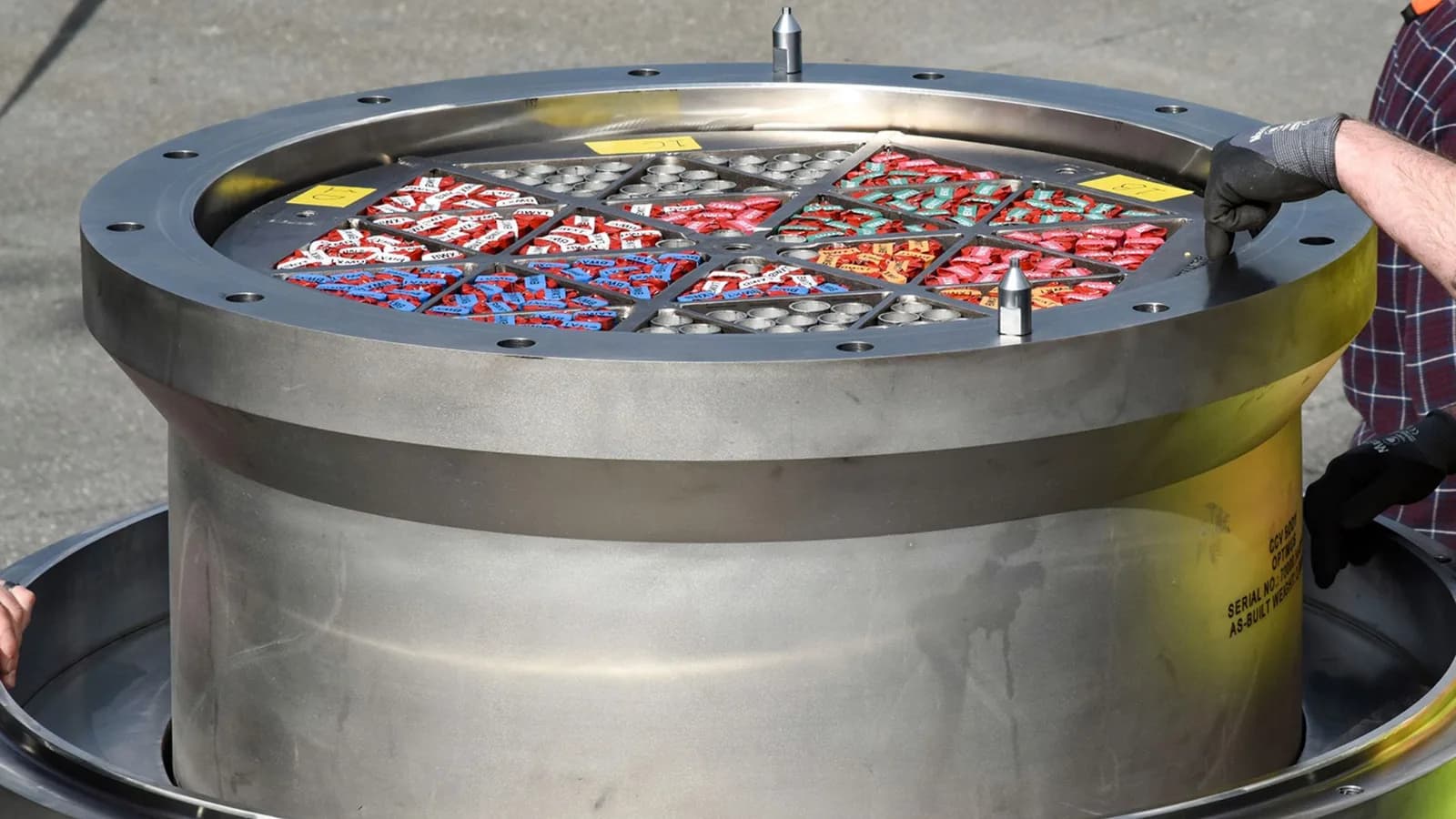
Nuclear power developer Antares has signed a multi-year deal to buy advanced fuel from BWXT. The agreement marks an important step toward bringing next-generation reactors to market.
Under the contract, announced today, BWXT Advanced Fuels will produce tri-structural isotropic (TRISO) fuel at its Lynchburg facility in Virginia.
The agreement initially covers one metric ton of uranium, with options to scale up as demand grows. Deliveries will roll out under future task orders setting exact delivery dates and specifications.
Turning technical success into commercial output
The Virginia production line is already well established. It previously supplied fuel for the US government’s Project Pele and the Antares Mark-0 test reactor. That demonstration unit achieved sustained fission earlier this year using BWXT fuel. Now, the companies want to turn that technical success into commercial output.
“BWXT’s decades of experience in advanced fuel manufacturing give us the foundation to support Antares as they accelerate toward commercial deployment,” said Joe Miller, president of BWXT Government Operations. He noted that the company has refined its fuel fabrication process.
Antares plans to use the fuel in its first electricity-generating system, the Mark-1 reactor, which is scheduled to come online in 2027. Securing the manufacturing line through the decade provides stability for those early commercial operations.
“We achieved criticality with BWXT fuel, and it’s what will power our electricity-producing reactor, Mark-1, in 2027,” said Jordan Bramble, chief executive and co-founder of Antares. “Securing that same line through the end of the decade means our first production deployments run on fuel from a team and a process we’ve already proven.”
Accelerating reactor technology across North America
The Antares deal comes as BWXT accelerates its own reactor technology across North America. Earlier this month, developers selected the company’s microreactor design for a commercial pilot project in Belledune, New Brunswick.
That Canadian project features a distinct ownership model. Prodigy Clean Energy leads the venture in direct partnership with the Pabineau and Eel River Bar First Nations. The facility will sit on traditional First Nations land under Indigenous ownership. It is slated to supply clean power to the local grid by the early 2030s.
The Belledune site will house two BWXT Advanced Nuclear Reactor (BANR) units. The two units can generate up to 50 megawatts of electricity. Also, each unit can produce 22 megawatts of electricity and 75 megawatts of thermal energy.
Power with advanced safety features
Interestingly, both the Antares reactors and the BANR units rely on TRISO particles. These microscopic fuel kernels encase high-assay low-enriched uranium inside tough ceramic coatings. The layers act as tiny pressure vessels, trapping radioactive fission products even under severe heat.
The BANR system also avoids traditional, powered cooling pumps. It relies on passive cooling. So, even if power cuts out, natural air convection and radiative heat transfer cool the core automatically, shedding decay heat without mechanical intervention.
“As demand grows across the advanced reactor sector, BWXT is prepared to scale,” concluded Miller.
Related articles