
US nuclear startup taps large-bore drilling firm to advance 1-mile underground reactor project
A nuclear energy project aimed at placing small modular reactors about one mile underground is...
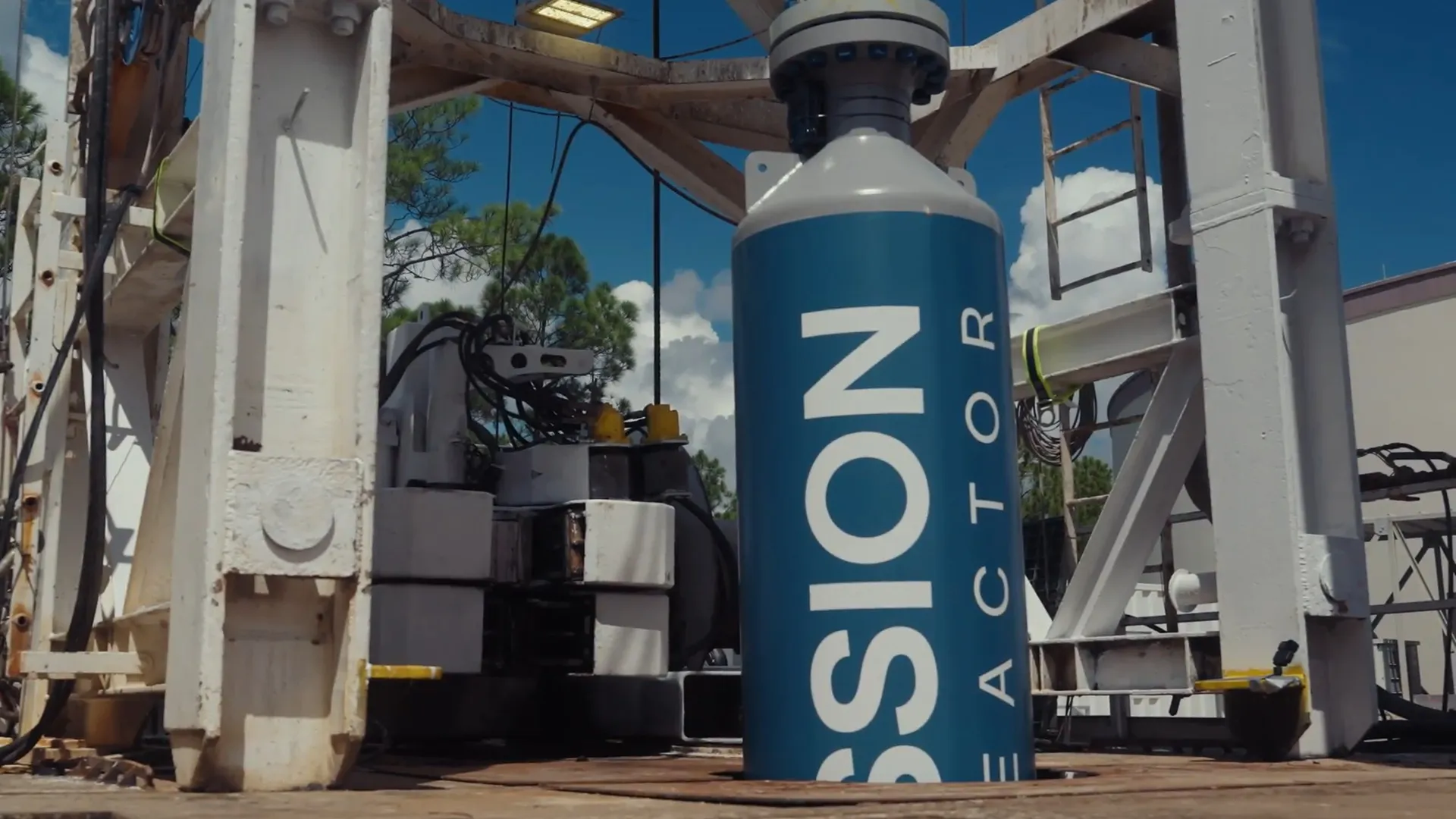
A nuclear energy project aimed at placing small modular reactors about one mile underground is teaming up with a commercial drilling contractor to develop the deep, large-diameter boreholes needed for the concept.
Deep Fission and Youngquist Brothers will evaluate and test drilling technologies and borehole-construction methods for the underground deployment model. The work will draw on Youngquist’s experience with large-diameter drilling and Deep Fission’s reactor deployment design.
Youngquist has drilled large-diameter boreholes to depths exceeding 8,000 feet. The companies will now assess how its commercial drilling equipment and methods can be adapted for the requirements of an underground nuclear reactor.
The collaboration moves the project beyond reactor design and into one of the key engineering challenges of the concept: creating a borehole deep and wide enough to accommodate the reactor system while supporting its installation and eventual retrieval.
Drilling takes center stage
“Youngquist brings decades of hands-on drilling experience that maps directly onto what our deployment model requires,” said Liz Muller, CEO and Co-Founder of Deep Fission. “Working with an established commercial driller lets us advance the drilling side of our approach using equipment and expertise that already exist in the field, rather than starting from scratch.”
The partnership will focus on drilling and construction methods for the deeper boreholes required by the proposed system. The companies say the work will build on Youngquist’s commercial drilling experience rather than developing an entirely new drilling approach from the ground up.
Youngquist has been working on large-diameter drilling since 1971, according to its CEO Harvey Youngquist.
“Large-diameter drilling to these depths is a method we’ve refined since 1971,” said Harvey Youngquist, CEO of Youngquist Brothers. “What Deep Fission requires for its nuclear application is the same discipline we’ve always applied. We’re glad to bring that experience to a project of this scale and in this unique application.”
The companies had already demonstrated part of the deployment process before announcing the collaboration. On September 3, they lowered a 30-inch full-size prototype reactor canister into a 34-inch borehole in Fort Myers, Florida, reaching approximately 100 feet before retrieving the canister.
That demonstration tested installation and retrieval mechanics, not the full-depth drilling required for the planned underground deployment. The new collaboration is intended to address that larger drilling challenge.
Scaling drilling for reactors
Deep Fission’s Gravity Nuclear Reactor uses established pressurized water reactor technology and standard low-enriched uranium fuel. The company’s concept places the reactor roughly one mile underground in a water-filled borehole, with surrounding rock and water intended to provide functions including containment and cooling.
The drilling partnership therefore addresses a fundamental part of the deployment model. Before the reactor can be placed roughly a mile underground, the project needs a method for constructing a suitably sized borehole at that depth.
Deep Fission is targeting commercial deployment as early as 2027. The company is also advancing its first reactor project in Parsons, Kansas, and was selected for the US Department of Energy’s Reactor Pilot Program.
The next phase of the collaboration will focus on continued drilling and testing as the companies work toward the deep-borehole requirements of the underground reactor system.
Related articles

Higgsfield AI ships new video features in a day with GPT-6 Astra
With GPT-6 Astra, Higgsfield AI makes video ad creation easier for small businesses and brings new creative tools to market faster.

Flights grounded at JFK, LaGuardia, other US airports after air traffic system outage
The Federal Aviation Administration (FAA) has issued ground stops at several major airports in the...
US Army’s oldest test base gets 390MW molten salt nuclear plant fueled by U-235
The US Army’s oldest active proving ground and test base will reportedly receive a 390-megawatt...

Advisory Group on Mathematics and Artificial Intelligence
OpenAI is working with an independent Advisory Group on Mathematics and Artificial Intelligence to guide the review and communication of emerging AI results.

Expanding OpenAI Academy with new learning paths
Explore new OpenAI Academy learning paths for employees, developers, leaders, educators, and students to build and demonstrate practical AI skills.

Building standards for the next phase of AI
OpenAI outlines a path to shared global AI standards, calling for coordinated evaluation, reporting, and governance to improve safety.