
US space factory platform signs first customer to screen drugs in microgravity
An automated laboratory designed to study diseases and screen drugs in microgravity has secured a...
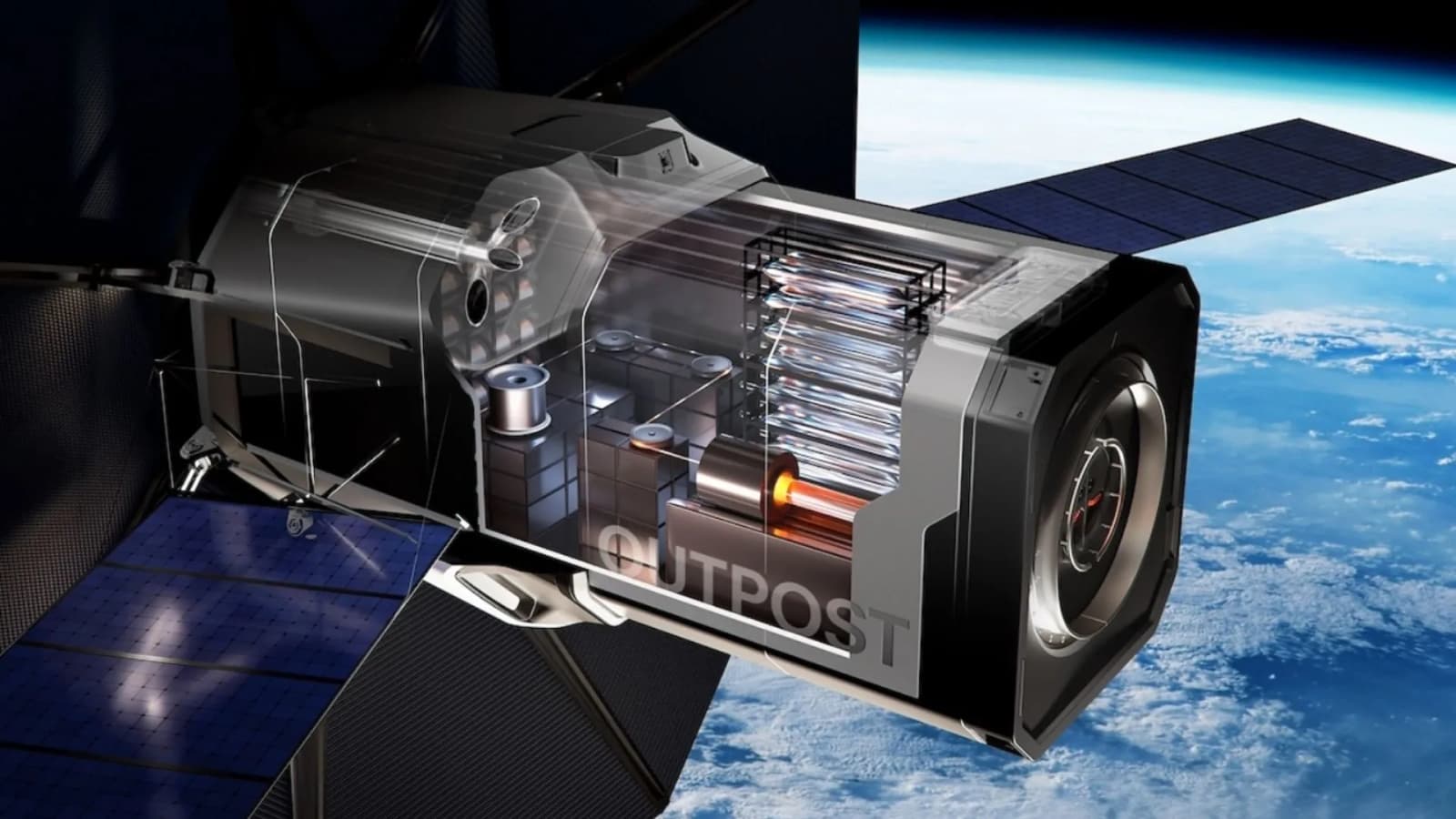
An automated laboratory designed to study diseases and screen drugs in microgravity has secured a place on a new US orbital manufacturing platform built to return research samples to Earth.
Outpost Technologies on October 2 said that Exobiosphere has become the first announced commercial customer of its Space Factories platform. Under the agreement, Exobiosphere’s Orbital High-Throughput System, or OHTS, will fly aboard Outpost’s CarryAll spacecraft.
The booking comes ahead of Outpost’s planned orbital mission in 2028. The companies aim to combine repeatable access to microgravity with sample return, allowing researchers to analyze their experiments after they reach Earth.
An automated drug laboratory in orbit
Exobiosphere, a space biotechnology company headquartered in Luxembourg, is developing OHTS to support disease modeling, drug screening, and other orbital biology workflows. The automated laboratory is intended to help researchers investigate diseases and evaluate potential treatments in microgravity.
Under the agreement, OHTS becomes the first customer research and manufacturing module slated to fly on Space Factories. CarryAll vehicles are intended to provide transportation and support the expansion of those activities.
Returning biological samples is a central part of the approach. Researchers need access to those samples for further testing, validation, and development on Earth.
Repeatable return could help Exobiosphere shorten experimental cycles and advance promising findings toward practical applications.
“Microgravity accelerates biology in ways we simply can’t reproduce on Earth, and demand from researchers and pharmaceutical companies to run experiments in orbit already far exceeds the capacity of the International Space Station,” said Kyle Acierno, co-founder and CEO of Exobiosphere.
Shared spacecraft infrastructure
Space Factories combines reusable, free-flying CarryAll spacecraft with standardized containers and shared services. These include power, thermal management, data, and safety interfaces.
The design allows customers to develop their own research or manufacturing modules while using a common spacecraft platform. Outpost says the expensive, complex infrastructure is built once and reused across missions, with the innermost module tailored to each customer.
For Exobiosphere, that customized module is OHTS. The surrounding platform is intended to manage orbital operations, protect products, and support their return.
“That’s exactly what we built Space Factories to serve: Exobiosphere brings the science, and we provide the standardized platform to fly it, operate it, and bring the results home. Their OHTS is a perfect first module,” said Jason Dunn, co-founder and CEO of Outpost.
Bringing research back to Earth
Outpost is developing the CarryAll vehicle family to host payloads in orbit and return cargo ranging from 200 kilograms to 10 metric tons.
The vehicles are designed to accommodate anything from a single experiment module to a larger commercial manufacturing payload. Their planned pressurized, ISS-compatible environment is intended to support sensitive research and technology payloads.
Outpost also plans reusable returns, precision landings, and flexibility in landing destinations, giving customers a potential route from initial experiments to larger manufacturing operations.
The agreement arrives as the International Space Station approaches its planned decommissioning in 2030. As commercial orbital platforms emerge, Outpost is positioning sample and product return as a core service for companies that need both access to space and analysis on Earth.
Related articles

US Navy weighs MQ-9B SeaGuardian drone as maritime patrol force multiplier
The U.S. Navy recently evaluated General Atomics’ MQ-9B SeaGuardian drone at a tactical symposium held...

Frontline Robotics unveils Frodo, its new 6×6 UGV with 93-mile range and 25 mph top speed
Ukrainian defense company Frontline Robotics has unveiled Frodo, a universal 6×6 unmanned ground vehicle built...

Pewdiepie builds smaller, local AJAX AI model after OpenAI ban controversy
YouTube creator Felix Kjellberg, better known as PewDiePie, has unveiled Ajax, a small language model...

Pentagon backs Supra Technology to recover high-purity Scandium in U.S.
Supra Elemental Recovery, an Austin-based firm, has received the U.S. Department of Defense (DoD) contract...

Capcom is preparing for a ‘future where we create games together with AI’
Capcom's Pragmata might be all about the horrors of AI, but in practice the studio doesn't seem so down on the tech.

180 mph over water: US Seaglider program advances toward operational demonstrations
The US Marine Corps Warfighting Lab has expanded its collaboration with electric Seaglider developer REGENT...