US startup’s space-based research aims to boost absorption of next-gen cancer medicines
Varda Space Industries, a California company, launched a spacecraft called W-7 on Oct. 20 to...
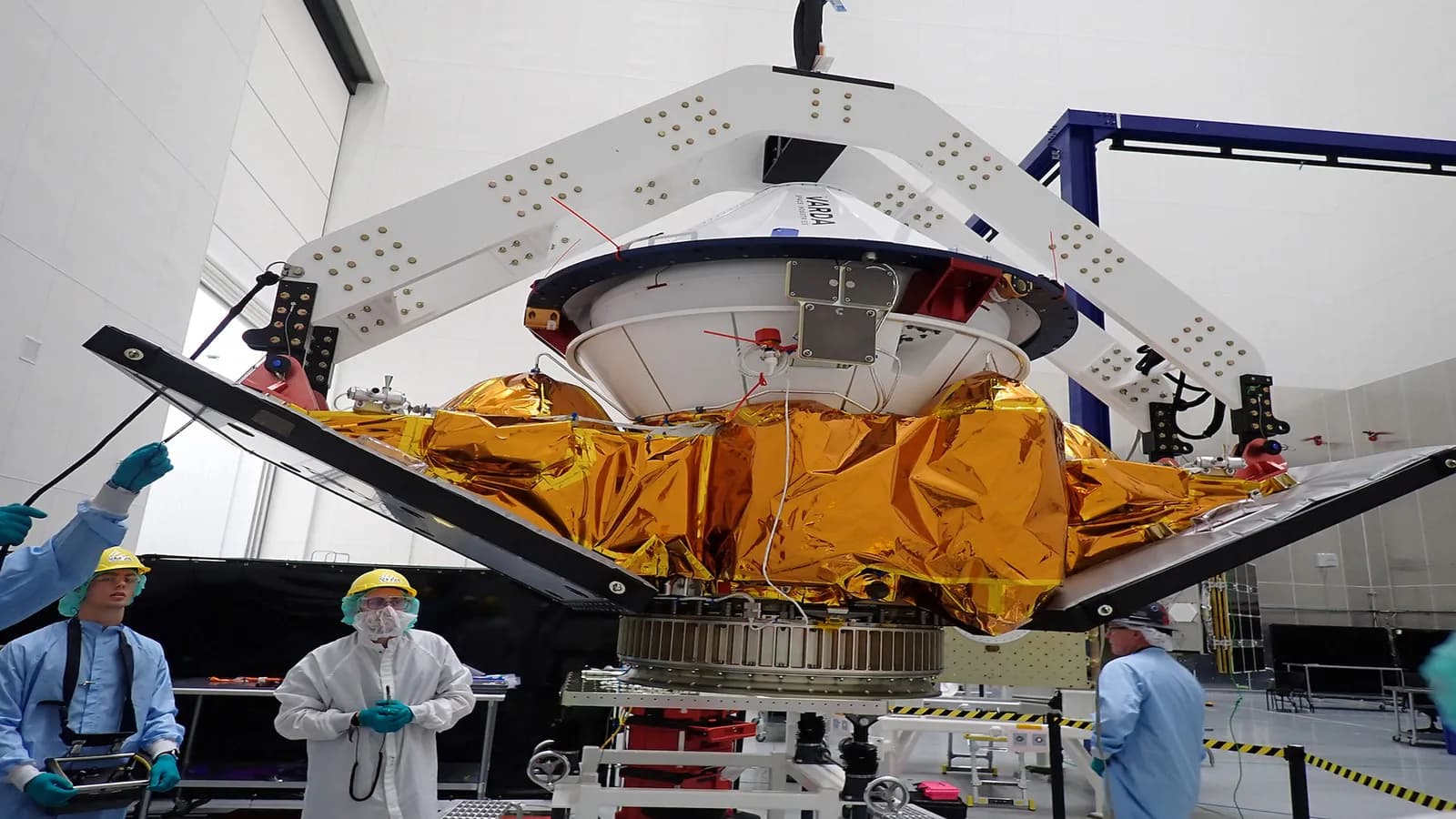
Varda Space Industries, a California company, launched a spacecraft called W-7 on Oct. 20 to test whether weightlessness can help an experimental class of cancer drugs dissolve better, the company said.
The launch gave Varda three spacecraft in orbit at once for the first time, The Guardian reported, as two others launched together on Oct. 1. Varda says it wants orbital processing to become a routine part of drug development.
The experiment targets a common problem. Poor solubility is one of the leading reasons promising drug candidates fail, Varda said, because the body can’t absorb them. Varda wants to see whether crystals grown in orbit dissolve better than those grown on the ground. The company says that it could eventually lead to a more absorbable, more effective medicine, though that is unproven.
What W-7 will test
The W-7 payload will mix liquids with an active pharmaceutical ingredient, the part of a medicine that does the work, according to Varda’s release. The compound belongs to a class called PROTACs, short for proteolysis-targeting chimeras. Rather than blocking a disease-causing protein, these drugs tag it so the cell destroys it, the company said.
PROTACs are large, complex molecules that dissolve poorly in the body’s fluids, Varda said, which makes them hard to turn into usable medicines. On Earth, gravity makes particles settle and creates currents in liquids, and both can disrupt crystal growth, Meganne Christian, an in-space manufacturing mission manager at the UK-based Satellite Applications Catapult, told The Guardian. In microgravity, Varda said, molecules can form crystals that are more soluble.
Michael Reilly, Varda’s chief strategy officer, said the company is “finding new ways to make powerful medicines work better.” Varda’s first mission, launched in June 2023, grew crystals of the HIV drug ritonavir and returned them to Earth in February 2024, Space.com reported.
What is unproven
The crystals must return to Earth for analysis before anyone knows whether they dissolve better, according to Varda. The release gives no return date. Details of W-7 come from Varda itself. If the gains are meaningful, the company said, that could open a path to clinical development, meaning tests in people. Cost is another hurdle. “It’s not going to be commercially viable for every application,” Christian told the Guardian.
Other companies are chasing similar goals. SpaceMD, a subsidiary of US space company Redwire, has booked a 2028 SpaceX mission that could carry up to 32 drug research labs, according to the company. Since November 2023, 54 of its PIL-BOX labs have flown to the International Space Station, the company said. Space Forge, a Cardiff-based company, wants to grow semiconductor crystals in orbit for use in electronics. Its ForgeStar-1 satellite has run a high-temperature furnace in space, but the company has not yet returned a finished material to Earth, the Guardian reported.
Varda has more flights planned. The company plans a mission with United Therapeutics on a pulmonary disease treatment “sometime next year,” Reilly said, according to Axios. The Guardian reported Varda plans seven more missions in 2027.
Get the latest news delivered to your inbox.
Related articles