US team maps electrolyte chemistry to guide next-generation battery designs
Lithium ions in battery electrolytes do not always remain isolated. Research from Columbia University shows...
This story was prepared automatically by software.
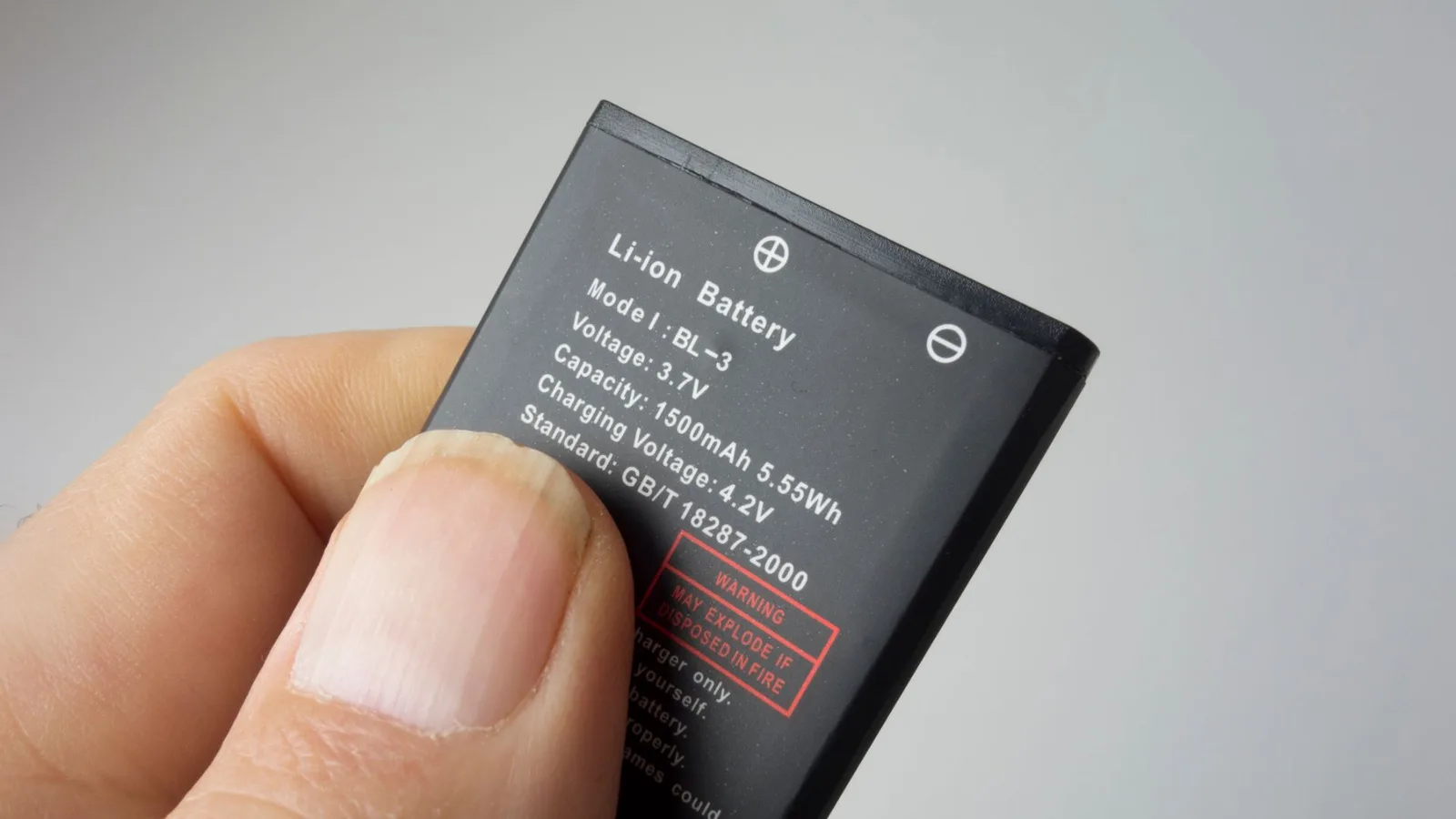
Lithium ions in battery electrolytes do not always remain isolated. Research from Columbia University shows they often form clusters without anions. It revealed a structural feature that challenges long-held assumptions about lithium-ion battery chemistry.
The study combines machine learning simulations with experimental validation to examine the atomic-scale structure of these electrolytes. Its findings could guide electrolyte designs for higher-capacity, faster-charging, and longer-lasting batteries.
The research was co-led by Richard Friesner of Columbia’s Department of Chemistry and Alexander Urban, Lauren Marbella, and Daniel Steingart of Columbia Engineering.
Lithium ions form unexpected clusters
Electrolytes are crucial to battery performance and help drive the formation of the solid electrolyte interphase, a protective film on the battery anode. This film influences battery lifespan and safety, but understanding how electrolyte structure affects its formation has remained difficult.
To investigate that structure, the researchers used machine-learning force-field technology from Schrödinger, Inc., with additional support from the New York Structural Biology Center.
The approach let them simulate battery electrolytes more accurately and at a larger scale.
The simulations revealed that up to 40% of lithium ions in standard battery electrolytes form multi-ion clusters.
Clustering became more prevalent at higher salt concentrations, challenging the assumption that lithium ions remain predominantly isolated in solution.
“We discovered lithium ions in batteries actually group together into clusters in the absence of anions, and that these clusters are what drive the creation of the protective film on the battery’s surface,” said Friesner, William P. Schweitzer Professor of Chemistry.
Experiments support the simulations
The team compared its simulations with a wide range of condensed-phase experimental data. Strong agreement between the two supported the physical reality of the predicted lithium clusters.
Theoretical analysis came from the Columbia and Schrödinger teams, while Columbia Engineering contributed the experimental work.
“While the most novel aspect of the paper is the theoretical simulations, the experimental work confirming the results was essential and extremely difficult to execute,” added Professor Friesner.
Friesner, who is also a co-founder and member of Schrödinger’s board of directors, emphasized the importance of combining computational predictions with experimental confirmation.
“Predicting this unexpected chemistry computationally and confirming it experimentally demonstrates that we can accurately model the hidden atomic details of batteries,” he said.
Clues to protective film formation
Quantum chemical calculations indicated that the multi-lithium clusters have particularly favorable reduction potentials. These results suggest that the clusters are key intermediates in forming the solid electrolyte interphase.
That connection gives researchers a clearer basis for investigating how electrolyte chemistry influences the protective film and, in turn, battery performance.
The findings provide a foundation for designing next-generation electrolytes with improved performance, stability, and charging rates.
Those improvements remain potential applications of the research, rather than demonstrated battery gains reported in the supplied material.
“It’s a reminder – and an exemplary example – of how advances in AI-driven simulation need to be coupled closely to experiments,” Friesner said.
“Ultimately, that will allow us to accelerate our progress in solving problems in biology and materials science, including making better, longer-lasting batteries,” he added.
Gates Ventures provided funding for the research. The study was published in the Nature journal.
Source: https://interestingengineering.com/energy/research-reveals-unexpected-lithium-ion-clusters
Related articles