
US to explore bringing C-17 Globemaster III production back from the dead
The United States Air Force (USAF) is currently weighing whether to restart production of the...
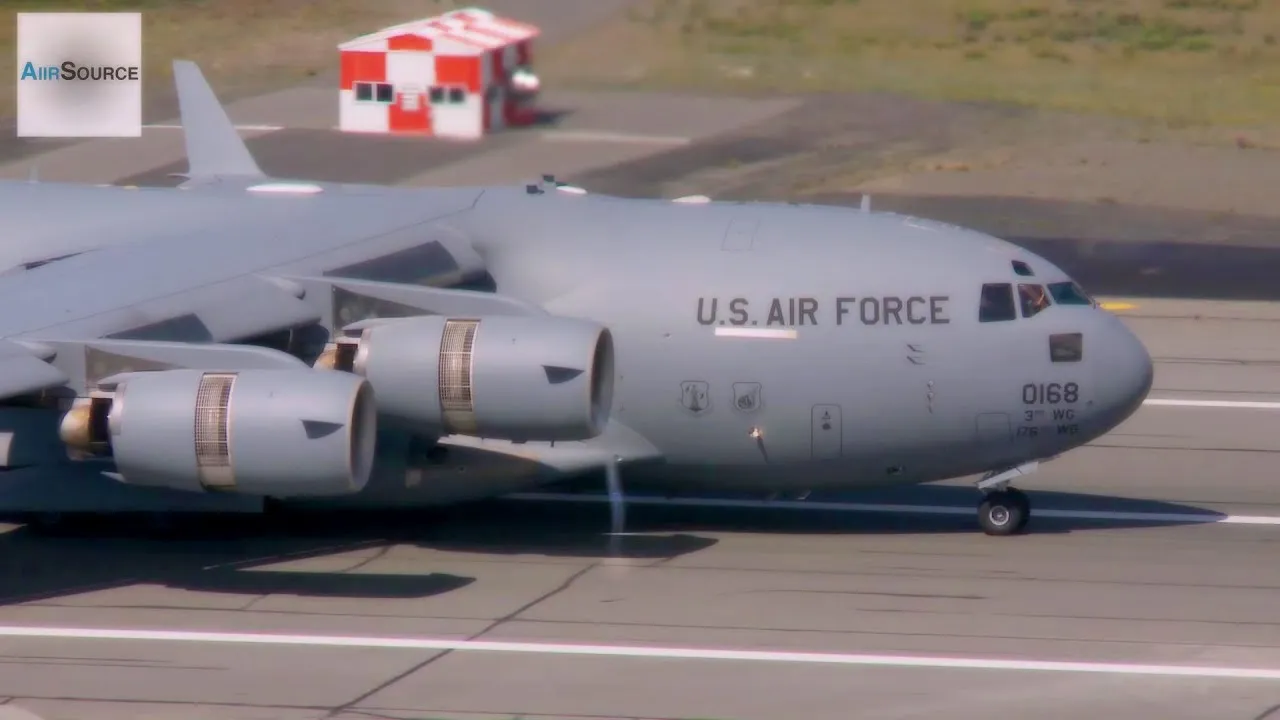
The United States Air Force (USAF) is currently weighing whether to restart production of the C-17 Globemaster III or commit to designing and buying an entirely new aircraft. This comes after the US Congress tasked the Air Force with providing a detailed analysis on the matter by no later than March 1, 2027.
The C-17 is an amazingly useful piece of military logistics kit. Among other things, it is able to haul roughly 77.5 tonnes, carry tanks, helicopters, troops, and oversized cargo. Importantly, it can also operate from relatively short or rough airfields, refuel in the air, and perform airdrops.
The USAF has around 220 of them, alongside 52 much larger C-5Ms, and expects to keep C-17s flying potentially until 2075. But no new ones are being made; existing aircraft require ongoing maintenance and repair.
The crux of the issue is that production of this incredibly versatile aircraft ceased in 2015. This means that any existing spare parts are all that’s available to keep them airborne without making new ones.
Keep or replace the C-17?
The problem is that restarting an aircraft factory after 11 years isn’t like switching a machine back on. Boeing would have to find out what tooling still exists, rebuild jigs and dies, locate or replace hundreds of suppliers, requalify manufacturing processes, recruit specialist workers, and possibly redesign components that are no longer available.
Back in 2006, estimates for stopping and restarting C-17 production ranged from about $918 million to $2 billion, and that was assuming a much shorter shutdown. Today’s bill could therefore run into several billions before the first new aircraft was produced.
If this were to be done, making just a handful of them would be astonishingly expensive per aircraft. But if third-party nations like the UK, Australia, and Canada were open to buying more themselves, then the economics of the decision would become far more attractive.
The study will compare such a decision with other options, such as improving technical support for the existing fleet versus designing and supplying an entirely new aircraft. This includes sourcing suppliers for obscure or discontinued parts.
It might be possible to increase the number of existing planes by a few percent (or a handful of aircraft) by improving predictive maintenance. Upgrading avionics, computers, and maintenance systems would also squeeze more useful capacity out of the existing fleet.
But such measures can only go so far. It cannot suddenly conjure into existence another 20 aircraft, say, if suddenly needed due to a large-scale military need.
USAF to decide by 2027
For this reason, the USAF will also look into developing a successor for the C-17. Dubbed the Next-Generation Airlift (NGAL), this could be ready for production by 2038, with operational status granted by 2041.
So, the USAF has some hard decisions to make by March next year. Is it better to keep the existing fleet and improve how they are maintained and upgraded? Could restarting production of the aircraft make more sense?
Or might it be cheaper in the long run to just develop the NGAL successor aircraft? It will be interesting to see the outcome next year.
Source: https://interestingengineering.com/innovation/us-to-resurrect-c17-globemaster-iii
Related articles

China fears US deployment of space weapons raises risks of fresh arms race: Report
The United States has publicly acknowledged that it has weapons deployed in orbit, marking a...

Trump wants ‘AI Force’ to keep US AI race moving, push ahead with modern tech despite concerns
President Donald Trump says he plans to create an “AI Force” and appoint a new...

Scientists transport 92 antiprotons by road for first time, store them in vessel for over a month
Scientists succeeded in transporting antiprotons by road for the first time in a purpose-built trap...

A mathematical rule against disagreement survives beyond quantum mechanics
Two people can examine the same evidence and reach different conclusions. However, if they share...

Volkswagen electric bus sets Guinness World Record, drives 62,000 miles across 92 countries
A Volkswagen ID. Buzz has completed a 99,767-kilometer (roughly 62,000 miles) journey through 92 countries...
Low-cost US interceptor destroys drones without jamming their signals
A US defense startup has tested a low-cost interceptor missile designed to physically destroy small...