‘World’s first’ two-way data transmission over 626 miles of hollow-core fiber achieved
China has reportedly completed a 1,007-kilometer (626-mile) test of hollow-core optical fiber, demonstrating simultaneous high-speed...
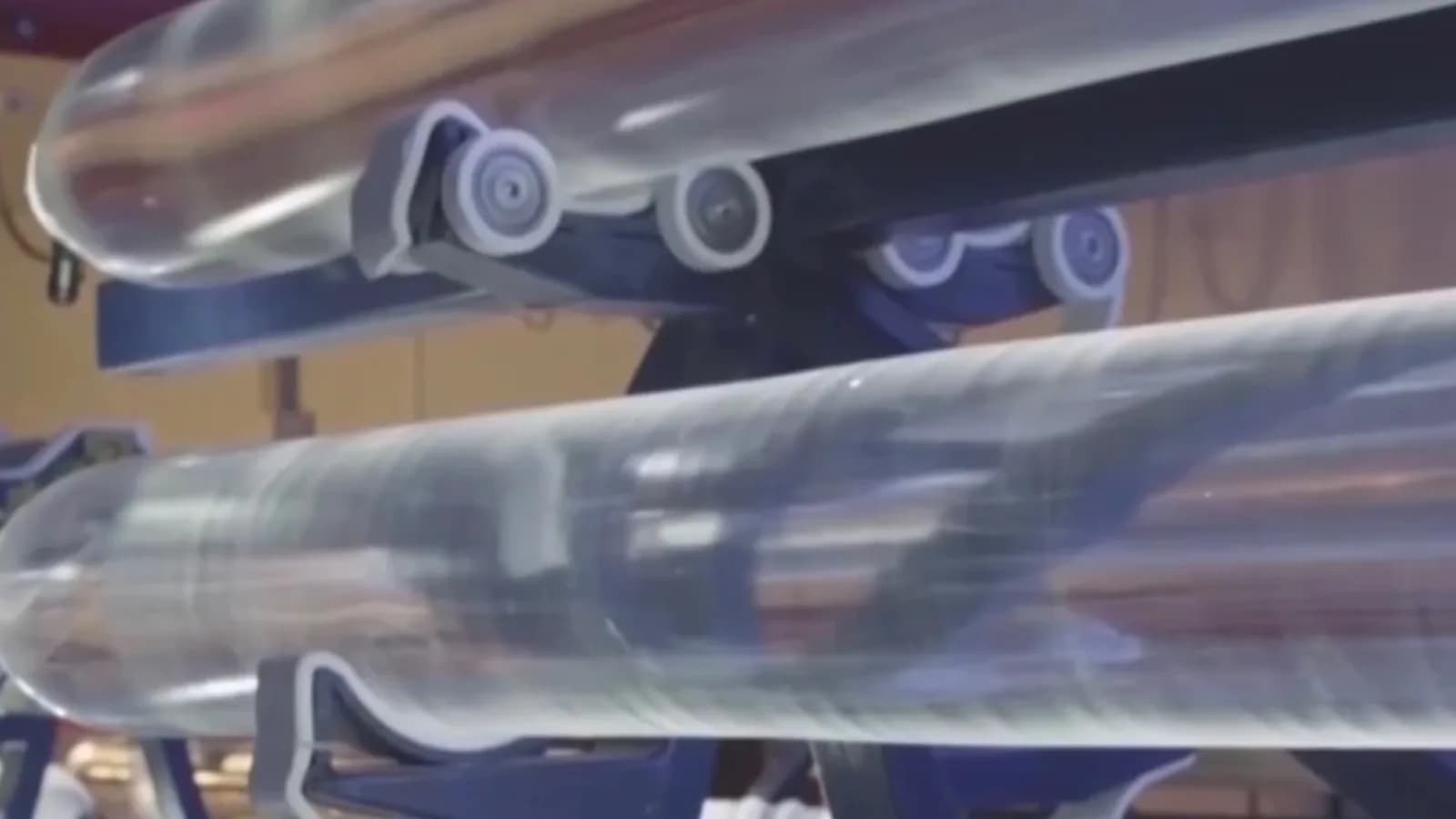
China has reportedly completed a 1,007-kilometer (626-mile) test of hollow-core optical fiber, demonstrating simultaneous high-speed data transmission in both directions over a record distance. The experiment achieved a transmission capacity of 64 terabits per second (Tbps) in each direction, as reported by China’s Central Television (CCTV) on November 8.
The milestone marks a significant step toward next-generation communication networks. It also demonstrates the potential of hollow-core fiber to support faster data transfer with lower latency, particularly as demand for computing power and AI data processing continues to grow.
Hollow-core fiber sets new transmission record
Most optical fiber networks today rely on solid-core fibers, which carry light signals through a silica glass core. Hollow-core fibers use a different approach, transmitting signals primarily through an air-filled channel.
The latest experiment used a 1,007.48-kilometer (625.7-mile) fiber link to verify the technology’s performance over long distances. It achieved simultaneous bidirectional transmission of 64 Tbps signals, meaning the same capacity was available for uploads and downloads.
According to CCTV, this is equivalent to transferring 160 4K movies, each measuring 50 GB, every second. A signal traveling one way across the entire link took just 3.43 milliseconds, setting a new record for real-time transmission using hollow-core fiber.
Air-filled channels reduce transmission delays
The technology improves on conventional solid-core fiber. According to the report, it doubles transmission capacity and extends transmission distance by 60 percent compared with the best-performing solid-core fibers currently available. The latest test also extended the transmission distance by 50 times compared with previous hollow-core fiber trials of the same type.
Huo Xiaoli, chief expert of next-generation information and communication at China Telecom, said hollow-core fiber transmits signals through gas rather than solid glass, reducing latency by 30 percent.
Huo added that the experiment demonstrated long-distance, high-capacity, low-latency transmission while reusing existing transmission equipment. This could help prepare the technology for wider deployment in future computing power networks.
Faster links could support AI data centers
The breakthrough could have implications for large-scale AI infrastructure. Training and running large AI models require data centers to exchange enormous amounts of information, making network speed and bandwidth important factors in computing performance.
Wang Ruichun, chief scientist of Yangtze Optical Fiber and Cable, said the technology could better support China’s national computing power strategy.
“In AI data centers, the requirements for latency are extremely stringent, and the rate of optical connectivity and optical transmission is also very important. It can improve computing efficiency and significantly reduce investment costs in GPUs or storage chips,” Wang noted.
Commercial deployments already underway
Hollow-core fiber has already moved beyond laboratory testing. CCTV reported that the technology is being used in the world’s first cross-border commercial hollow-core fiber financial dedicated line, connecting Shenzhen in Guangdong Province with Hong Kong.
More than 10 commercial and pilot projects have also been deployed across Asia, Europe and other regions.
The latest long-distance verification could help expand these applications. As data centers handle increasingly demanding AI workloads, faster optical connections could become an important part of the infrastructure needed to move information between computing facilities.
Get the latest news delivered to your inbox.
Related articles