
YouTuber turns window AC into a DIY geothermal heat pump supplying 49°F cold air
A discarded window air conditioner has become the centerpiece of an unconventional geothermal cooling experiment...
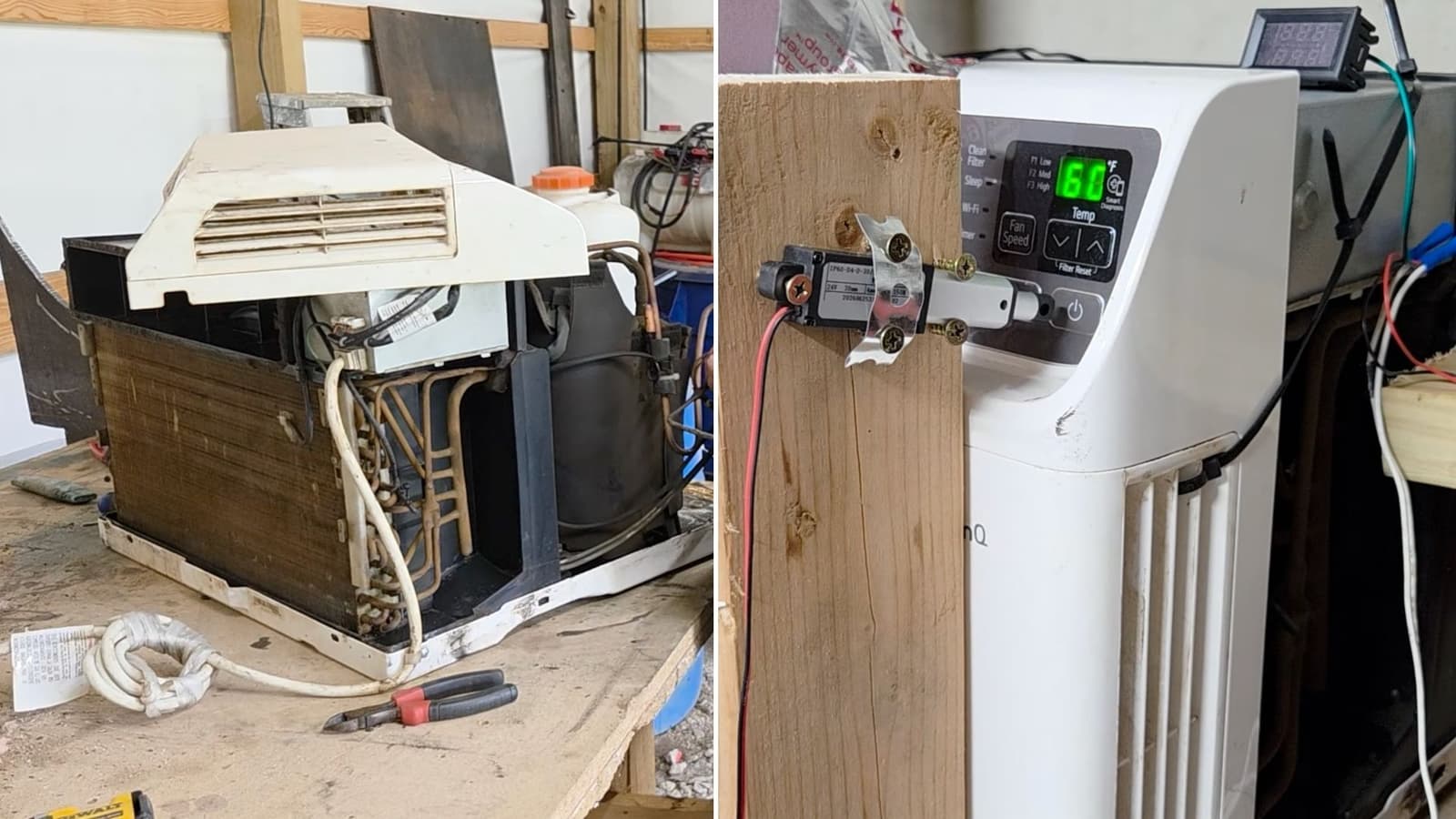
A discarded window air conditioner has become the centerpiece of an unconventional geothermal cooling experiment after YouTuber Craftsman Chris rebuilt the machine to dump household heat into the ground instead of the outdoor air.
The project combines a salvaged 14,000-BTU LG Dual Inverter window air conditioner with roughly 2,000 feet of buried PEX tubing. After several iterations, the system is now producing supply air around 49–54°F and automatically cooling parts of the house.
From buried PEX to a homemade heat pump
Chris initially buried four 500-foot loops of half-inch PEX about 6–8 feet underground. The original system circulated groundwater through a heat exchanger in the home’s furnace plenum, but the approach was limited by the temperature of the ground-loop water.
The new design uses the same buried loops in a different way. Instead of sending the relatively cool water directly through the house’s air-handling system, the water now cools the condenser of a conventional refrigerant-based air conditioner.
Chris salvaged an LG 14,000-BTU Dual Inverter window unit from a dumpster and cleaned its heavily contaminated coils and internal components. Crucially, he kept the refrigeration circuit sealed rather than cutting the copper lines and recovering the refrigerant.
He then rotated the condenser coil by roughly 90 degrees and built a water jacket around it from scrap sheet metal. Ground-loop water enters the jacket, surrounds the condenser, absorbs heat rejected by the refrigerant, and then travels back through the buried PEX loops. That effectively turns the window unit into a rudimentary ground-source heat pump.
An industrial controller pushes a button
Getting the refrigeration system and ground loops working was only part of the challenge. Chris also wanted the system to respond automatically to his home’s thermostat.
Rather than electrically modifying the air conditioner’s control board, he used an Allen-Bradley programmable logic controller (PLC) and a linear actuator. When the thermostat calls for cooling, the PLC activates the actuator, which physically presses the window unit’s power button.
The system eventually switched the air conditioner on and off automatically. Chris also added temperature monitoring that can shut the system down if the water jacket becomes too hot.
The ground-loop pump moves approximately 3.3 gallons of water per minute. During testing, the water typically gained around 3–5°F as it passed through the condenser jacket before returning underground.
The numbers are surprisingly promising
In later testing documented in the video, the water surrounding the condenser generally reached the upper 70s to low 80s Fahrenheit. Meanwhile, the buried loops rejected the heat back into the ground.
The system produced supply air between roughly 49 and 54°F at several vents. Chris measured a temperature split of about 26.5°F during one test. The design also improved after he abandoned an earlier attempt to distribute the cold air using uninsulated aluminum ducting. That duct acted as an unwanted heat exchanger, warming the chilled air before it reached the living areas.
He eventually replaced it with insulated flexible duct and routed the cold air directly toward the family room, dining room, and kitchen. Chris stresses that the setup is still an experiment rather than a finished HVAC system. The project needs better electrical protection, additional sensors, power-consumption measurements, and more rigorous efficiency data.
Still, the experiment demonstrates that a discarded window air conditioner can be repurposed into a working ground-source cooling system when paired with a sufficiently large underground heat-exchange loop. The bigger question now is whether the homemade system can maintain comfortable temperatures through an entire summer rather than simply producing cold air during controlled tests.
Related articles


Xbox’s Mythic achievements sound like PlayStation’s Platinum trophy
Xbox appears to be ready to launch its own version of PlayStation's platinum trophies.

Logitech’s new haptics-based gaming mouse is a little better and $20 more
The G Pro Superstrike mouse is one of Logitech's most interesting products.

Logitech’s new Blue Yeti 2 mic adjusts itself to where you are
The original Blue Yeti has been one of the most recognizable go-to USB microphones for content creators since it launched in 2009, and now it finally has a successor.

Energy firms advance US nuclear reactor technology for heavy industry operations
An alliance between US-based reactor developer Terrestrial Energy and British energy firm Viaro Energy has...
Ukraine builds 258-mph drone killer to down jet-powered Russian unmanned aircraft
Ukraine’s Vluchnyk has completed internal testing of the Zorelit v5, a high-speed interceptor drone designed...