
10 AI technologies reshaping healthcare from the lab to the operating room
Artificial intelligence is now moving into a far more challenging domain. It is going from...

Artificial intelligence is now moving into a far more challenging domain. It is going from research papers into medical devices, diagnostic workflows, drug development, and even operating rooms. The U.S. FDA says more than 1,600 AI-enabled medical devices had been authorized for marketing in the US by September 2026, spanning radiology, cardiology, pathology, and other specialties. Here are 10 specific technologies showing how AI is changing healthcare beyond the usual chatbot hype.
1. AlphaFold 3 for predicting drug interactions
Google DeepMind’s AlphaFold 3 can predict the structures and interactions of proteins, DNA, RNA, small molecules, and ions. Unlike earlier versions focused primarily on protein structures, its diffusion-based architecture models entire biomolecular complexes, giving researchers a computational tool for studying how potential drugs interact with biological targets.
2. AI-designed drugs entering clinical trials
Insilico Medicine’s rentosertib (INS018_055) became one of the clearest demonstrations of AI moving from target discovery to human testing. The drug was developed using AI to identify a target and design a molecule, and reached Phase II trials for idiopathic pulmonary fibrosis. Phase 2a results subsequently showed improvements in lung function, providing a clinical milestone for AI-driven drug discovery.
3. AI that flags prostate cancer in biopsy slides
Paige Prostate uses AI to analyze digitized prostate biopsy slides and flag areas suspicious for cancer for pathologists to review. The FDA granted it De Novo authorization in 2021, making it the first AI-based software device authorized in digital pathology. It is designed as an aid to pathology review, rather than replacing the pathologist’s diagnosis.
4. AI that rapidly analyzes stroke scans
Brainomix 360 Stroke analyzes CT, CT angiography, CT perfusion, and MRI data to identify signs of ischemic stroke, large-vessel occlusion, and hemorrhage. Its software can automatically calculate measures such as ASPECTS and ischemic-core volume, while sending alerts when potentially critical findings are detected. The FDA has cleared multiple Brainomix stroke-imaging components.
5. AI-guided ultrasound scanning
GE HealthCare’s Caption AI and Caption Guidance use deep-learning algorithms to help clinicians acquire cardiac ultrasound images. The system provides real-time guidance on probe positioning, effectively helping less-experienced operators obtain diagnostic-quality views. It is being integrated into portable ultrasound systems, potentially making echocardiography more accessible at the point of care.
6. ECGs that can detect hidden heart problems
AI can extract information from a conventional 12-lead ECG that may not be obvious to clinicians. FDA-listed ECG-AI systems can help identify patients with low left-ventricular ejection fraction. A 2025 randomized trial involving 13,631 inpatients found AI-assisted ECG screening increased detection of newly diagnosed low ejection fraction.
7. AI that automatically adjusts insulin
Medtronic’s MiniMed 780G combines continuous glucose monitoring with an adaptive algorithm that automatically adjusts insulin delivery every five minutes. Its Meal Detection technology can also detect rising glucose associated with missed or underestimated meal doses and provide corrective insulin. The system represents a shift from manually calculated dosing toward automated, continuously adjusted diabetes management.
8. Autonomous diabetic-eye screening
Digital Diagnostics’ IDx-DR is an autonomous AI system designed to detect more-than-mild diabetic retinopathy from retinal photographs. The FDA cleared the system as a Class II device, allowing it to make a screening determination without requiring an eye specialist to interpret the images first. It demonstrates how AI can bring specialized screening into primary-care settings.
9. Robots that can perform surgical procedures
Johns Hopkins researchers developed the Surgical Robot Transformer-Hierarchy, which learned surgical actions from videos of expert surgeons. In 2025, the system performed a lengthy segment of gallbladder removal on a lifelike model without direct human control, while responding to voice commands and adapting to unexpected situations. The work points toward surgical robots capable of more than precisely repeating pre-programmed movements.
10. AI that automatically outlines tumors for radiation therapy
MIM Software’s Contour ProtégéAI+ uses machine-learning algorithms to automatically create contours from CT and MRI images for radiation-therapy planning. FDA-cleared versions are designed to help clinicians process these images and support applications such as adaptive therapy. A newer version received FDA clearance in March 2026, illustrating how AI is becoming part of the planning workflow rather than simply analyzing scans.
AI in healthcare is therefore becoming less about a single futuristic system and more about specialized tools embedded into existing medical workflows. Some are already authorized and used clinically, while others remain in research or clinical development. Now AI is being trained to interpret scans, control devices, design molecules, and assist with physical procedures rather than simply generate text.
Related articles

Who Controls the Critical Minerals Powering AI?
AI’s rapid growth depends on critical minerals. Here’s which countries dominate production of gallium, rare earths, and tantalum.

Steam Deck 2: Is AMD Gainsborough the chip Valve’s been waiting for?
The Steam Deck is four and a half years old, and handheld gamers are eagerly awaiting a Steam Deck 2 - but Valve has consistently said it needs a new chip with a "generational leap" in performance…

US Navy adds M-Code GPS to shield carrier landings from jamming threats at sea
BAE Systems has secured a $16 million award to modernize GPS guidance aboard U.S. Navy...

Judge dismisses antitrust lawsuits over Google’s AI Overviews
A federal judge has dismissed a pair of antitrust lawsuits filed by Chegg and Rolling Stone parent company Penske Media Corporation, which accused Google of driving away web traffic with its…
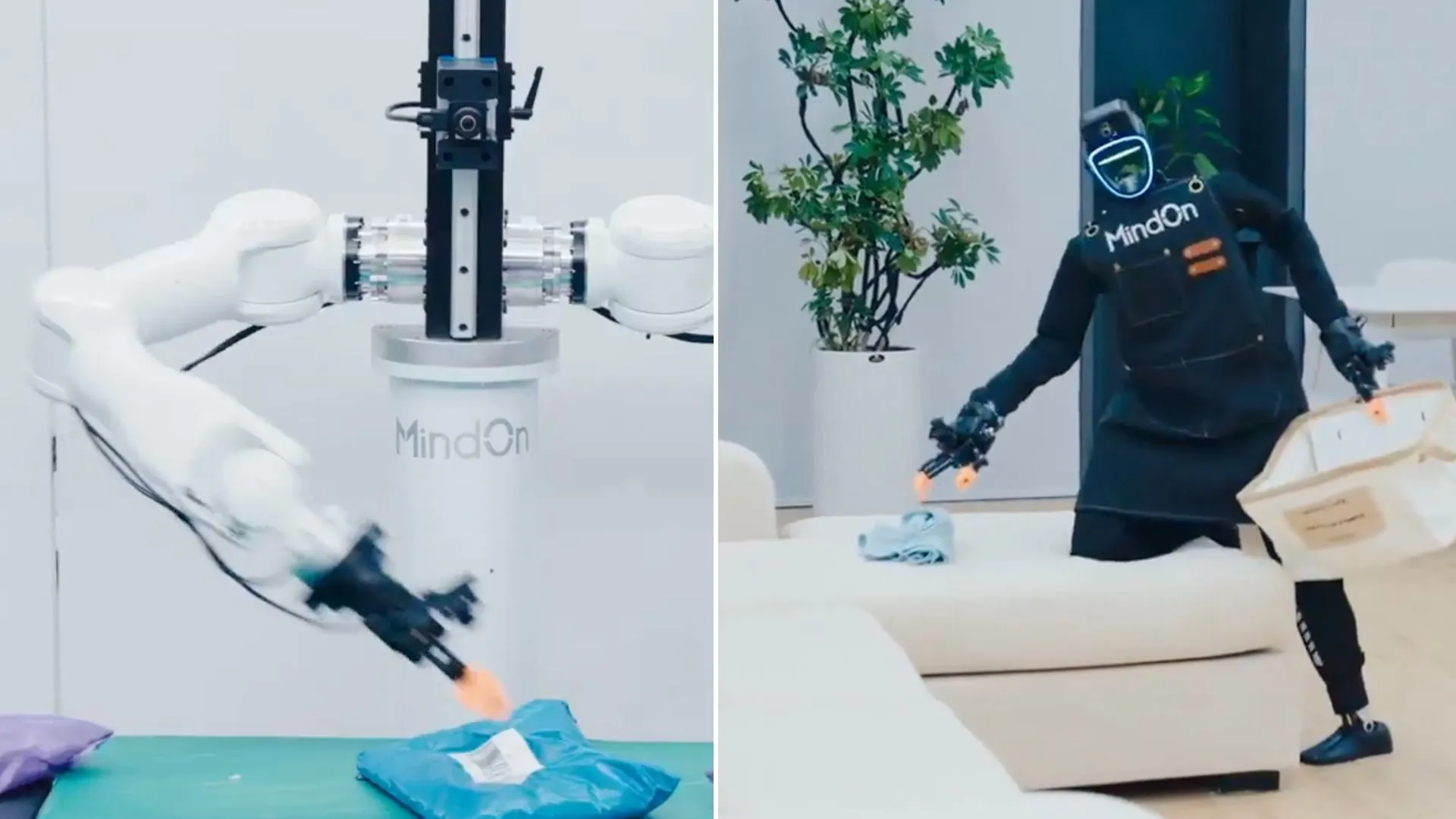
MindOn’s new Mind-1 model brings human-speed execution to robots
MindOn has unveiled Mind-1, a new physical AI model designed to make robots perform everyday...

Airbus A350F takes maiden flight with 111-ton payload and 5,400-mile range
Airbus’s A350F cargo jet has taken to the skies for the first time and completed...