
100 buoys the size of small houses could tap 90% of ocean wave energy for power
A group of researchers from Australia and Germany has developed a new method that could...
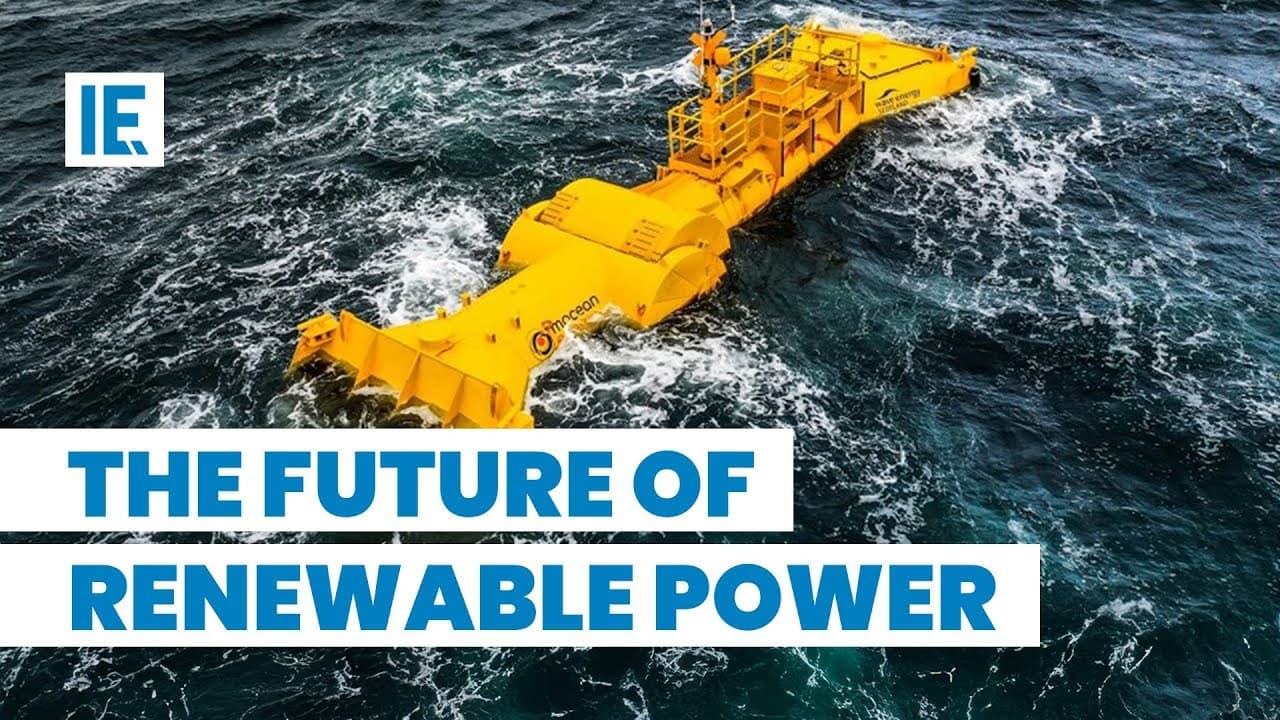
A group of researchers from Australia and Germany has developed a new method that could make 90 percent of the energy carried by incoming waves available for conversion into electricity.
The project was carried out by the University of Augsburg in Germany, alongside the University of Adelaide and the University of Melbourne in Australia. The team found out that tuning each buoy based on the waves reaching it could help large wave farms capture energy much more efficiently.
The research team’s simulations were based on large farms containing 50 or 100 buoys. They believe that the approach could help maintain high output as wave frequency and direction change.
“For example, special buoys anchored to the seabed can be utilized,” Malte Peter, PhD, from the Institute of Mathematics at the University of Augsburg, said. “They are lifted by the waves and then sink again in the troughs. This constant up-and-down movement drives a kind of dynamo that generates electricity.”
Tuning each buoy
According to the researchers, some buoys can reach the size of a small house and generate enough energy to supply several hundred households. However, linking many of them together, into a single farm, can change how waves move through the array.
As waves travel through a farm, the buoys themselves alter them through effects such as scattering and shielding. As a result, a buoy near the front of the farm may experience very different waves from one farther back.
“That is a problem,” Peter stressed. “The buoys have a preferred rhythm at which they move up and down. We also refer to this as their resonance frequency.”
Modern wave energy buoys allow this resonance frequency to be adjusted within certain limits. Additionally, the resistance of the generator driven by the buoy can also be adjusted.
For the study, the researchers optimized both parameters for each buoy in a farm containing 50 or 100 buoys arranged in a checkerboard-like pattern. They also accounted for each device’s position and its interaction with surrounding waves.
Capturing wave energy
Simulations showed that the strategy worked across a surprisingly broad range of wave frequencies. In addition the system maintained similar performance whether the waves arrived quickly or slowly. Changes in the direction of incoming waves also had little impact.
Moreover, about 90 percent of the energy contained in the incoming waves could consequently be converted into electricity. “We found a strategy that enables very high yields across an astonishingly wide range of wave frequencies,” Peter said in a press release.
The study also showed the effect on the waves themselves. As per the team, they became progressively smaller as they passed through rows of energy-harvesting buoys. By the time the waves exited the farm, only gentle movement remained at the water surface.
The approach could boost the future wave power output without major changes to existing technology. However, although the energy contained in ocean waves is freely available, building, installing, and maintaining the machinery needed to harvest it remains expensive.
According to the team, whether large wave farms can compete with established wind and solar power will depend on technological development and costs. “We found a strategy that enables very high yields across an astonishingly wide range of wave frequencies,” Peter concluded.
The study has been published in the Journal of Fluid Mechanics.
Related articles

Expanding OpenAI Academy with new learning paths
Explore new OpenAI Academy learning paths for employees, developers, leaders, educators, and students to build and demonstrate practical AI skills.

Building standards for the next phase of AI
OpenAI outlines a path to shared global AI standards, calling for coordinated evaluation, reporting, and governance to improve safety.
US company’s new reactor can make 800 barrels of sustainable aviation fuel per day
Houston, Texas-based company Velocys has launched AlphaCore 800, its newest reactor that uses Fisher-Tropsch (FT)...

World’s first 33 feet deep submarine solar power plant trialed in China
Scientists at the Yunnan University in China have achieved a global first by building a...
Single-atom technique could tackle 350 million tons of global PET plastic waste
To break down a plastic bottle, science doesn’t need a hammer, but a microscopic scalpel....

UFO? Mysterious lights over Tehran spark online buzz 50 years after 1976 sighting
A strange cluster of lights was seen over Tehran, and videos of the event are...