1000-mile range: US Air Force moves hypersonic missile into production after tests
The US Air Force awarded Lockheed Martin a $694 million contract to produce and field...
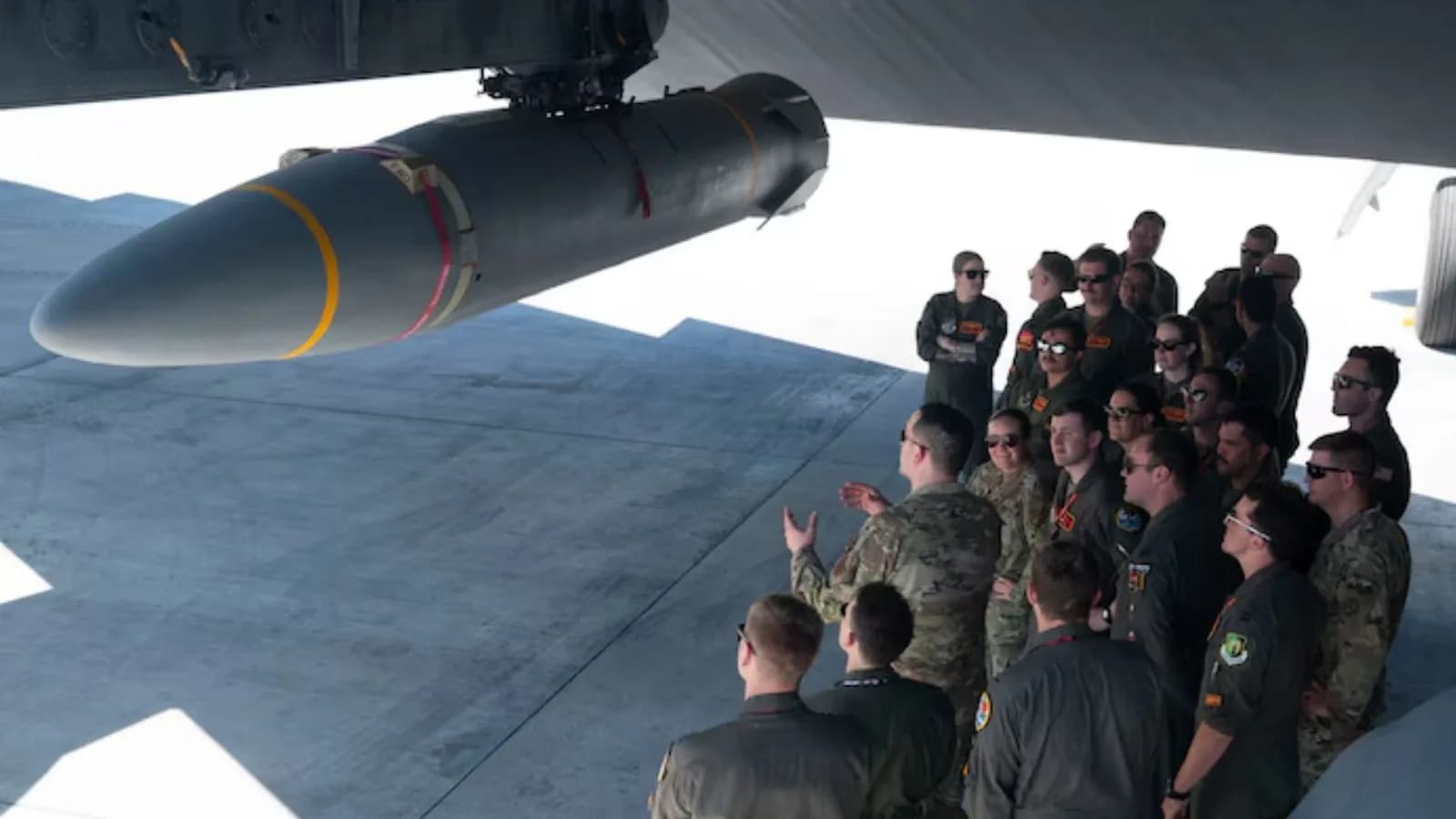
The US Air Force awarded Lockheed Martin a $694 million contract to produce and field the AGM-183A Air-Launched Rapid Response Weapon (ARRW), moving the hypersonic missile program from prototyping and flight testing to production.
The Pentagon awarded the contract on September 29 and announced it on October 26. The decision marks a major step toward giving the US military a long-range strike weapon designed to travel at more than five times the speed of sound and reach targets from outside heavily defended airspace.
“This is a turning point in our advanced weapons roadmap,” Secretary of the Air Force Troy Meink said in a statement. He said the program would give commanders a high-speed strike option designed to penetrate advanced anti-access and area-denial defenses.
Mach 5 speeds, 1000 mile range
The AGM-183A uses a boost-glide architecture rather than a conventional cruise-missile design. A solid-fuel rocket booster accelerates the weapon to hypersonic speeds, exceeding Mach 5, before releasing a glide vehicle that travels toward its target.
The Air Force puts the missile’s range at approximately 1,000 miles (1,600 kilometers), allowing aircraft to launch it from a considerable distance rather than flying directly over hostile territory. Its speed and glide profile are intended to help it reach high-value, time-sensitive targets in areas protected by sophisticated air defense networks.
Unlike a weapon that relies primarily on an explosive blast, ARRW is described in the Air Forceas using the kinetic energy from its high-speed impact to destroy targets. The system is intended to provide a conventional long-range strike capability, although the precise operational performance of the production weapon has not been publicly detailed.
Bomber aircraft to carry missile
The Air Force has primarily tested ARRW using the B-52H Stratofortress, a long-range bomber already used to carry stand-off weapons. Officials have also identified the B-1B Lancer as another aircraft for testing and planned integration.
These bombers could launch the missile without entering the most heavily defended areas around a target. However, the service has not disclosed how many missiles the new contract covers or when deliveries will begin, citing operational security.
The production decision also follows a turbulent development history. Lockheed Martin began work on ARRW in 2018, with captive-carry testing from a B-52 beginning the following year. The program experienced setbacks during early flight tests, and in 2023 the Air Force signaled it would shift attention toward other hypersonic efforts rather than proceed with ARRW procurement.
The service later reversed course. Funding for procurement appeared in the fiscal 2026 budget, and the new contract now formalizes the move toward production.
Unclear timelines
The $694 million award signals renewed commitment to fielding the missile, but it does not set a timeline for when ARRW will become operational or how quickly the Air Force will build its inventory. Those details remain undisclosed.
The service is pursuing hypersonic weapons to strike important targets quickly while operating against increasingly sophisticated air defenses. ARRW’s boost-glide design is one approach to that challenge, combining high speed with long-range launch from an aircraft.
For now, the contract moves the program into its next phase. Turning a tested weapon design into a production system the Air Force can eventually field. The scale and timing of that transition will become clearer as deliveries and operational integration progress.
Source: https://interestingengineering.com/military/us-air-force-hypersonic-missile-production
Related articles