
50-year-old accelerator at Los Alamos lab gets green light to design billion-dollar upgrade
For more than five decades, the Los Alamos Neutron Science Center (LANSCE) in New Mexico...
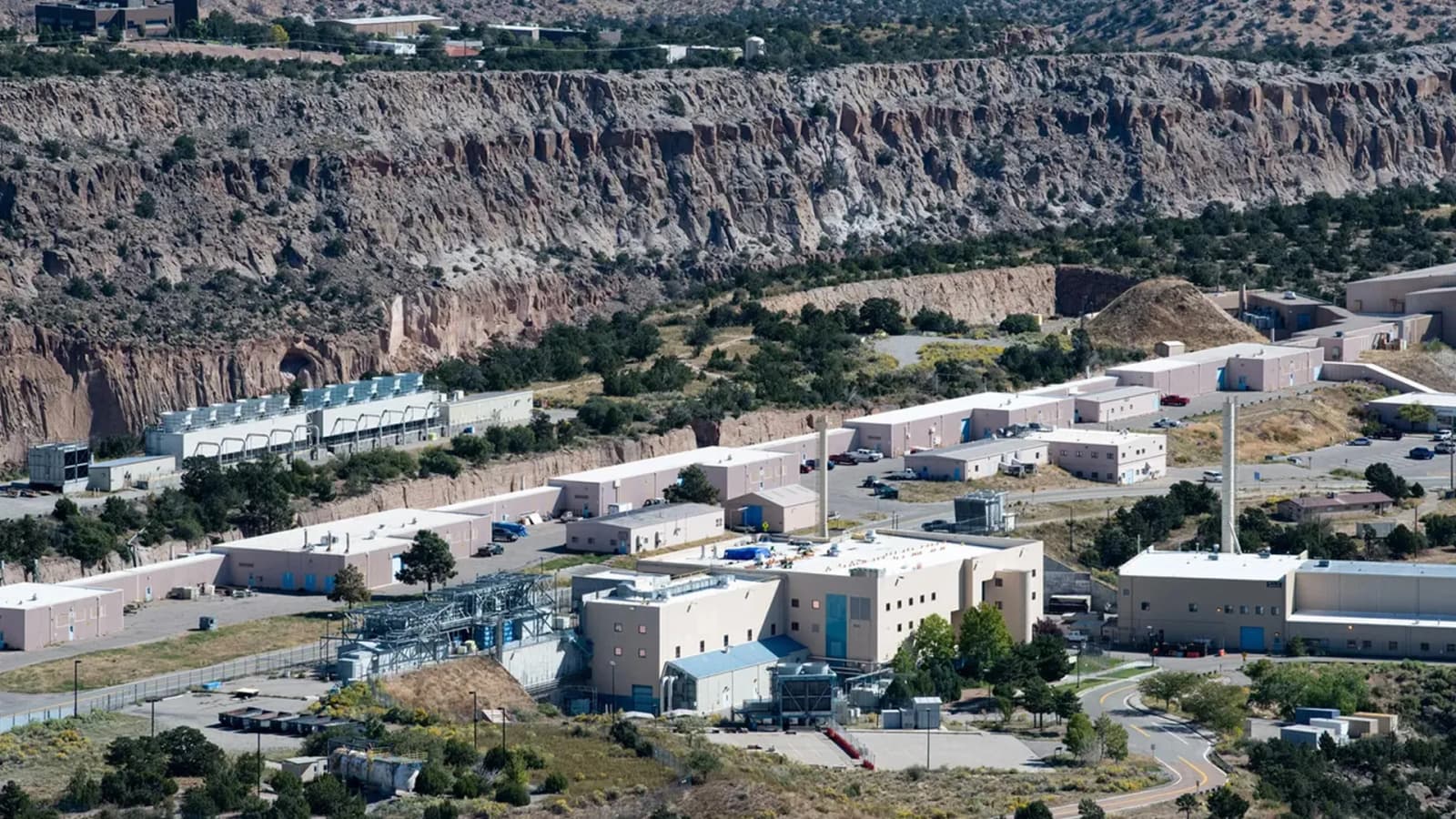
For more than five decades, the Los Alamos Neutron Science Center (LANSCE) in New Mexico has supported research that depends on specialized accelerator technology.
It has allowed scientists to conduct materials research and highly advanced experiments involving neutron scattering and dynamic proton radiography.
However, much of the infrastructure powering these experiments dates back to the facility’s initial startup. As a result, some systems are approaching the end of their operational lives, creating a challenge for scientists who rely on the facility’s capabilities.
The LANSCE Accelerator Modernization Project (LAMP) has now received approval to begin designing a major upgrade, aiming to preserve these capabilities and keep the facility operational until 2050.
The National Nuclear Security Administration (NNSA) granted LAMP Critical Decision-1 (CD-1) approval on June 1, with authorization from the US Deputy Secretary of Energy.
“CD-1 gives us a clear path forward, ensuring LANSCE will continue delivering the world-class accelerator capabilities our national security mission requires,” Charlie Nakhleh, deputy Laboratory director for Weapons at Los Alamos National Laboratory (LANL), said.
This milestone will allow the project to enter its design phase, where engineers will develop plans to replace and modernize multiple systems in LANSCE’s front end.
Replacing obsolete systems and components
LANSCE’s aging infrastructure has become increasingly difficult to maintain. In recent years, its systems have shown signs of wear, including end-of-life failure indications and increased downtime affecting the availability and quality of particle beams.
The facility is also the last US accelerator using certain high-voltage generator technology. Critical components, including the drift tube linac, have required extensive repairs. A significant failure in 2019 even led to emergency intervention.
LAMP will address these problems by replacing the accelerator’s front end with modern ion sources and other components. The project is designed to improve reliability, reduce maintenance requirements, enhance worker safety, and extend the facility’s operational life.
“Moving into the design phase is a crucial step toward addressing aging infrastructure challenges so that the facility can consistently exercise the experimental capabilities that address national security needs and important scientific challenges,” Pat Fitch, deputy Laboratory director for Science, Technology and Engineering at LANL, said.
A mix of capabilities found nowhere else in the nation
The challenge extends beyond maintaining an aging accelerator. LANSCE brings together an integrated suite of experimental capabilities that the laboratory describes as unique within the US.
These include dynamic proton radiography, materials science, neutron scattering, and nuclear physics, all operating at a facility authorized to use hazardous materials and handle classified data.
This combination supports weapons component qualification for stockpile sustainment, advanced manufacturing initiatives involving modern and aging components, nuclear data generation for simulation and modeling, and radiochemistry research related to nuclear weapon science and threat assessment.
LAMP is intended to maintain these experimental capabilities while improving the infrastructure that supports them. The modernization project has an estimated cost of $687 million to $1 billion and will serve both NNSA and non-NNSA customers.
“The LANSCE modernization helps ensure we can continue delivering on mission-relevant science for decades to come,” Fitch said.
Related articles
China fears US deployment of space weapons raises risks of fresh arms race: Report
The United States has publicly acknowledged that it has weapons deployed in orbit, marking a...

Trump wants ‘AI Force’ to keep US AI race moving, push ahead with modern tech despite concerns
President Donald Trump says he plans to create an “AI Force” and appoint a new...
Scientists transport 92 antiprotons by road for first time, store them in vessel for over a month
Scientists succeeded in transporting antiprotons by road for the first time in a purpose-built trap...

A mathematical rule against disagreement survives beyond quantum mechanics
Two people can examine the same evidence and reach different conclusions. However, if they share...

Volkswagen electric bus sets Guinness World Record, drives 62,000 miles across 92 countries
A Volkswagen ID. Buzz has completed a 99,767-kilometer (roughly 62,000 miles) journey through 92 countries...
Low-cost US interceptor destroys drones without jamming their signals
A US defense startup has tested a low-cost interceptor missile designed to physically destroy small...