Airbus U.S. hands off an unmanned UH-72 to operators more than 12 miles away in test
Airbus U.S. Space & Defense has shown that its unmanned UH-72 Logistics Connector can be...
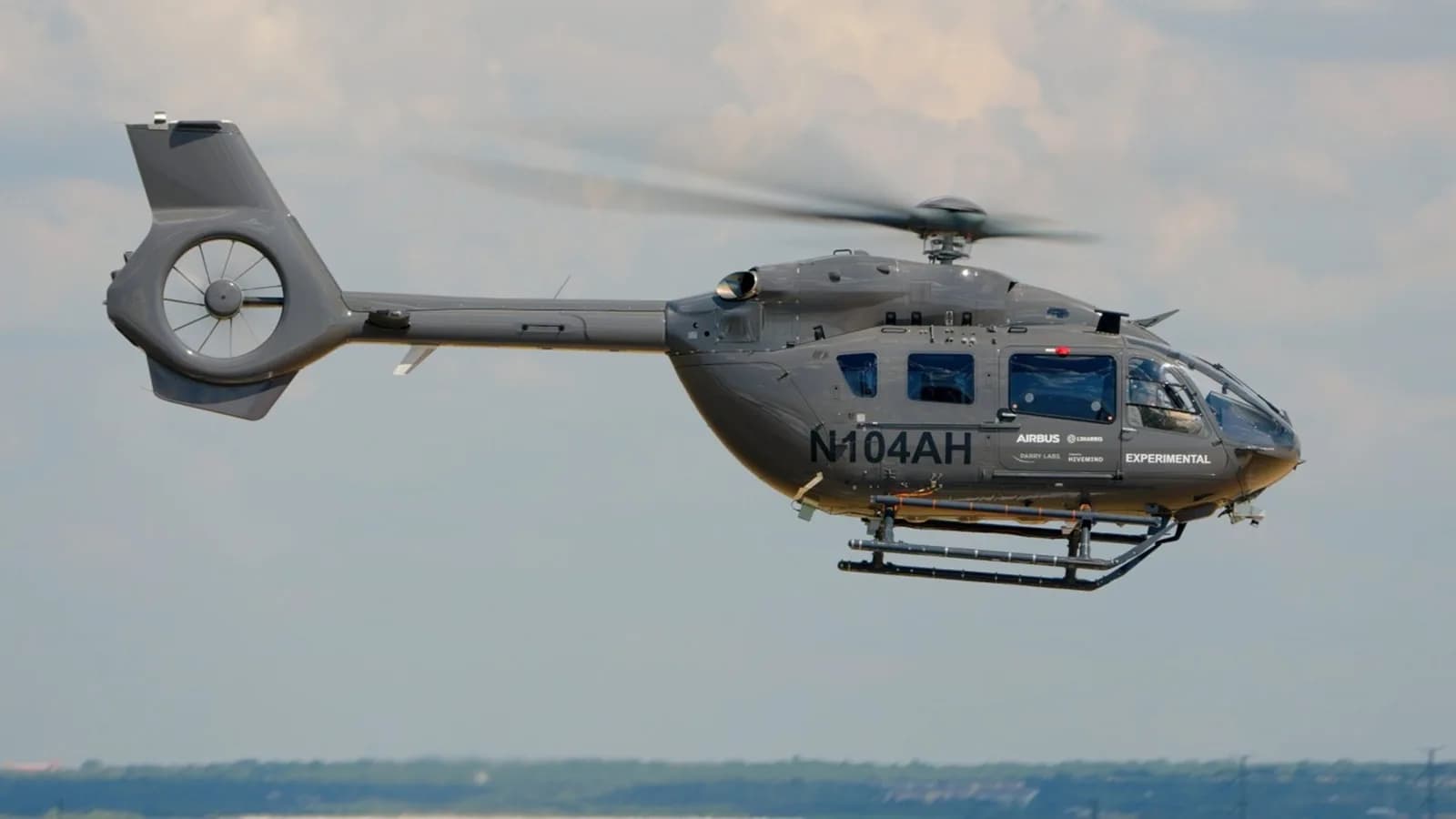
Airbus U.S. Space & Defense has shown that its unmanned UH-72 Logistics Connector can be flown by operators in separate locations, completing the aircraft’s seventh flight test. Shield AI, L3Harris Technologies and Parry Labs partnered on the test, which Airbus announced Oct. 28.
The helicopter is a variant of the UH-72 Lakota, and the work supports the Marine Corps’ Aerial Logistics Connector effort. Airbus lists the aircraft as the MQ-72C Lakota Connector.
Control passed across distance
During testing last month in Grand Prairie, Texas, personnel more than 12 miles (20 kilometers) from the primary flight test team took control of the aircraft. They commanded it through a series of autonomous behaviors and then transferred control back to the primary ground control station.
A Man-Packable Control System tablet made the handoff possible, letting geographically separated operators assume control of the aircraft. Building on earlier tests, the team concentrated on improvements to the aircraft’s ground control station.
Airbus says the demonstration validated the system’s ability to support aircraft operations from dispersed locations, which it called an important capability for future distributed logistics operations.
More autonomy improvements
The team also reported improved precision in autonomous takeoff and landing and better beyond-line-of-sight (BLOS) connectivity. Beyond-line-of-sight links let operators command an aircraft even when it is out of direct view. The team also validated thermal-management modifications designed to prepare the aircraft for high-temperature environments.
CEO Alex Veneziano said the test is a step toward giving Marines “the flexibility to move critical supplies where they are needed most.”
Aircraft specs from Airbus
Airbus has previously described the Logistics Connector as being based on the H145/UH-72 platform, a light twin helicopter used by commercial, public and military customers worldwide. The company says the unmanned version can carry nearly 2 tons of cargo, such as standard containers and mortar, at high speed over operationally relevant ranges.
Airbus figures published in 2024 list a range of nearly 350 nautical miles (about 400 miles) and a maximum takeoff weight of 8,378 pounds (3,800 kilograms). The same figures give an operating altitude of up to 20,000 feet and a cruise speed of 135 knots, about 155 mph.
Airbus says a modular open systems approach (MOSA) and a digital backbone help avoid vendor lock and obsolescence, while open autonomy allows best-of-breed technology.
Where program stands
Airbus U.S. is in the third year of the Aerial Logistics Connector Middle Tier of Acquisition (MTA) Rapid Prototyping Program. The program aims to give the Marine Corps aircraft prototypes for a series of operational demonstrations and experiments.
NAVAIR awarded Airbus U.S. a Phase I Other Transaction Authority agreement in April 2024, through the Naval Aviation Systems Consortium, based on its unmanned Logistics Connector concept.
Airbus reported its first demonstration for the program in October 2024, held at Marine Corps Air Station New River and Marine Corps Base Camp Lejeune. That demonstration assessed the aircraft’s performance characteristics and validated its ability to transport specialized cargo, tied to Marine Corps requirements for expeditionary advanced base operations.
Airbus has described the program’s goal as evaluating options for delivering essential payloads to distributed forces in austere and contested environments. The effort is one of several Department of Defense initiatives aimed at delivering logistics support in distributed environments during peer or near-peer conflicts.
Get the latest news delivered to your inbox.
Related articles