Airscope: World’s smallest wearable brain monitor tracks 8,500 neurons wirelessly
Chinese researchers have built a wireless microscope that weighs just one gram yet can image...
This story was prepared automatically by software.
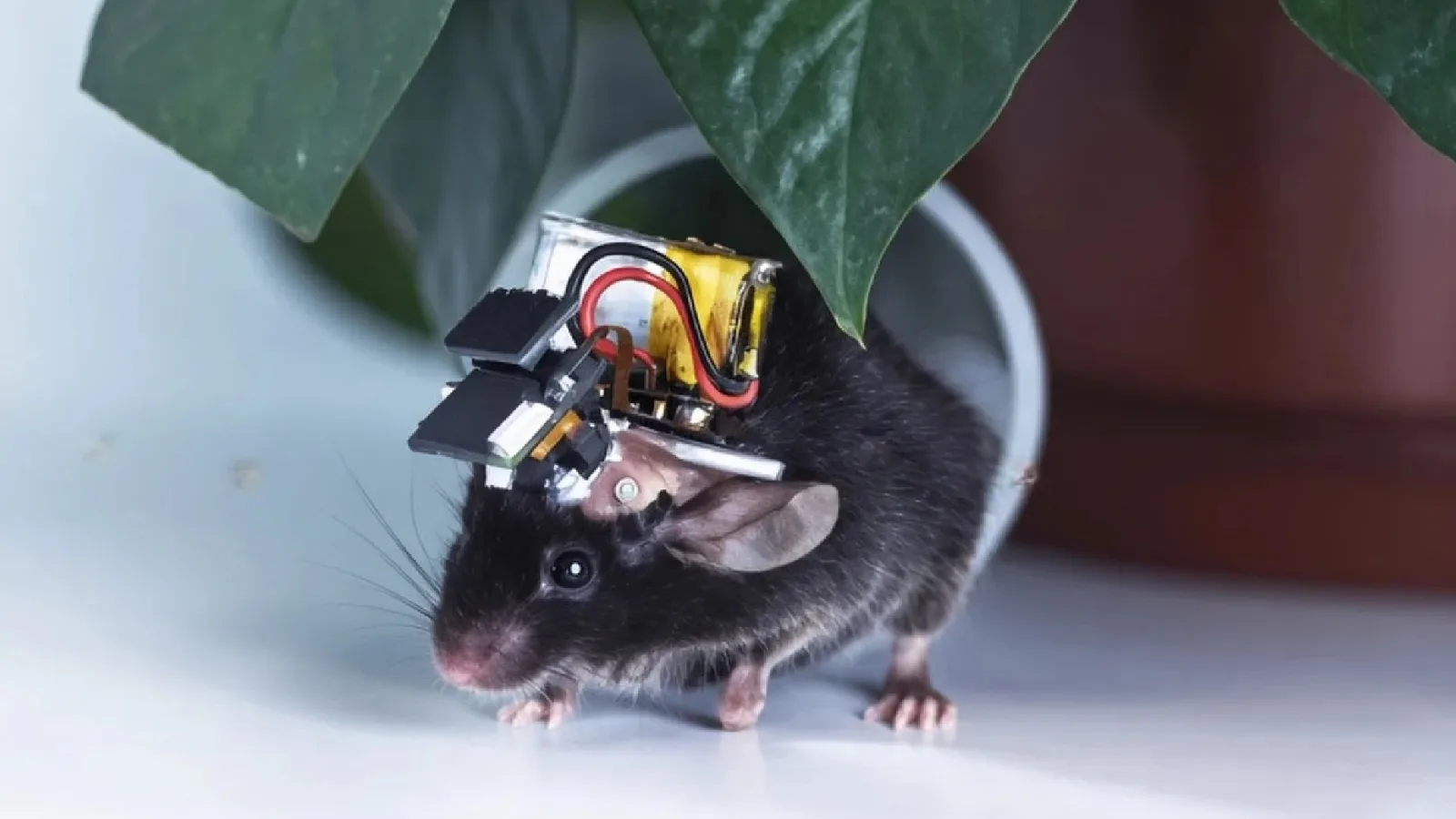
Chinese researchers have built a wireless microscope that weighs just one gram yet can image more than 8,500 neurons across a mouse’s cortex while the animal runs, climbs and socializes freely, according to a paper published Monday in Nature.
The device, called Airscope, was developed by a team from Tsinghua University and the Chinese PLA Medical School, which bills it as the lightest device of its kind. Dai Qionghai, the paper’s corresponding author at Tsinghua, said it should push optical brain-computer interfaces toward more precise neural detection.
Why weight matters
Understanding how large populations of neurons across the brain drive complex behavior in natural and social settings is a core challenge in neuroscience, Global Times reported. Head-fixed or wired systems restrict movement and can distort behavior, while earlier wireless devices have been too heavy and offered too narrow a view.
Conventional head-mounted miniature microscopes typically weigh more than 3 grams, said Wu Jiamin of Tsinghua, a member of the team. Airscope weighs 1 gram without its battery, more than 30% lighter than comparable devices, according to the researchers.
What is inside
Airscope pairs a 2-megapixel sensor with an optical system of just four aspheric lenses. That makes it 2.84 times shorter than previous miniaturized microscopes while matching the neuron yield of benchtop mesoscopes. It images at single-cell resolution, about 4 micrometers, across a 6-millimeter (0.24-inch) field of view at 12.5 frames per second. Data compression lets it stream megapixel images wirelessly, and a magnetically attached, swappable battery supports long recordings.
More neurons, longer recordings
The device records calcium activity from more than 8,500 neurons in a single mouse, 25 times what existing wireless devices manage. It can keep stable recordings from the same brain region for more than 200 days, with signal quality comparable to a conventional benchtop microscope, Global Times reported.
What the mice revealed
The team used Airscope to record mice in a naturalistic habitat of about 5 square meters (54 square feet) and as they explored a large maze with 32 terminal arms. Cortical activity varied systematically with the terrain the mice met, Wu said. Paired with a behavior-analysis tool, the device also worked in room-sized arenas and swimming tests, and recorded several animals at once.
In experiments described in the journal Nature, activity patterns across the dorsal cortex correlated with behavioral signs of social dominance, and population activity could prospectively decode which of two mice would win a competition. Researchers also saw patterns tied to reward locations in the maze. With two Airscopes on one animal, they recorded brain and spinal cord together and characterized influence from the spinal cord to the cortex during fear conditioning.
Zhang Yuanlong, a Tsinghua assistant professor, said the device lets animals move more freely so that large-scale neural recordings can accompany a wider range of natural behaviors.
What comes next
Dai said Airscope offers a new tool for studying the neural basis of intelligence, and that it could later extend to immunology and oncology, enabling tracking of disease progression. The Nature version is an early online release and may be edited before final publication.
Source: https://interestingengineering.com/innovation/china-airscope-1-gram-wireless-brain-monitor-mice
Related articles