
Anthropic grants METR researchers employee-like access for independent AI evaluations
Anthropic said on October 15 it has onboarded six METR employees with company hardware, office space and internal-tool access roughly on par with its own risk teams, and that METR can publish assessments Anthropic cannot veto.

Anthropic on October 15, 2026 said it has started giving employee-like access to a team of six researchers from METR, a nonprofit that evaluates frontier AI models, according to the company's blog and reporting by TechCrunch and Reuters.
What “employee-like access” means
METR staff received Anthropic-issued hardware, office space and access to internal tools roughly on par with the company's own risk-assessment teams. Outside a small set of defined categories — customer data, attorney-client privileged information, and information about model architectures — Anthropic employees are encouraged to share information with them as they would with a colleague working on alignment risk.
METR will publish analyses of Anthropic's risk levels, incidents or practices. Anthropic cannot veto publication, though it can require redactions for those narrow categories. METR may publicly characterize whether it believes redactions were justified, without revealing the redacted material.
A three-tier evaluator system
Anthropic is building three tiers of evaluator access. Tier one covers narrowly scoped investigations that need Anthropic's approval to publish. Tier two adds more information and publication without approval (subject to narrow redactions). Tier three is the METR arrangement with employee-like access.
The company said it is also working with SecureBio and Accenture (with Faculty), and is in early talks with others including Hugging Face. SecureBio is reviewing the chemical and biological weapons chapter of Anthropic's August Risk Report under more limited publication rights for now.
Why now
The move follows Anthropic's September commitment to stronger third-party assessment and the White House Accord on Super Intelligence, in which labs pledged to partner with independent evaluators. Anthropic likens the setup to resident bank examiners inside large banks. CEO Dario Amodei floated embedded evaluators in a September essay; TechCrunch noted OpenAI quickly pledged a similar approach.
«We want to be publicly accountable for the decisions we're making,» Anthropic wrote. «We aim to close the gap between what evaluators understand about a frontier AI company's systems and what the company itself understands.»
Sources: Anthropic, TechCrunch, Reuters (via Investing.com).
Related articles
New nuclear waste sensor detects 100 kHz vibrations, could help spot canister cracks
Researchers at the University of Pittsburgh have demonstrated a fiber-optic sensing system capable of detecting...
World’s first fast-spectrum molten chloride reactor experiment nears critical testing
A nuclear experiment backed by the U.S. Department of Energy could deliver crucial operating data...
US Military drones tap 150,000 radios in push to beat battlefield jamming threats
L3Harris Technologies and Skydio are integrating military drones with tactical radio technology to help U.S....
Google DeepMind shows Antigravity finding a novel antimicrobial peptide candidate
In an October 15 technical walkthrough, Google DeepMind described how biologists used the Antigravity agentic science workbench to identify a 97-amino-acid bacteriocin candidate now entering wet-lab validation.
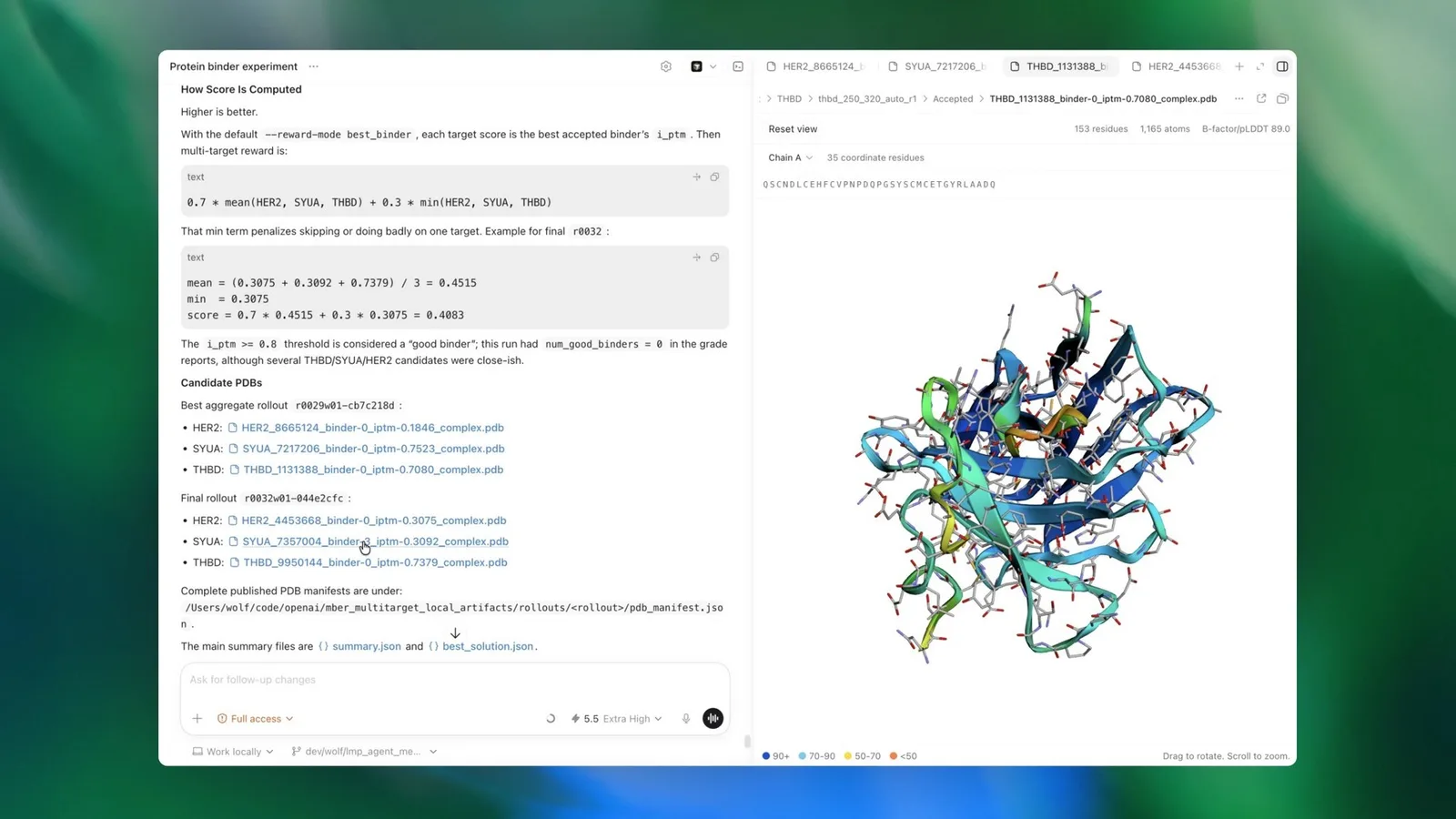
OpenAI launches Rosalind Academic Plan for U.S. university life-science labs
OpenAI on October 15 introduced the Rosalind Academic Plan, offering eligible U.S. university labs sponsored access to GPT-Rosalind and life-sciences research tools under a trusted-access review.