Staff at US AI safety center CAISSI asked to report informally to the White House, raising independence concerns, AP reports
Officials at the Commerce Department's Center for Advancing Innovation and Standards for Super Intelligence were recently asked to informally report to a White House office, the Associated Press reported. The center lacks a permanent leader and has stopped publishing its safety research.
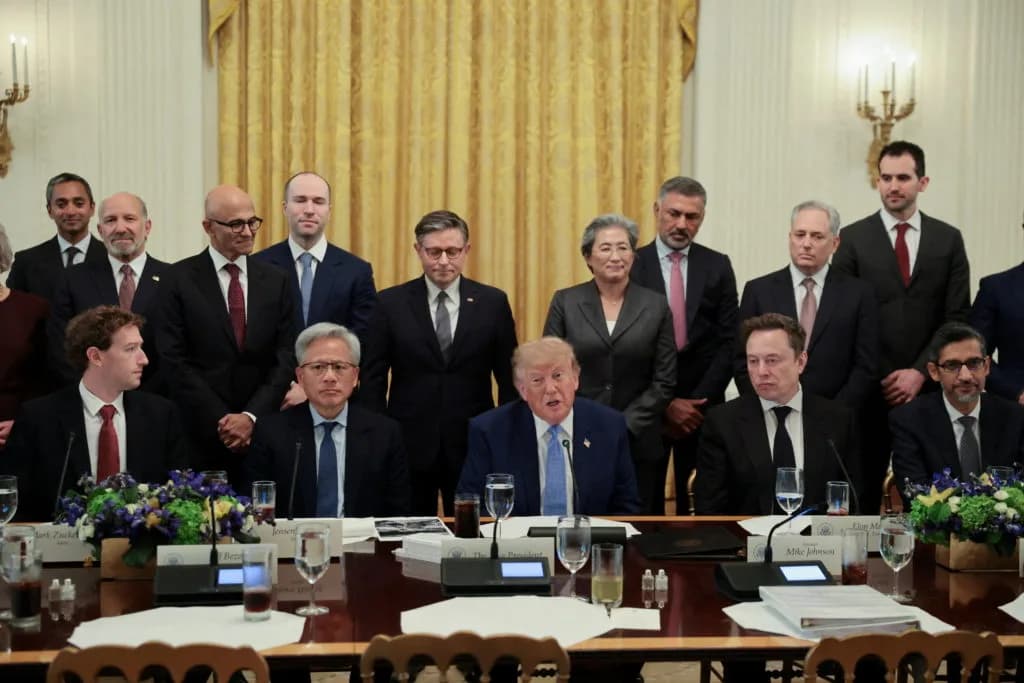
Officials at the Center for Advancing Innovation and Standards for Super Intelligence (CAISSI), the Commerce Department division charged with assessing the safety of new AI systems, were recently asked to informally report to an office of the White House, the Associated Press reported on November 8. The AP cited two former government officials with knowledge of the ongoing conversations, who spoke on condition of anonymity to avoid repercussions for current staff.
The state of the center
According to the AP, CAISSI — until recently called the U.S. Center for AI Standards and Innovation — is allocated $10 million a year, about one-eighth of the annual budget of its counterpart in the United Kingdom. In April, the division's director was hired and then fired within days; his replacement lasted a few months before resigning. The center has been without a permanent leader since, although the head of its parent institute doubles as acting director.
In August, Congress began asking why the center had stopped publicly releasing its reports on how safely certain AI systems were performing. By then OpenAI had also asked policymakers to put more money and support behind the division, the AP reported.
Concerns and counterarguments
Critics worry that the executive branch could politicize decisions affecting everything from cybersecurity to bioweapons, and that the center's findings could be altered or muted in deference to the tech industry. Caroline Siegel Singh, an AI and emerging technology program manager at the Federation of American Scientists, told the AP that the hope is for nonpartisan or bipartisan technocratic experts to set policy in the public interest. Amos Toh, a senior counsel at the Brennan Center for Justice, said such decisions "are of immense public consequence and should be explained and rationalized in the public eye."
Others argue that bringing AI safety officials closer to the orbit of President Donald Trump could give the division more prominence, and possibly more funding.
The White House did not respond to specific questions about CAISSI. In a statement, it said Trump had formally established his new Super Intelligence Force and commissioned a report on risks from his Council of Advisors on Science and Technology. The AP reported that Director of National Intelligence Jay Clayton leads the force.
Sources: Associated Press, PBS News / AP
Get the latest news delivered to your inbox.
Related articles