Big Pharma says AI is cutting early drug discovery timelines by as much as half
GSK, Novartis, Eli Lilly, Novo Nordisk, AstraZeneca, Sanofi and Bristol Myers Squibb told Reuters that AI has cut the time needed to produce new molecules and move them into the clinic by up to half, as Anthropic pushes deeper into drug discovery.
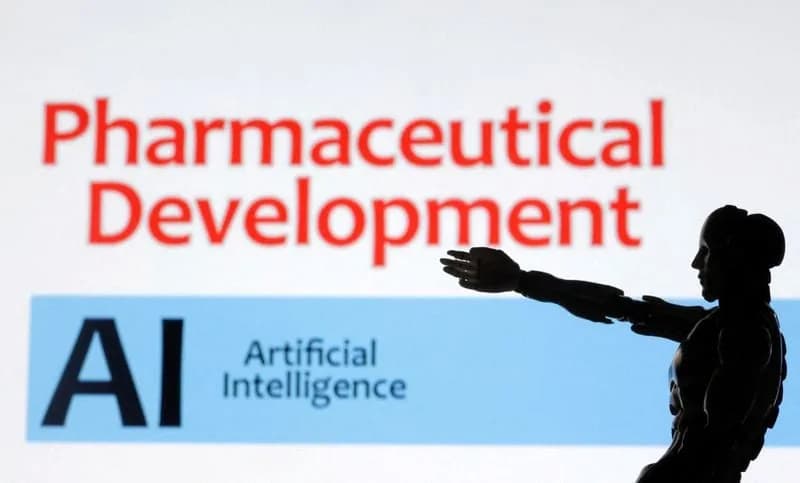
Artificial intelligence has sped up early-stage drug development at some of the world's largest pharmaceutical companies this year, cutting by as much as half the time it takes to produce new molecules and move them into the clinic, their top scientists told Reuters in a report published on November 20.
GSK, Bristol Myers Squibb, Novartis, Eli Lilly, Novo Nordisk, AstraZeneca and Sanofi say they have moved beyond routine uses such as preparing regulatory filings and now use AI to design molecules, pick the most promising candidates and identify safety risks. “There is no part of the discovery through development pipeline where we are not using AI,” AstraZeneca executive Sharon Barr said.
Concrete results
- Sanofi said it saved at least a year developing asthma treatment lunsekimig by using an AI-enabled approach that let it skip a dose-selection study.
- Novo Nordisk said AI cut its design-make-test cycles for new molecules from about eight to three, and halved each cycle from eight weeks to four.
- Novartis said the average time from project start to drug candidate has fallen from three years to about 18 months to two years.
- Bristol Myers said one of its sickle cell anemia candidates would not have been developed without its AI systems.
Anthropic: rival or partner?
Anthropic, which went public this week, has opened its own laboratory and launched research software called Claude Science. CEO Dario Amodei has said AI can substantially accelerate clinical and experimental processes. Lilly's Aliza Apple, who runs its TuneLab platform, said claims that AI can cure all disease overstate current capabilities: “It would be great for them to cure one, and then let's talk about the rest.”
Drugmakers differ on how they view the AI labs: GSK sees Anthropic as “another competitor,” while Bristol Myers and Novo see AI companies more as partners. Novo and Sanofi said they do not give proprietary data to frontier labs for model training. The number of AI-enabled drugs in clinical testing has risen only incrementally, with researchers counting 129 candidates across 69 companies as of March.
Sources: Reuters
Get the latest news delivered to your inbox.
Related articles