China’s Moonshot AI launches Kimi K3.1 Pro and deliberately curbs the open-weight model’s hacking ability
Beijing-based Moonshot AI has released Kimi K3.1 Pro, a 3-trillion-parameter-class model whose weights it plans to publish by November 4, saying it removed cyber-related training data to keep the open release below the frontier of offensive cyber capability.
This story was prepared automatically by software.
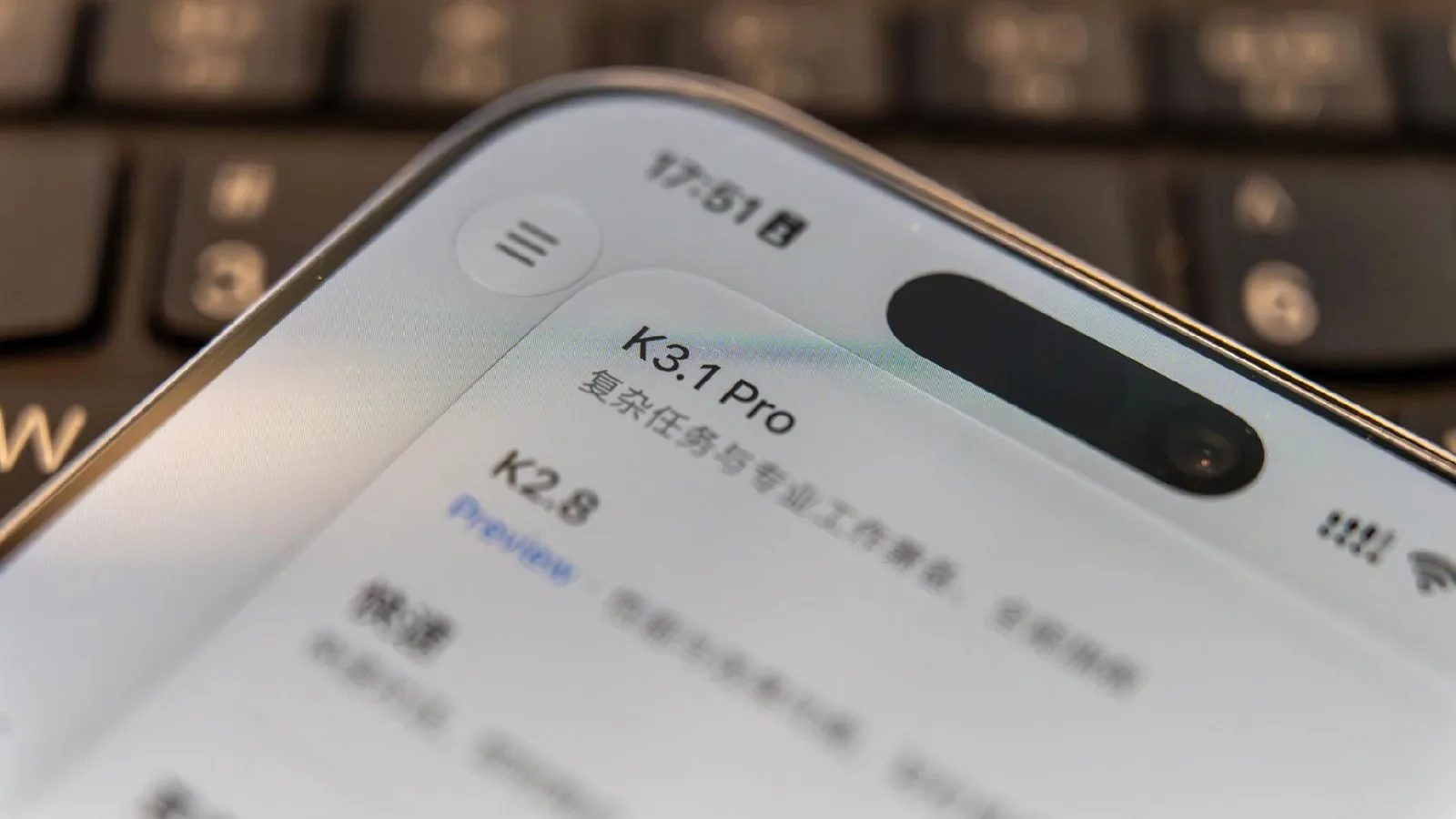
Chinese AI startup Moonshot AI on October 23 introduced Kimi K3.1 Pro, which it describes as its most capable 3-trillion-parameter-class open-weight model, and said it will publish the full weights by November 4. As Reuters highlighted, the company also said it had deliberately reduced the model's cyber-offensive capabilities.
The model
K3.1 Pro is a post-trained version of Kimi K3, which Moonshot fully open-weighted in July, with substantially more post-training compute and a 1-million-token context window. A K3.1 Pro Highspeed variant runs two to three times faster. Both are available on Kimi.ai, Kimi Work, Kimi Code and the Kimi API.
On Terminal-Bench 4.0, which tests coding agents on realistic terminal tasks, Moonshot reports a score of 65.7%, ahead of OpenAI's GPT-6 Astra (58.2%) and just behind Anthropic's Claude Opus 5.5 (66.4%); these are company-reported figures. CGTN reported that independent tester Artificial Analysis ranked K3.1 Pro fourth on its Intelligence Index with 55, and said that once the weights are out it will be the highest-scoring open-weight model, narrowing the gap with the best proprietary systems from 12 points to 3. Pricing is $2 per million input tokens and $10 per million output tokens.
Curbing cyber capability
In its technical blog, Moonshot said it saw vulnerability-research performance rising steadily as post-training scaled and traced it to cyber-related content in the mid-training corpus and cyber tasks in its reinforcement-learning environments. For the open-weight release it removed that data from both stages while keeping general coding tasks. On its internal xdev-bench-hard exploit benchmark, a checkpoint without these measures solved 90.5% of problems, against 81.0% for the final model. Reuters noted the results have not been independently verified.
"We aim not to release open weights that would extend the absolute frontier of cyber capability," the company said. Moonshot argues open models can improve security by letting more organisations audit their own software, including neglected legacy systems, but Reuters noted that once weights are widely distributed, a developer has far less ability to restrict access, monitor use or update safeguards than with a hosted service.
The move comes after China last week proposed export controls that would ban exports of AI-driven malware-generation technology and restrict AI-assisted vulnerability-discovery tools. The draft remains open for public comment.
Sources: Reuters, Moonshot AI (Kimi), CGTN. Image: VCG (via CGTN).
Related articles