Chinese scientists build 100-channel single-photon detector for quantum internet
Researchers at the Shanghai Institute of Microsystem and Information Technology (SIMIT) in China have built...
This story was prepared automatically by software.
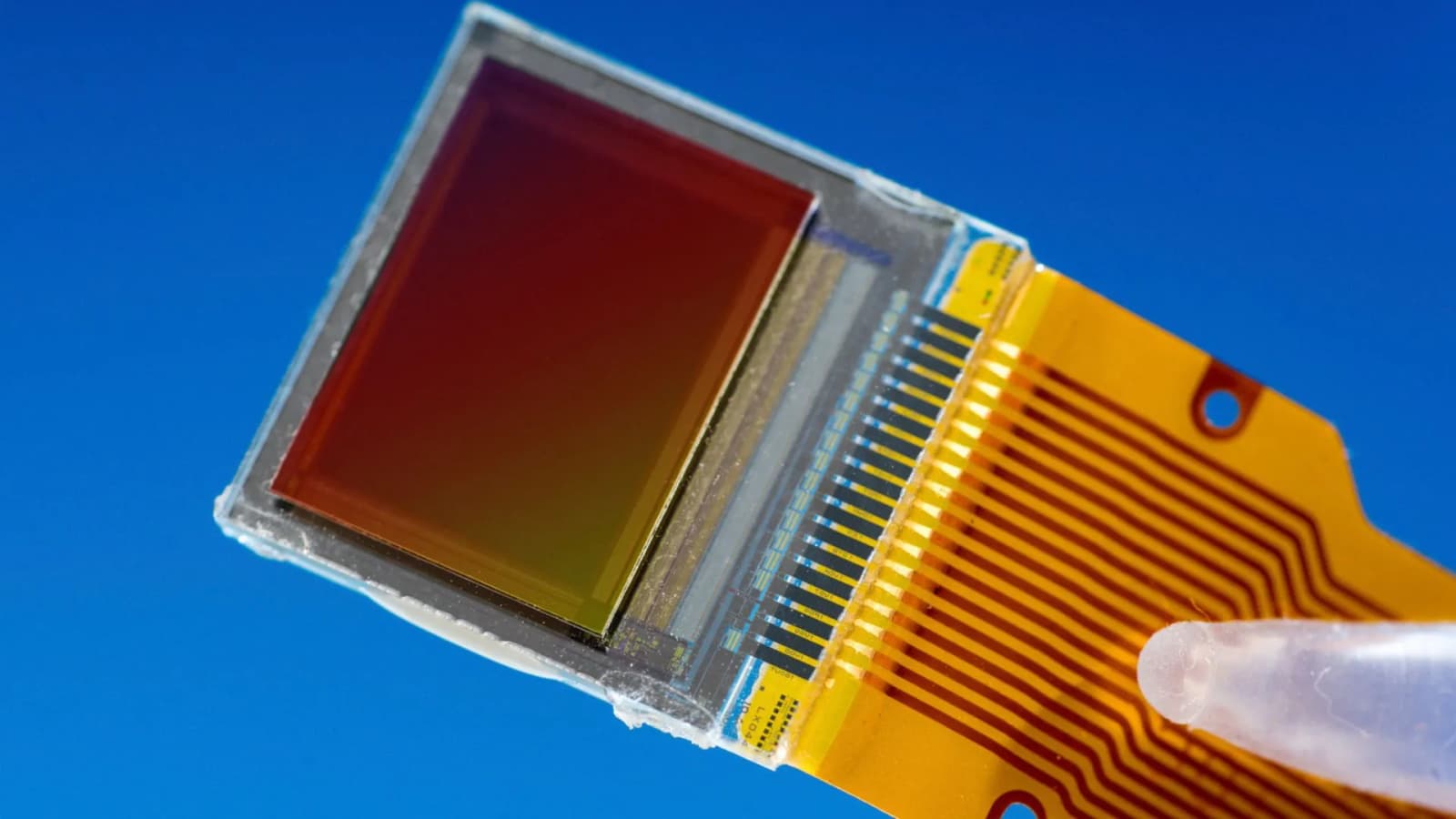
Researchers at the Shanghai Institute of Microsystem and Information Technology (SIMIT) in China have built a 100-channel single-photon detector that opens the door to developing broadband quantum-based networks in China. A prototype network tested with this detector showed communication fidelity of over 90 percent.
With advances in quantum computing and sensing technologies, there will soon be a need for a quantum information network. Although different approaches are being tested for such a network, one that closely resembles existing optical fiber networks is likely to be adopted due to its ease of transition.
Single-photon detectors or SPDs are critical components of such networks since they facilitate the measurement of photons, or individual light particles, that can be used to store quantum information.
SPDs can help in deploying fiber optic or space links for quantum data transfer while also helping facilitate quantum entanglement or teleportation by transferring quantum states to photons.
Challenges of using SPDs
For quantum technologies to evolve and scale, we also need to develop SPDs with higher capacities. Currently, there are two types of SPDs that are being used for quantum research.
Superconducting nanowire single-photon detectors (SNSPDs), are high-end optoelectronic devices that are extremely precise in their detection but need ultracold temperatures for operation.
Single-Photon Avalanche Diodes (SPADs), on the other hand, can work at room temperature but do not offer high accuracy. This is why SNSPDs are preferred.
However, the ultracold temperature requirements of SNSPDs present other challenges. For readouts, the SNSPDs are connected to instruments that are maintained at room temperature.
This is achieved with coaxial cables that are relatively thick and built with thermally conductive metals. These cables allow room-temperature heat to travel into the cryogenic chamber where the SNSPD operates; this is known as thermal load.
As the number of detection channels inside a SNSPD increases, the number of cables needed to read out the signals also increases, which then increases the thermal load. The workaround for this has been to limit the number of detectors to 32, which is the standard when it comes to SPDs.
A 100-channel SPD
To overcome this, researchers at SIMIT performed a comprehensive redesign of the SNSPD and replaced the coaxial cables with special flexible materials called high-density multi-core microstrip lines.
These lines are not just ultrathin but also thermally insulating, so the heat they send back to the cryogenic chamber is minimal. According to the SIMIT team, the heat that entered the system was one twenty-first that of the traditional cables.
This allowed them to add more independent channels to the SPD while also maintaining long-term stability and not significantly increasing the size of the SPD.
To test their design, the researchers ran the SPD round the clock for seven days and yet the temperature of the cryogenic chamber stayed below 2.1K, very close to the absolute zero temperature of 0K (-273.15 degrees Celsius).
During the test, the channels demonstrated detection efficiency of 80 percent while also reporting extremely low false positives, the researchers noted in a paper.
For a more real-world scenario comparison, the team built a five-user quantum entanglement distribution network with 10 two-way quantum links.
Each user received photons using the newly developed channels of the SPD, and communication fidelity, or the preservation of quantum information, was found to be more than 90 percent, the paper added.
The research findings were published in the journal Laser & Photonics Reviews.
Source: https://interestingengineering.com/science/100-channel-single-photon-detector-quantum-internet
Related articles