Fuel from landfill waste can bring down carbon emissions in the cement industry
Australian researchers said non-recyclable landfill waste could help produce low-carbon cement. Using refuse-derived fuel (RDF)...
This story was prepared automatically by software.
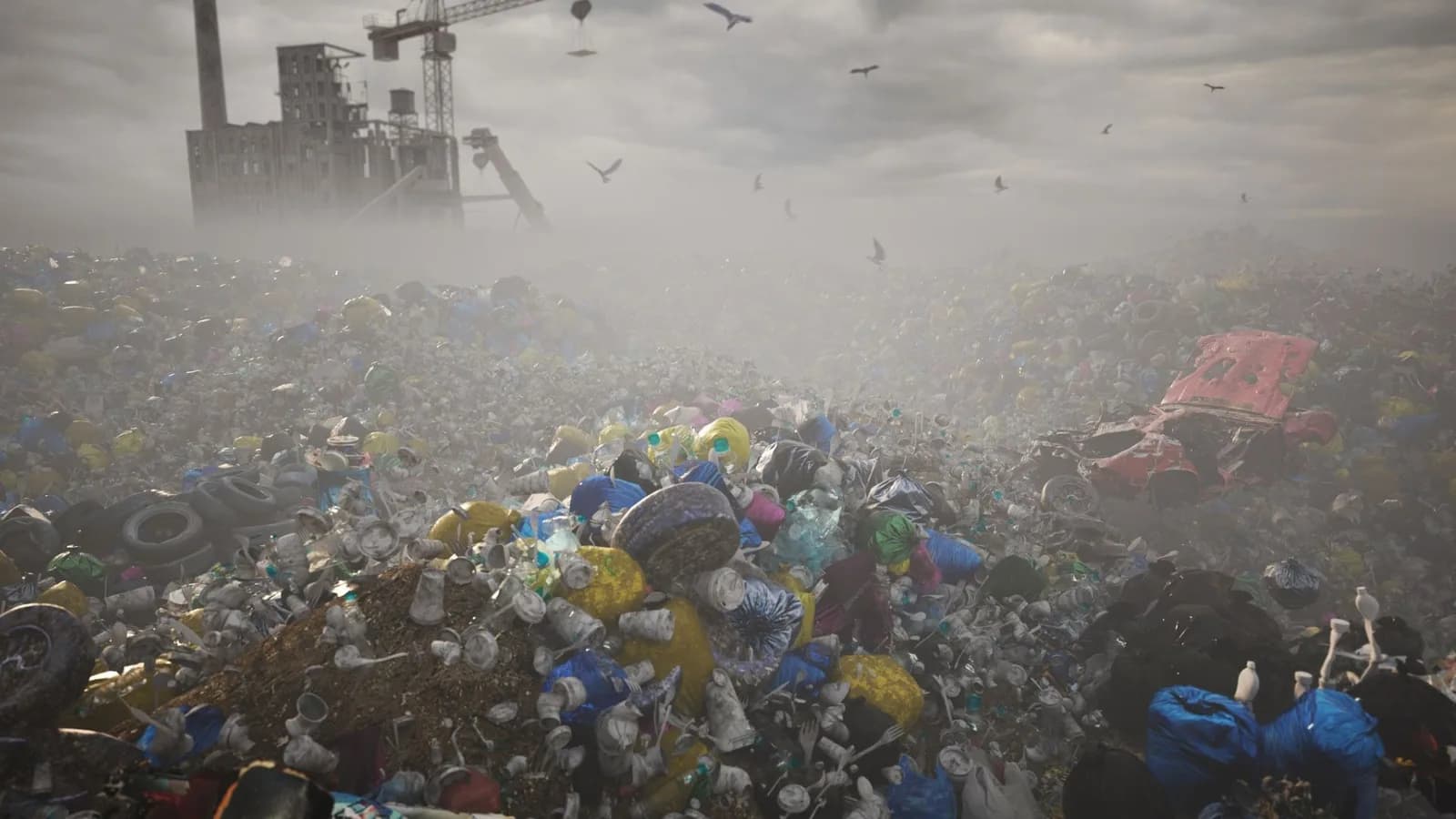
Australian researchers said non-recyclable landfill waste could help produce low-carbon cement.
Using refuse-derived fuel (RDF) to produce cement could help reduce the carbon footprint of the industry, which relies heavily on fossil fuels.
The researchers said clearer standards would be essential to support wider and more responsible use of waste-derived fuels.
Australian researchers said non-recyclable landfill waste could help produce low-carbon cement.
Using refuse-derived fuel (RDF) to produce cement could help reduce the carbon footprint of the industry, which relies heavily on fossil fuels.
Cement manufacturing accounts for an estimated 8% of global carbon dioxide emissions, largely because key ingredients must be fired in massive kilns at extreme temperatures.
Researchers are turning to waste as fuel to decarbonize cement manufacturing.
RDF is made from processed non-recyclable waste. Cement kilns can use these fuels alongside traditional fuels in a process called co-processing.
Waste to fuel
Researchers at the University of Adelaide studied whether fuel made from non-recyclable waste could make cement production cleaner and reduce waste sent to landfills.
They conducted a literature review of more than 200 research articles published between 1991 and July 2025.
The findings showed growing interest in RDF as a way to reduce landfill waste and cut fossil fuel use in cement production.
Based on her analysis, Geethmi Thisakya, a PhD candidate in the School of Civil Engineering and Construction at the university, said that waste management could be linked with industrial decarbonization.
”Previous research has highlighted the potential of refuse-derived fuel to turn suitable waste materials into a useful resource rather than sending them to landfill,” she said.
Need for clear, consistent standards
However, she cautioned that a simple fuel replacement would not suffice.
For RDF to help cut carbon emissions, it will need consistent quality, clear regulations, and stronger evidence of its environmental and economic impacts, the study said.
The study also examined challenges that could affect the use of waste-derived fuels in cement production.
It found widespread confusion between refuse-derived fuel (RDF) and solid recovered fuel (SRF), a more standardized form of waste-derived fuel.
Although both can be used in cement manufacturing, inconsistent terminology and differing quality standards make it difficult to compare studies, interpret regulations, and ensure consistent fuel quality.
The researchers said clearer standards would be essential to support wider and more responsible use of waste-derived fuels.
“Cement manufacturers need confidence that alternative fuels will perform consistently, meet environmental requirements and support safe, reliable production,” Thisakya said.
However, she cautioned that more work is needed before the cement industry can confirm RDF as a reliable alternative to fossil fuels.
”Developing stronger quality assurance systems and clearer regulatory frameworks will help industry make informed decisions about using waste-derived fuels.”
The findings were published in the International Journal of Building Pathology and Adaptation.
Meanwhile, scientists at ETH Zurich are turning to some of the smallest living organisms on Earth to build sustainable cities, using biocement as an alternative to reduce the industry’s carbon footprint.
Researchers developed a 3D bio-printing process for biocement elements using a custom bio-ink made of water, natural gums, sand, and live bacteria.
In a second approach, they use a robotic arm to spray alternating layers of sand, bacteria, and mineralizing agents onto surfaces to produce biocement.
Source: https://interestingengineering.com/energy/cement-made-from-waste-carbon-footprint
Related articles