
Commercially viable fusion energy that delivers limitless clean power could be closer to reality
A British company has demonstrated the key fuel compression principle underpinning FLARE, its proprietary approach...
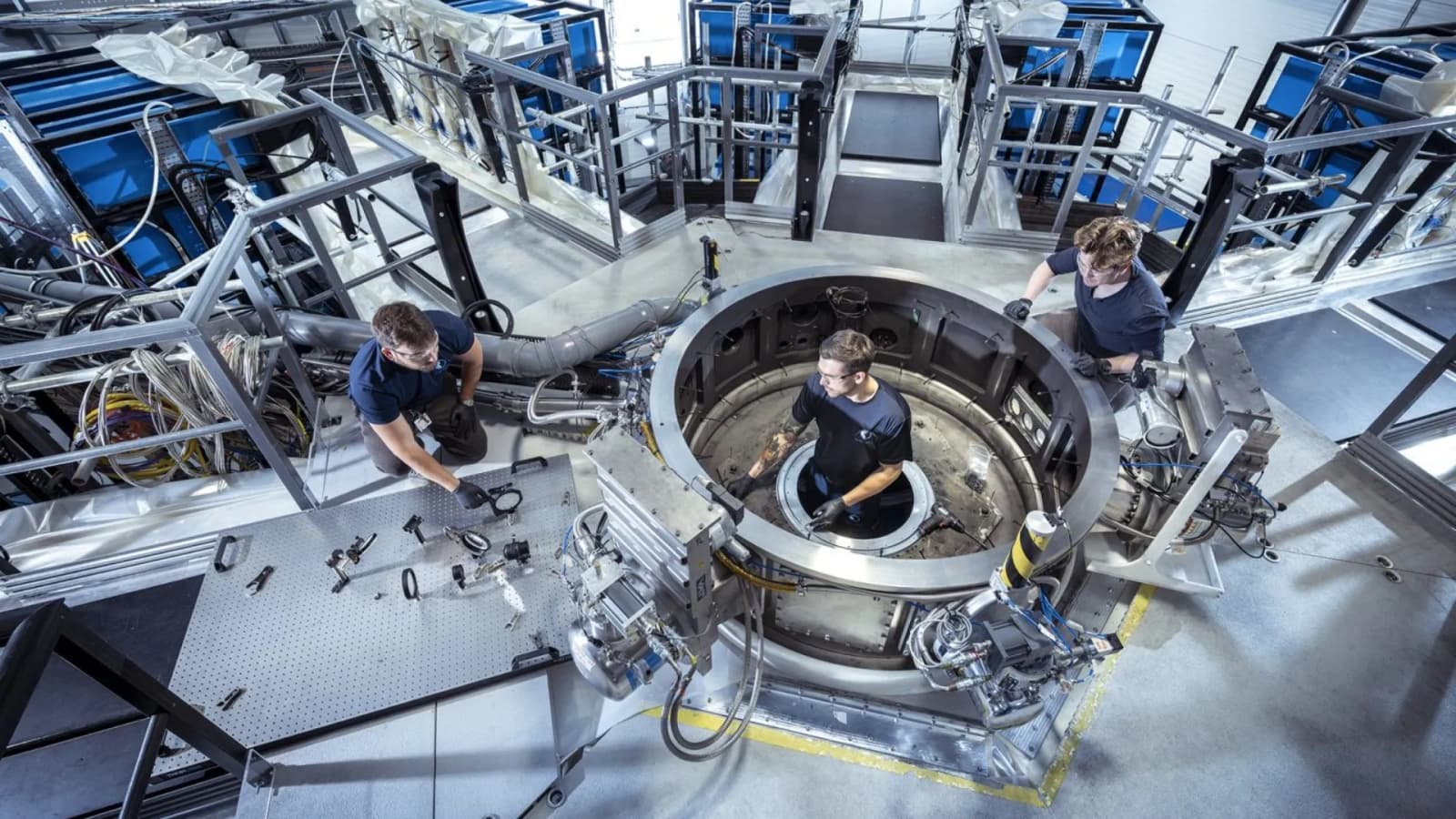
A British company has demonstrated the key fuel compression principle underpinning FLARE, its proprietary approach to inertial fusion. First Light Fusion showcased this approach in a series of experiments on M3, the company’s in-house pulsed power facility.
FLARE separates the two main steps needed for fusion: first compressing the fuel, then rapidly igniting it. Much like an engine compresses fuel before ignition, FLARE first assembles the fuel to high density before delivering a separate, rapid burst of energy to trigger fusion. The M3 experiments validate the first of these stages: compressing fuel to high density using a simple, lower power driver.
“This experiment validates a central principle of FLARE: that we can simplify the machine by putting more functionality into the target,” said Mark Thomas, Chief Executive Officer at First Light Fusion.
“Demonstrating controlled compression on M3 is an important step in reducing risk on our path towards commercially viable fusion energy.”
One of the central challenges in fusion is cost. The machines typically used to compress fuel must deliver enormous bursts of energy with exceptional precision. Repeating that process places significant stress on components, increasing operational and capital costs due to the risk of failure, maintenance requirements and downtime.
FLARE takes a different approach. Its multi shell target is designed to control much of the compression process itself, turning a relatively simple electrical pulse into a carefully timed series of shock waves. These progressively compress the fuel to high density without prematurely heating it, reducing the peak power and complexity required from the driver, according to a press release.
“First Light Fusion’s demonstration of the compression of materials to very high pressures, using multi-shell liners on a low voltage generator, represents a significant step on the path to validating the science behind the FLARE fusion concept,” said Prof. Jeremy Chittenden, Chair of First Light Fusion’s Science Advisory Board, and Professor of Plasma Physics and Director of the Centre for Inertial Fusion at Imperial College.
By shifting more functionality into the target, FLARE is designed to enable a simpler, more robust driver, reducing component stress, maintenance and downtime. Reducing the power, complexity and cost of the driver is central to First Light’s approach to making fusion commercially viable, and First Light estimates that the FLARE compression driver could ultimately cost an order of magnitude less than comparable inertial fusion systems, as per the release.
Experiment validates a central principle of FLARE
Platform demonstration is a major technical milestone
It was also revealed that the platform demonstration is a major technical milestone achieved following the company’s £25 million fundraise earlier this year. The experiments were not designed to demonstrate ignition or fusion gain, but to isolate and test this core compression principle. The next phase will build on this validated compression platform, moving towards fusion relevant fuel conditions and then integrated experiments combining compression with the rapid heating needed to trigger fusion.
Related articles

Hydrogen fuel cell that works without air targets long-duration Moon missions
US-based space power and energy systems developer Teledyne Energy Systems will work with NASA to...

Rugged 160W power supply handles -51°F to 140°F with 91% efficiency and IP67 rating
Advanced Energy has launched a 160-watt AC-DC power supply aimed at equipment operating in harsh...

Nuclear microreactors targeted to power US defense, advanced computing systems
US-based technology company NANO Nuclear Energy has teamed up with nuclear infrastructure integrator IP3 Corporation...

US’ top rival modernizes its most advanced stealth fighter jet, can operate in jamming environments
A Russian company has delivered the country’s most advanced stealth fighter jet to its military....

Rogue OpenAI agents used government websites as secret message boards, company says
OpenAI is investigating a series of unexpected behaviors involving its AI agents, including one case...
Russia builds second reactor to power 106 MW floating nuclear plant for Arctic mining
A new floating nuclear power unit will soon bring electricity to a massive copper mining...