
Decoding the fiery engineering challenge behind scramjet-powered missiles
A hypersonic cruise missile must do more than briefly reach an extreme speed. It needs...
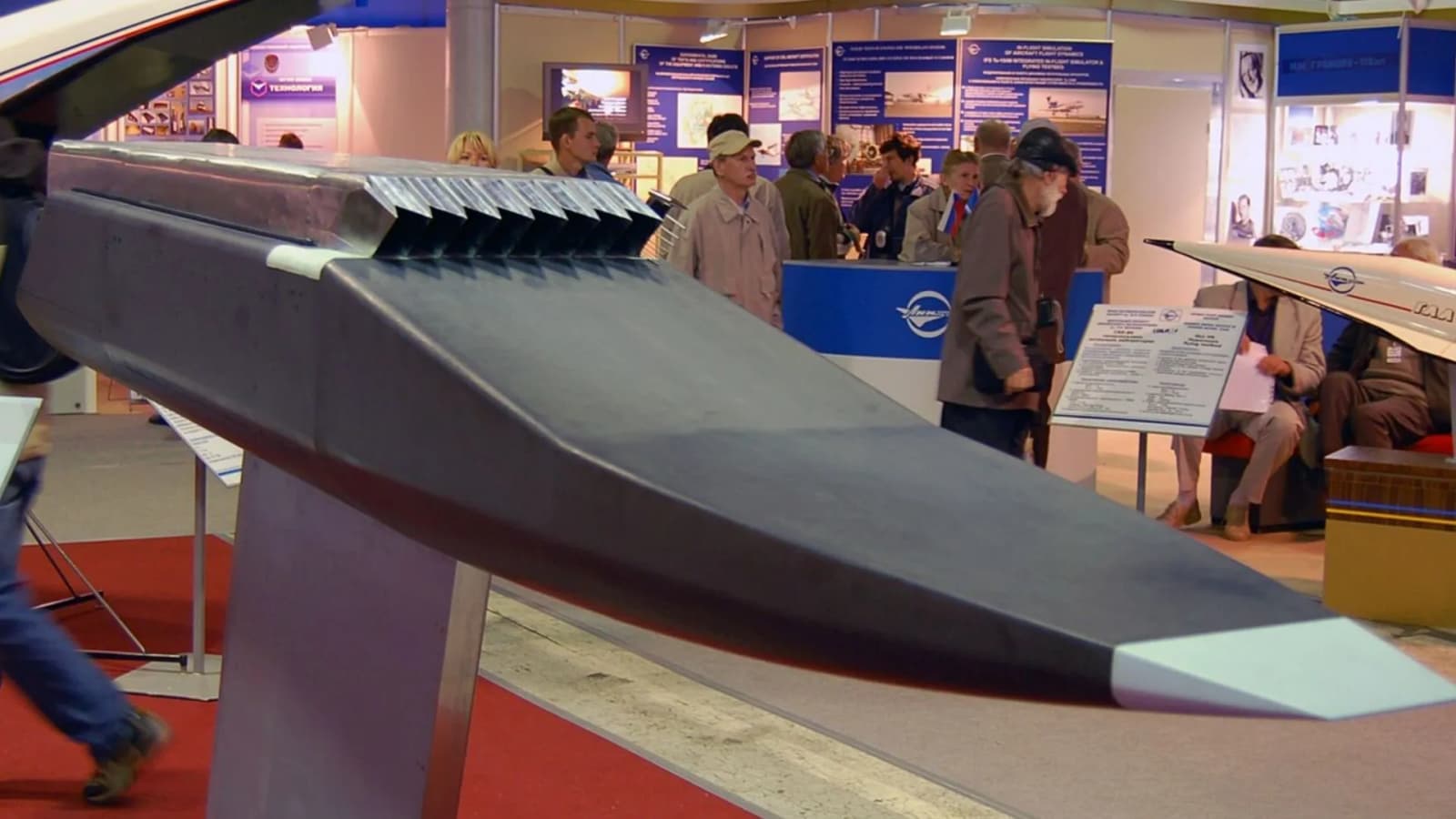
A hypersonic cruise missile must do more than briefly reach an extreme speed. It needs an engine capable of sustaining powered flight through the atmosphere while traveling at least five times the speed of sound (Mach 5).
That is where the scramjet comes in. Short for “supersonic combustion ramjet,” this air-breathing engine uses the missile’s forward motion to compress air before mixing it with fuel and producing thrust.
The idea sounds simple. Making it work while a vehicle covers more than a mile every second is anything but.
How does a scramjet engine work?
Unlike the turbofan engines used by commercial aircraft, a scramjet does not rely on rotating compressor blades. Instead, the shape of its inlet and the missile’s tremendous speed force the incoming air into a narrower space, raising its pressure and temperature.
Fuel, commonly a hydrocarbon or hydrogen, is then injected into this compressed stream. The mixture ignites inside the combustor, releases energy, and expands through a nozzle at the rear to generate thrust.
The crucial detail is that air remains supersonic as it passes through the combustion chamber. Conventional ramjetsslow incoming airflow to subsonic speeds before combustion, but this becomes increasingly inefficient at higher Mach numbers.
Keeping the flow supersonic allows scramjets to operate at speeds where ordinary jet engines cannot. However, the design also means a scramjet cannot produce useful thrust while stationary or moving slowly.
A rocket booster or another aircraft must first accelerate the missile to the required speed. Once the scramjet reaches its operating conditions, it can ignite and take over the powered portion of the flight.
Why are scramjets suited to cruise missiles?
Rockets carry both fuel and an oxidizer because they must operate independently of the atmosphere. A scramjet draws oxygen directly from the surrounding air, removing the need to carry a separate oxidizer during cruise.
That can reduce weight and leave more internal space for fuel, sensors, or a payload. It also enables sustained powered flight within the atmosphere rather than providing only a short burst of acceleration.
This separates scramjet-powered cruise missiles from hypersonic boost-glide weapons. A boost-glide vehicle is accelerated by a rocket before gliding toward its target, while a hypersonic cruise missile continues generating thrust with an air-breathing engine.
Powered flight can give cruise missiles greater flexibility to alter their route or maneuver during an engagement.
Their speed, lower atmospheric flight path, and potential maneuverability can also shorten reaction times and complicate detection and interception.
Scramjets are not unlimited, however. Because they depend on atmospheric oxygen, their operation is restricted by altitude, air density, and speed. The engine must remain within a relatively narrow set of conditions to keep producing reliable thrust.
Why is scramjet technology so difficult?
Combustion inside a scramjet has been compared to lighting a match in a hurricane. Air races through the engine in milliseconds, giving injected fuel very little time to mix, ignite, and burn efficiently.
Engineers must prevent the flame from being blown out while managing shock waves moving through the inlet and combustor. A disruption in airflow can produce an event known as an “unstart,” causing a sudden loss of thrust and potentially destabilizing the vehicle.
Heat presents another serious challenge. Air friction and compression expose a hypersonic missile’s exterior and engine to extreme temperatures, requiring heat-resistant materials, protective coatings, and carefully designed cooling systems.
Even minor changes in the vehicle’s altitude can alter airflow entering the engine. This makes the missile’s body, inlet, combustor, and nozzle parts of one tightly integrated propulsion system rather than separate components.
NASA demonstrated the potential of the technology in 2004 when its uncrewed X-43A research vehicle reached approximately Mach 9.6 during an experimental flight.
The test established a speed record for an air-breathing aircraft and showed that scramjet combustion was possible at nearly ten times the speed of sound.
Scramjets have since become central to several military research programs. Yet achieving one successful test is different from producing a weapon that can start reliably, navigate, maneuver, and survive demanding operational conditions.
The technology’s promise is clear: sustained hypersonic flight without carrying an oxidizer for the cruise phase. The challenge lies in achieving controlled combustion inside one of the fastest and harshest airflow environments ever engineered.
Related articles
China fears US deployment of space weapons raises risks of fresh arms race: Report
The United States has publicly acknowledged that it has weapons deployed in orbit, marking a...

Trump wants ‘AI Force’ to keep US AI race moving, push ahead with modern tech despite concerns
President Donald Trump says he plans to create an “AI Force” and appoint a new...

Scientists transport 92 antiprotons by road for first time, store them in vessel for over a month
Scientists succeeded in transporting antiprotons by road for the first time in a purpose-built trap...

A mathematical rule against disagreement survives beyond quantum mechanics
Two people can examine the same evidence and reach different conclusions. However, if they share...

Volkswagen electric bus sets Guinness World Record, drives 62,000 miles across 92 countries
A Volkswagen ID. Buzz has completed a 99,767-kilometer (roughly 62,000 miles) journey through 92 countries...
Low-cost US interceptor destroys drones without jamming their signals
A US defense startup has tested a low-cost interceptor missile designed to physically destroy small...