Eagles hunt baboons as heavy as early human ancestors, upending 2.5-million-year theory
Eagles are preying on adult baboons as heavy as early human ancestors, according to a...
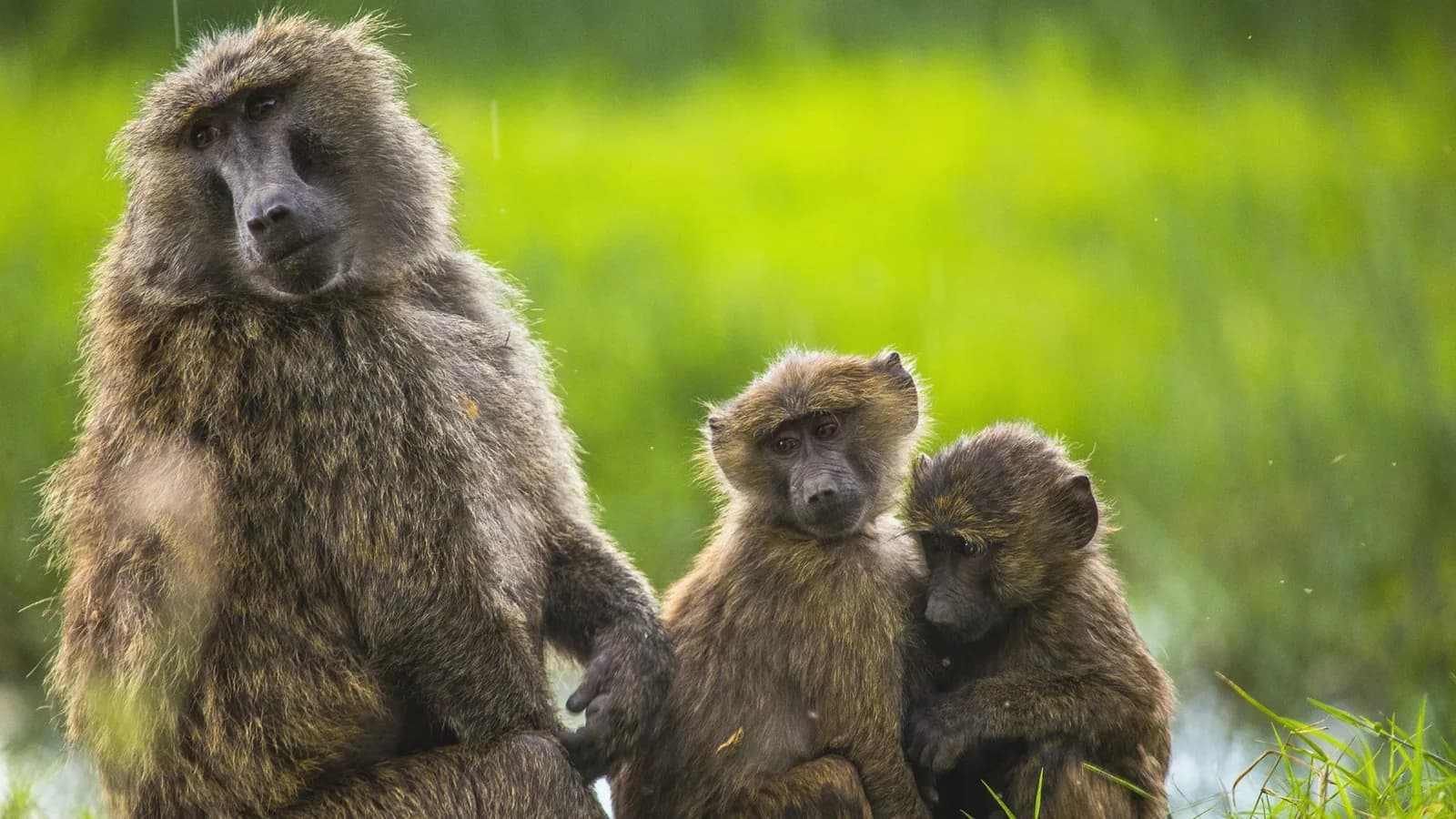
Eagles are preying on adult baboons as heavy as early human ancestors, according to a new study that challenges a long-held assumption about which predators hominins faced. The discovery comes from an isolated baboon population on the Ennedi plateau of northern Chad, in the middle of the Sahara.
Researchers from the University of St Andrews worked with Dartmouth College, the University of Konstanz, the Max Planck Institute of Animal Behavior and African Parks. The study was published Nov. 18 in the American Journal of Biological Anthropology.
Talon marks on bone
The team found skulls and bones of adult male baboons marked by eagle predation, with talon punctures in the skull and scrapes called “rakes” on the shoulder bones.
Crucially, the researchers could calculate the animals’ weight. One baboon weighed more than 57 pounds (26 kilograms), well within the range of hominin species.
Eagles have hunted primates for millions of years, but humans and our hominin ancestors were thought to have escaped them for about the past 2.5 million years. No primate over 29 pounds (13 kilograms) has been confirmed as raptor prey, so large primates were judged too heavy even for ancient giant eagles to lift.
Defenses against eagles
Primate defenses against aerial predators differ from those against land predators such as big cats and crocodiles. Primates respond to eagles by mobbing, and larger adult males charge the attacker to drive it off.
Knowing hominins may have been vulnerable to eagles changes how researchers think about the evolution of behaviors from communication to group cooperation. Modern primates in eagle country often travel in large mixed groups with other primate species.
Early hominins lived alongside other hominin species and other primates for much of their history. Scientists often picture them as competitors, but sticking together may have offered cooperative advantages against threats from above.
A remote Sahara expedition
Lead author Catherine Hobaiter, a professor in the School of Psychology and Neuroscience at St Andrews, called the expedition “any primatologist’s dream.” Some baboons there rarely, if ever, see people, and after a couple of days they followed the team around.
The researchers saw eagles while searching for the baboons but never imagined they might be a threat. Then they found a skull with a puncture mark, then another, and another.
Senior author Nathaniel Dominy of Dartmouth College said the idea at first seemed to sit on the thin edge of possibility. “Our skepticism slowly gave way to acceptance,” he said.
Hobaiter also described watching the baboons react when a pair of Verreaux’s eagles swept overhead. They gave alarm calls and dropped to safety, though they had stayed relaxed around other big birds of prey, which shows they respond only to real threats.
A desert of surprises
Dr. Gisela Kopp of the University of Konstanz and the Max Planck Institute of Animal Behavior said studying a place with no prior primate data proved extremely rewarding. Jean Didier Akpona of African Parks, who has worked in the region for about three years, often saw Verreaux’s eagles at the gueltas, pockets of water in rock formations. He said he never imagined they would target primates of this size until the team found the evidence.
The team wants to learn more about the Ennedi baboons. Their first observations upended notions about everything from diet to social life, Hobaiter said, adding, “I can’t wait to see what new ‘rules’ they’ll break next.”
Source: https://interestingengineering.com/culture/eagles-hunt-hominin-sized-baboons-ennedi
Get the latest news delivered to your inbox.
Related articles