
Electra’s EL2 first fixed-wing plane to fly helicopter-style IFR at commercial airport
A fixed-wing aircraft has landed at a commercial airport using helicopter-style instrument procedures for the...
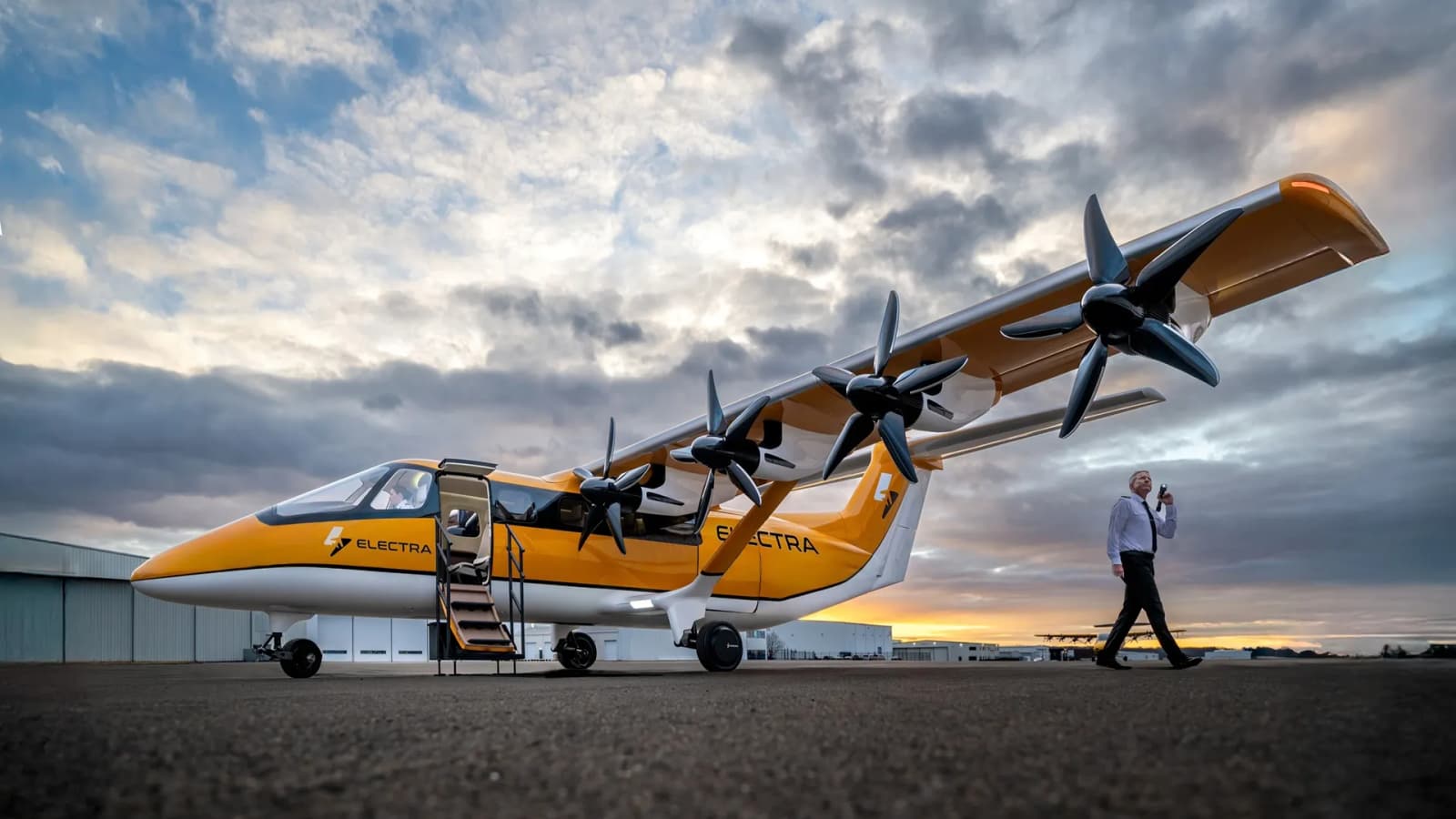
A fixed-wing aircraft has landed at a commercial airport using helicopter-style instrument procedures for the first time, with Electra’s hybrid-electric EL2 Ultra Short demonstrator completing a series of milestone flights across five Virginia airports as part of the FAA’s eVTOL and Advanced Air Mobility Integration Pilot Program.
The flights, announced Sept. 22, were conducted at Roanoke–Blacksburg Regional Airport (KROA), Virginia Tech/Montgomery Regional Airport (KBCB), Allan C. Perkinson/Blackstone AAF Airport (KBKT), and two additional sites in Newport News and Richmond. At each location, the EL2 took off and landed from heliports, vertiports, taxiways, and other novel access points — surfaces historically accessible only to rotary-wing aircraft.
New flight procedures
The flights tested point-in-space procedures and dedicated instrument routings designed specifically for the Ultra Short aircraft’s performance profile. These are IFR (instrument flight rules) procedures analogous to those used by helicopters, enabling aircraft to approach and depart from non-runway surfaces in low-visibility conditions with the predictability and safety margins that commercial operations require.
This distinction separates these flights from simple short-field demonstrations. The EL2 wasn’t just operating from a small area — it was doing so under instrument conditions, with FAA-approved procedures, in the same airspace as commercial airline traffic at Roanoke–Blacksburg Regional. The data gathered from each flight will directly inform the development of guidelines and operational standards for future EL9 commercial service, Electra said.
Why it matters
“What happened in Virginia provides a glimpse into the future of flight,” said Marc Allen, CEO of Electra. “We showed that fixed-wing, Ultra Short aircraft can use vertical flight landing areas and a new generation of instrument procedures to reach places conventional airplanes were never designed to access.”
The operational concept, what Electra calls Direct Aviation, rests on the idea that passengers should be able to reach an aircraft from locations close to where they live and work, without driving to a major airport hub. A heliport on a commercial airport ramp is one step in that chain, but the same access points extend to parking lots, barges, and sports fields in future operations.
EL9 endgame
The EL2 flights are explicitly paving the way for the nine-passenger EL9 Ultra Short, Electra’s production aircraft scheduled for commercial service by 2030. With the FAA’s G-1 certification basis already secured — establishing the regulatory framework for how the EL9 will be certified — and the eIPP flights now generating operational data on instrument procedures and novel landing areas, Electra is building the regulatory and procedural foundation in parallel with the aircraft itself.
The flights were conducted in coordination with Virginia Tech’s Mid-Atlantic Aviation Partnership, the Virginia Department of Aviation, the Virginia Smart Airspace Program, and PennDOT, which serves as lead eIPP participant for Virginia operations.
“The goal is not just to fly a route, but to generate the data and operational insight needed to help new aircraft types integrate safely, efficiently, and repeatably into the airspace system,” said Tombo Jones, Director of Virginia Tech’s Mid-Atlantic Aviation Partnership.
Electra currently holds over 2,200 letters of intent from more than 60 commercial customers, including airlines and helicopter operators, alongside contracts with the U.S. Air Force, Army, Navy, and NASA. The Virginia eIPP flights represent the most direct step yet toward demonstrating that those contracts reflect a platform that can actually operate in the real-world airspace system.
Related articles

Everything is spying on you and there’s no opting out
Earlier this month, Apple announced that its new Apple Watches will have the ability to continuously listen to every spoken word they detect and create summaries of whatever's going on around you.

Meta’s Muse AI Charms can interact with each other
Meta's handheld AI gadget, called the Muse Charm, will be able to recognize and interact with other nearby Charms when it launches later this year.

Waymo’s driverless cars continue to crash less often than people
Waymo's latest batch of self-reported data continues to affirm the company's message that its driverless cars are safer than human drivers.
F-35 jets could get 40-kilowatt cooling boost to handle future tech upgrades
Honeywell Aerospace has introduced an upgrade designed to give the F-35 fighter jet more cooling...
Island solar plant gets 150-kW electrolyzer to make hydrogen from surplus energy
A solar plant on the French island of Corsica has a new use for electricity...

Unitree humanoid robots return to America’s Got Talent for Chinese dance finale
A Chinese dancer and eight humanoid robots from Unitree Robotics have brought a centuries-old Chinese...