
Heat-only method makes critical alloys tougher for nuclear fusion reactors and jet engines
Future fusion reactors and commercial jet engines share a common challenge: their critical parts must...
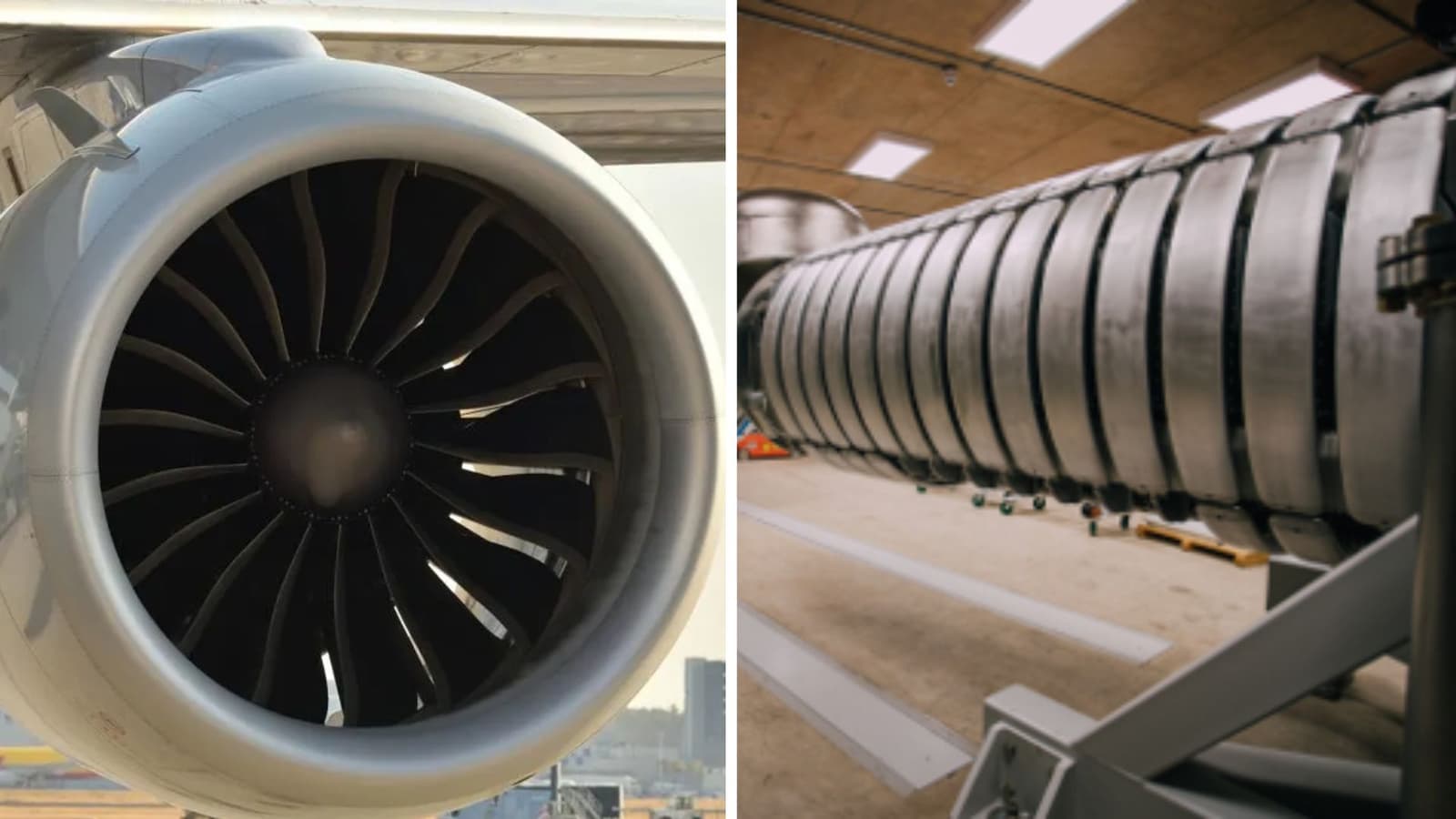
Future fusion reactors and commercial jet engines share a common challenge: their critical parts must endure punishing heat and stress without cracking. Building materials tough enough for these extreme conditions usually demand heavy industrial processing, such as repeatedly rolling or forging hot metal.
Researchers at the University of Birmingham have discovered that heat alone can transform the internal structure of stubborn alloys. The breakthrough could fundamentally change how engineers produce tough, high-performance parts.
The fundamental principle behind the advance is grain size control. All metals are made of microscopic grains. When these grains are coarse and broad, microcracks can easily run through them, causing sudden structural failure. When the grains are tiny and packed tightly together, their boundaries act like defensive barriers that stop cracks in their tracks. Traditionally, shrinking these grains required violent mechanical force.
Using controlled thermal stress
The new approach, named Precipitation Induced Recrystallisation (PIX), replaces physical force with controlled thermal stress.
During heat treatment, nanoscale regions with slightly different atomic spacing begin to precipitate within the alloy. Because the crystal grids of these regions do not match their surroundings perfectly, they generate intense elastic strain throughout the metal.
This internal pressure eventually forces the microstructure to recrystallize on its own, spawning fresh, dramatically finer grains from within.
“Our discovery challenges conventional understanding that grain refinement typically requires extensive thermomechanical processing,” explained Sandy Knowles, Professor in Nuclear Materials at the University of Birmingham.
“We can design alloys where strain is generated internally during heat treatment, opening exciting possibilities for materials that are difficult to process using conventional methods.”
Testing across different fields
The team tested the technique across two radically different engineering fields, publishing their findings in Nature Communications Materials and Scripta Materialia.
The first test involved tungsten, the leading candidate for fusion reactor walls because it melts only above 3,400°C (6,152°F). Tungsten is naturally brittle, and exposure to intense fusion radiation makes it even more fragile.
“Aging the tungsten-chromium alloy at 1,250°C (2,282°F) generated enough internal stress to drive recrystallization, reducing average grain size by around 60%,” noted the researchers.
They applied the method to a titanium-iron-molybdenum alloy under evaluation for jet-engine compressor blades. Heating the alloy to 750°C (1,382°F) reduced its grain size by roughly 90%, while raising its hardness by 60 Vickers units.
Broader materials-design principle
The research was carried out alongside partners at the UK Atomic Energy Authority, TU Bergakademie Freiberg in Germany, and the City University of Hong Kong.
The heat-only mechanism solves a growing headache for advanced manufacturing. Modern 3D printing can create intricate, near-final shapes, but these components often emerge with coarse grain structures that cannot be hammered or rolled without destroying the part.
PIX offers engineers a straightforward way to produce durable, complex parts straight from the furnace.
“PIX may represent a broader materials-design principle that could be applied across different alloy systems, giving researchers a new way to control grain structure and material properties through heat treatment alone,” concluded the researchers.
Related articles

Mapped: Where U.S. Jobs Are Most Exposed to AI
See which U.S. states have the highest share of AI-exposed jobs, led by Washington, Virginia, and Washington, D.C.

Ranked: Where Are Ultra-Rich Populations Forecast to Grow the Fastest?
Global wealth is expanding beyond traditional hubs. Through 2031, Indonesia is forecast to see the fastest ultra-rich population growth.

Can VR glasses save VR?
I'm pretty sure I won't be buying the $1,299 Meta VR Glasses. That's too rich for my blood in today's economy, and my feelings about Meta are… conflicted.

Sony brings AI graphics upscaling to the regular PS5
Sony is launching a new AI upscaling technology specifically for the regular PS5.
Scientists use far ultraviolet LEDs to transmit data at a record 1.5 Gbps
A collaboration of researchers from the Ferdinand-Braun-Institut (FBH) in Berlin and the Universities of Strathclyde...

Blackbird awakens? NASA quietly eyes resurrecting historic SR-71A aircraft after 27 years
NASA may be quietly working to return one of its historic SR-71 Blackbird aircraft to...