AI model predicts cancer patients’ survival from a single face photo, Lancet Digital Health study finds
Researchers at Mass General Brigham have built FAHR-Face, an AI foundation model trained on more than 40 million face images that estimates biological age and directly predicts cancer survival from an ordinary photograph.
This story was prepared automatically by software.
Researchers at Mass General Brigham, the Massachusetts academic health system, have developed an artificial intelligence tool that can predict a cancer patient’s chances of survival from a single photograph of their face. The study was published on October 19 in The Lancet Digital Health and reported by The Guardian and Scientific American.
A foundation model trained on 40 million faces
The model, called FAHR-Face, was first trained on more than 40 million facial photographs across a range of ethnicities and ages without a specific task, then adapted in two ways. FAHR-FaceAge estimates a person’s biological age, the age they appear rather than their chronological age. FAHR-FaceSurvival predicts survival directly from a photo of a cancer patient.
“To our knowledge, this is the first demonstration that an AI model can directly predict cancer survival from a simple photograph,” said Hugo Aerts, a co-senior author of the study. He said the foundation-model approach offers “a scalable way to develop multiple facial health biomarkers rather than training each model from scratch.”
What the study found
Among US cancer patients treated with radiotherapy, those whom FAHR-FaceAge judged to look five or more years older than their actual age had a 21% higher risk of dying during an average four-year follow-up than the rest of the group, while those who looked five or more years younger had a 17% lower risk, The Guardian reported.
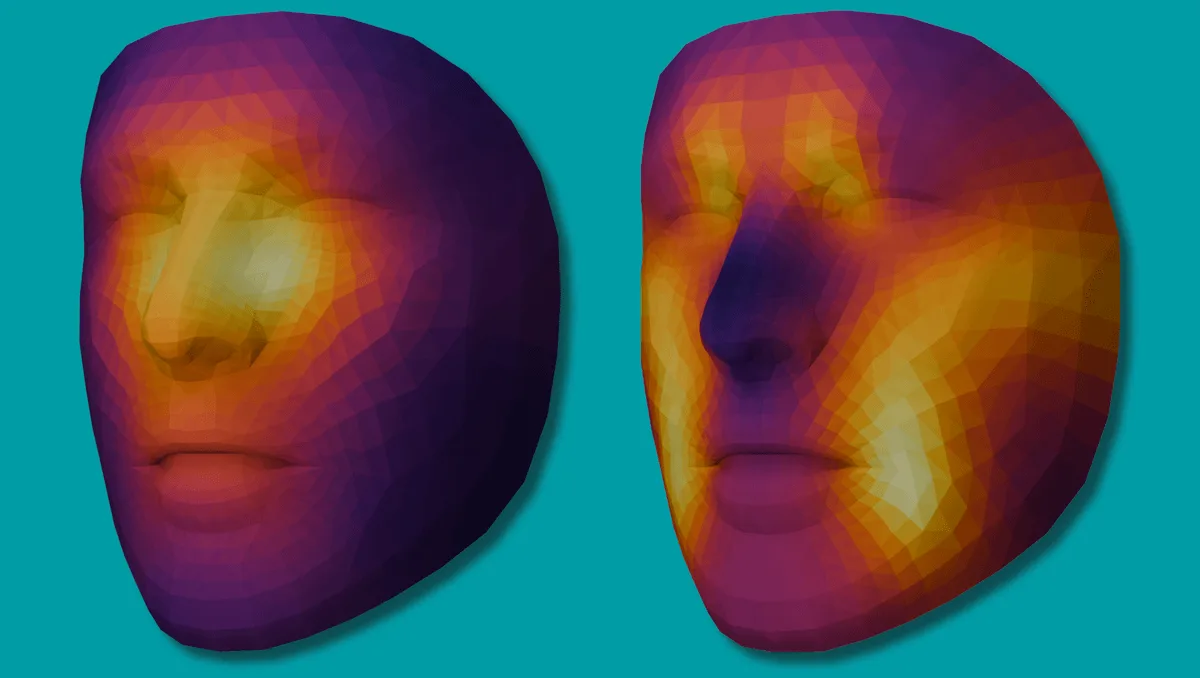
In a test group of 3,820 cancer patients, 64 of the 122 people given the highest risk scores by FAHR-FaceSurvival died within 90 days of their photo being taken, according to Scientific American. Combining both scores in a clinical prognostic model improved survival prediction over either one alone. The two tools focus on different parts of the face: the age model on the creases from the nose to the corners of the mouth, the forehead and temples, and the survival model on the area below the eyes and around the bridge of the nose.
Heavy alcohol use, drug use and smoking were associated with looking biologically older. The researchers said FAHR-FaceAge was consistent across pose, lighting, expression and makeup, and stable across most plastic surgery procedures tested, with only a small shift after rhinoplasty.
Not ready for the clinic
“As the population ages, physicians need better ways to estimate physical reserve and frailty before recommending intensive treatments such as radiation, surgery or systemic therapy,” said Dr Raymond Mak, a radiation oncologist at Mass General Brigham. The goal, he said, is to “support personalised treatment decisions rather than replace physician judgment.”
The researchers cautioned that more work is needed before the tool can be widely used. Scientific American noted that the survival model was trained on a mostly white, Boston-area patient population. Matthew Liao, director of New York University’s Center for Bioethics, who was not involved in the research, warned that errors could mean people who need care do not receive it, and raised concerns about insurers or employers using such technology.
Sources: The Guardian, Scientific American, The Lancet Digital Health. Image: Mass General Brigham (via Scientific American).
Related articles