Japan launches world-first mission to return samples from a Martian moon by 2031
Japan has sent a spacecraft toward Mars on a mission that could answer a long-standing...
This story was prepared automatically by software.
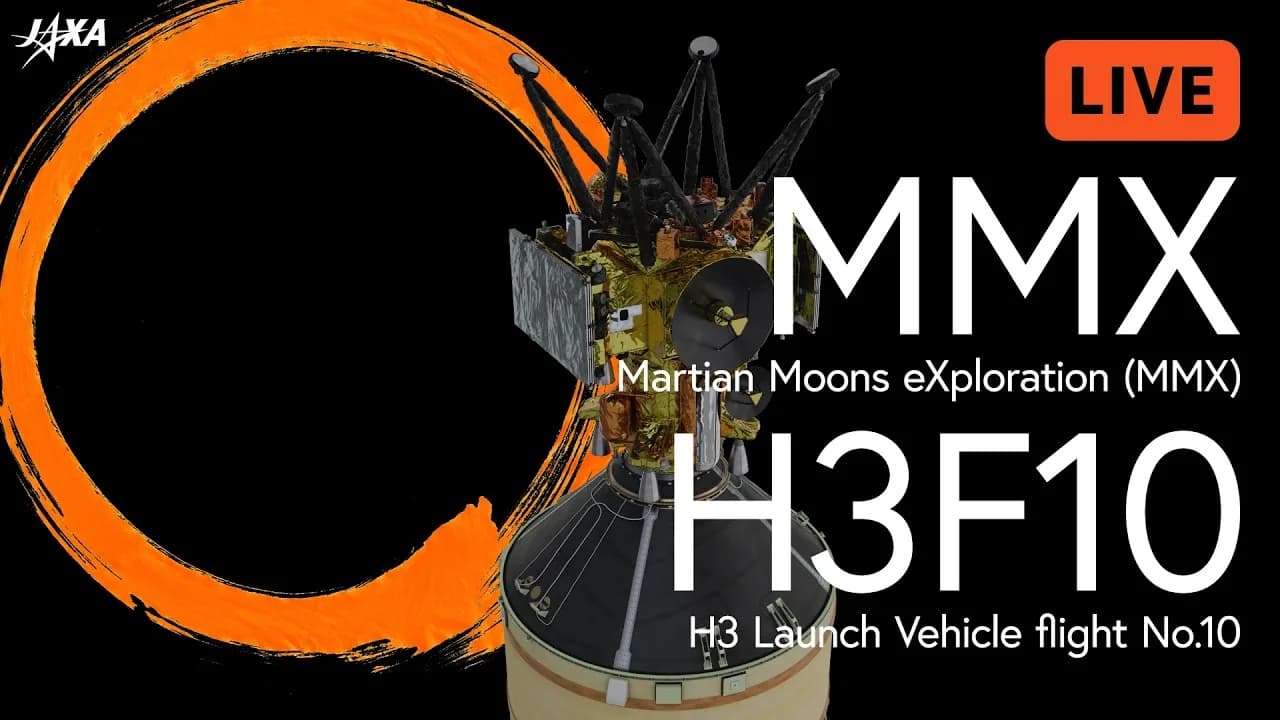
Japan has sent a spacecraft toward Mars on a mission that could answer a long-standing question about the planet’s two moons. The Martian Moons eXploration (MMX) spacecraft lifted off aboard an H3 rocket from Tanegashima Space Center on October 20, Japan time.
Led by the Japan Aerospace Exploration Agency (JAXA), the $578 million mission will investigate Phobos and Deimos. Its primary objective is to collect material from Phobos and deliver it to Earth in 2031. No spacecraft has previously landed on either Martian moon and returned samples.
JAXA later confirmed that MMX had successfully separated from the H3 F10 rocket’s upper stage. The separation placed the sample-return spacecraft on its interplanetary trajectory toward Mars and Phobos, marking a key milestone in the mission.
Inside the mission
The mission begins with a journey lasting several months before MMX reaches Mars in 2027. The spacecraft will then spend roughly three years studying the moons before departing for Earth.
JAXA developed the H3 launch vehicle alongside Mitsubishi Heavy Industries. Standing 207 feet tall, the rocket uses two LE-9 engines on its first stage. They burn liquid hydrogen and liquid oxygen to generate approximately 331,000 pounds of combined thrust.
Four solid rocket boosters provide additional power during liftoff. The vehicle sheds these boosters during ascent before discarding its protective payload fairings. After first-stage separation, the upper stage will perform the burns needed to send MMX toward Mars.
The mission builds on Japan’s experience returning asteroid samples. Its earlier missions demonstrated the country’s ability to retrieve material from small celestial bodies. Phobos presents a different challenge because it orbits Mars and has an extremely weak gravitational pull.
Phobos landing plans
Phobos stretches about 14 miles across and has an irregular, potato-like shape. Its surface conditions could complicate the landing operations needed for sample collection.
MMX will deploy IDEFIX, a French-German rover designed to examine the terrain. The four-wheeled vehicle may bounce across the surface before settling into place. Its design allows it to recover from an upside-down landing, although soft soil or obstructing rocks could leave it stranded.
IDEFIX will spend approximately 100 days surveying Phobos. Its findings will help mission controllers identify suitable landing locations for the main spacecraft.
The Japanese lander will attempt two touchdowns during late 2028 or 2029. It will use a sampling mechanism to gather material before securing the collected material inside its return capsule. Each surface operation will require careful coordination because Phobos offers little gravity to hold the spacecraft down.
The return journey
Scientists want to determine whether Phobos formed from debris following an impact on Mars or represents a captured asteroid. Samples could help distinguish between these competing explanations.
MMX will also investigate Deimos, the smaller of Mars’ two moons. Measuring approximately eight miles across, Deimos will receive several close flybys during the mission’s final months.
The spacecraft plans to leave the Martian system in November 2030. Its return capsule should reach Australia in 2031, carrying material collected from Phobos.
Laboratory analysis could reveal details about the moons’ composition and their place in the solar system’s history. The findings may also help researchers understand how other planetary moons formed.
Related articles