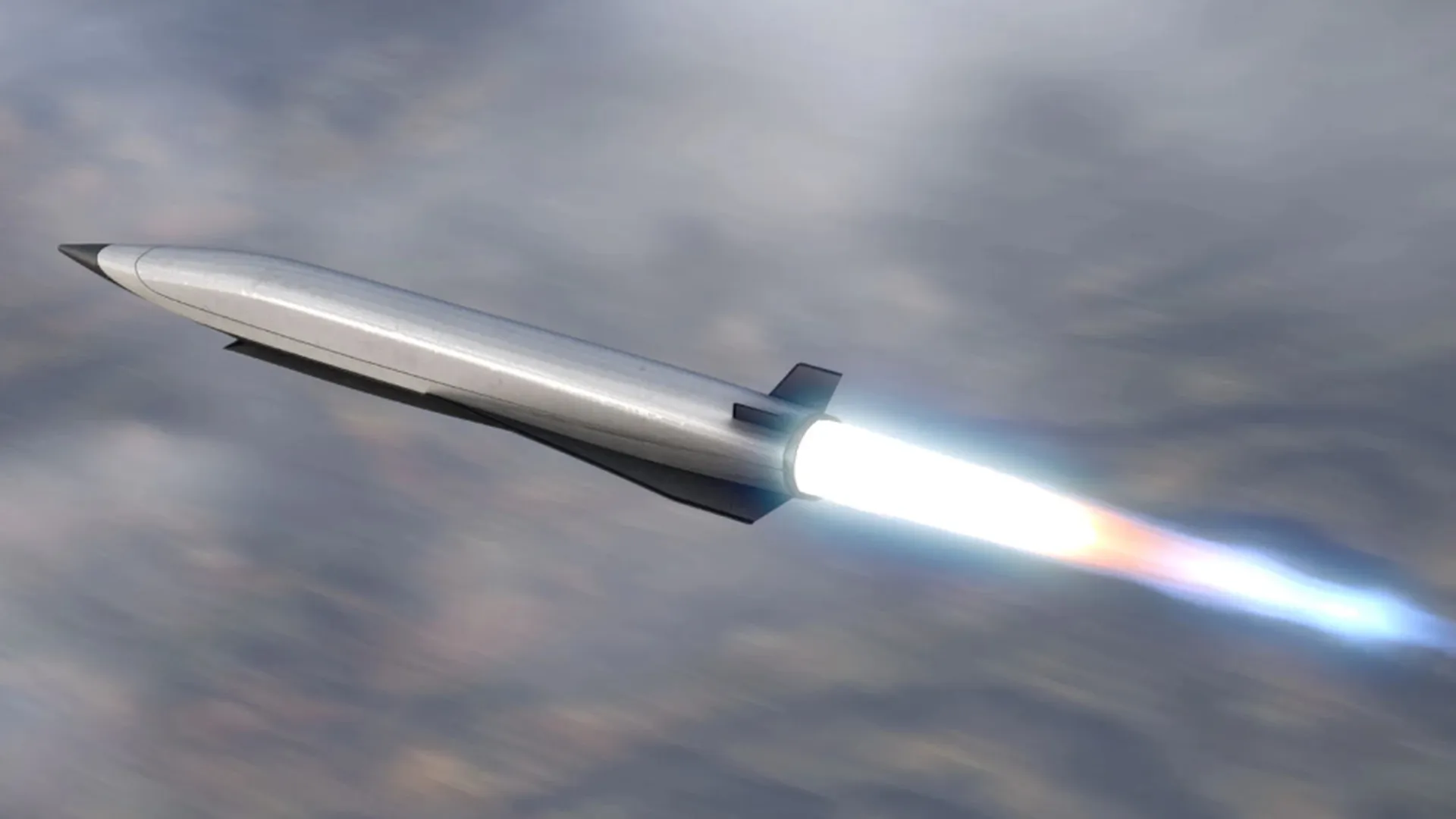
How hypersonic weapons withstand the heat of flying five times faster than sound
Hypersonic missiles can race through the atmosphere at more than five times the speed of...
This story was prepared automatically by software.
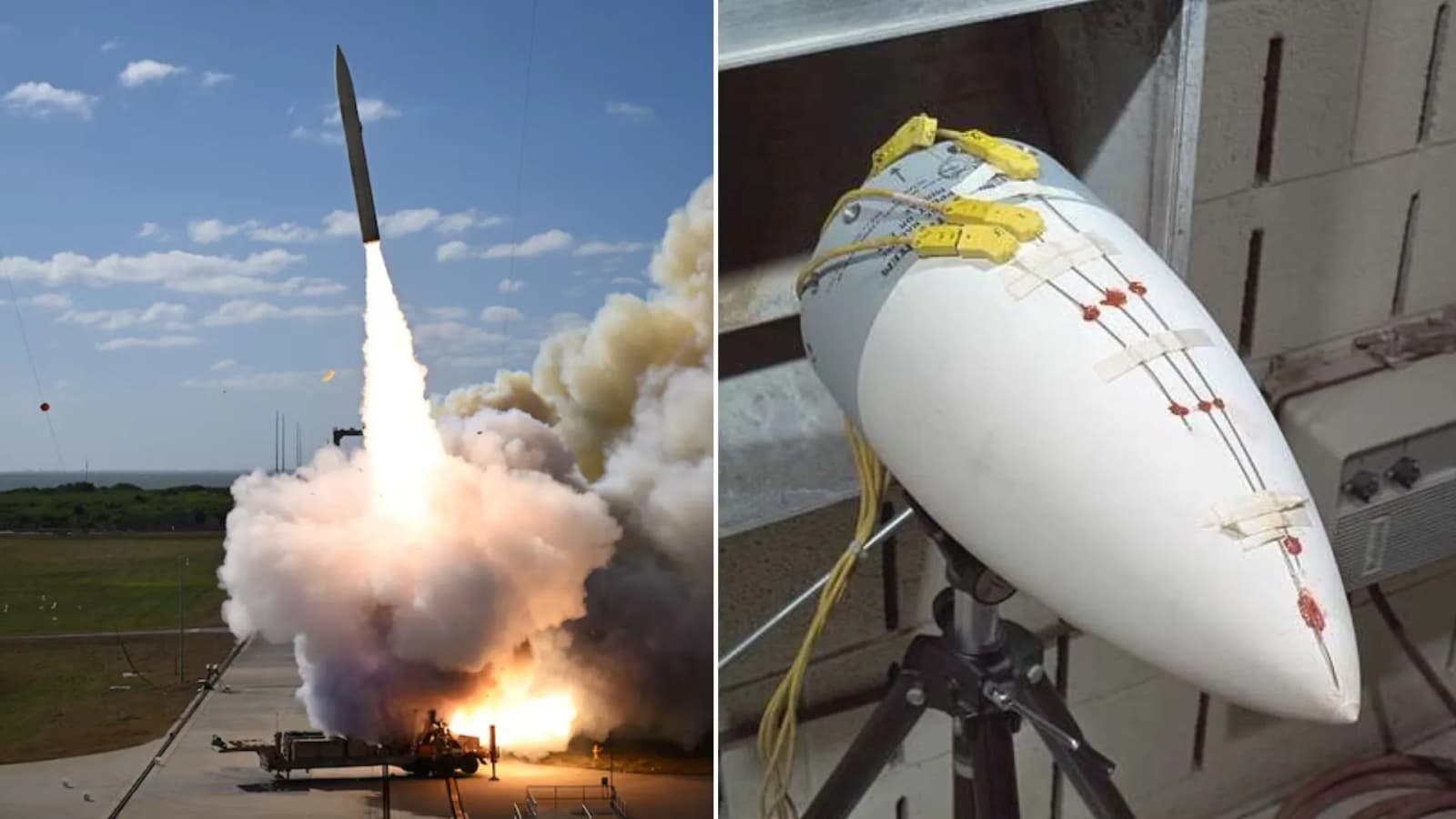
Hypersonic missiles can race through the atmosphere at more than five times the speed of sound, exposing their surfaces to temperatures hot enough to damage or destroy conventional aircraft materials. Their survival depends on a combination of heat-resistant materials, protective coatings, carefully engineered shapes, and, in some designs, systems that actively remove heat.
The challenge is not simply moving fast. At hypersonic speeds, air cannot move out of the vehicle’s way quickly enough, creating strong shock waves and compressing the surrounding gas. This process heats the air around the missile, while aerodynamic heating transfers energy to its surface. The nose and leading edges often face the most intense thermal loads.
NASA says thermal protection systems are designed to keep this heat from reaching internal structures and components. For hypersonic weapons, that means engineering a vehicle that can survive both extreme temperatures and the mechanical stresses of high-speed flight.
1. Heat-resistant materials form the first line of defense
Ordinary aircraft materials, including many conventional metal alloys, can lose strength at the temperatures encountered during hypersonic flight. Engineers therefore turn to specialized composites and ceramics.
One important option is carbon-carbon composite, made from carbon fibers embedded in a carbon matrix. It can withstand extremely high temperatures while retaining useful structural properties, making it valuable for exposed surfaces such as nose tips and leading edges.
However, carbon-carbon has a weakness. Oxygen can attack the material at high temperatures. Protective coatings are therefore essential to limit oxidation and prevent the structure from degrading.
Ceramic matrix composites offer another option. Materials such as silicon-carbide-reinforced composites combine high-temperature resistance with relatively low weight. Researchers are also studying ultra-high-temperature ceramics for components exposed to especially severe heating.
DARPA’s hypersonics materials research highlights the difficulty of protecting sharp leading edges, where thermal loads are particularly intense. A material must survive the heat without losing the shape needed for aerodynamic performance.
2. Sometimes, the missile is designed to burn away
Not every hypersonic vehicle needs to survive repeated flights. Some can use ablative thermal protection, in which the outer material gradually decomposes, chars, melts, or erodes, carrying heat away from the underlying structure.
Think of it as a sacrificial shield. Instead of preventing all damage to the surface, the system uses controlled material loss to protect what lies beneath. NASA has used ablative heat shields for spacecraft returning through Earth’s atmosphere, where the thermal environment can be particularly severe. Similar principles can help protect expendable high-speed vehicles.
The trade-off is that ablative protection changes the surface as it works. That can make it unsuitable for vehicles that must preserve their aerodynamic shape over repeated missions.
3. Active cooling can remove heat before it builds up
Some advanced designs explore active cooling, in which a fluid circulates through channels within a structure to carry heat away from vulnerable areas. Fuel can potentially serve as a coolant before it enters an engine, absorbing heat as it passes through specially designed passages. Other concepts combine active cooling with insulating layers, allowing the outer surface to withstand high temperatures while limiting heat transfer into the vehicle.
A 2026 study published in Applied Thermal Engineering examined a combined thermal-protection structure using ceramic insulation and cooling channels. Its simulations found that cooling with aviation kerosene could improve the modeled system’s thermal-protection efficiency. These are research results, not proof that the same arrangement is used in operational missiles.
4. Shape and flight time matter, too
Materials alone cannot solve the problem. Missile designers must balance aerodynamic efficiency against heat management. Sharp edges can improve aerodynamic performance in some flight regimes, but they also concentrate heat. Blunter shapes can spread heating over a larger area, though they may increase drag. Engineers must also account for how long a vehicle remains in a dense atmosphere, its flight path, and how heat distributes across its surface.
Boost-glide vehicles, such as the US Army’s planned Dark Eagle, use a rocket to accelerate a glide vehicle before it enters the atmosphere. Hypersonic cruise missiles, by contrast, are designed to sustain powered flight at hypersonic speeds, potentially using an air-breathing scramjet engine. Their thermal challenges overlap, but their propulsion systems and flight profiles differ.
The bottom line is that no single miracle material makes a missile heatproof. Surviving Mach 5 and beyond requires an integrated system of materials, coatings, cooling, structural design, and flight planning.
Source: https://interestingengineering.com/military/how-hypersonic-missiles-survive-extreme-heat
Related articles