
Meta claims new Muse Wonder models are world’s best at handling complex agentic tasks
Meta has introduced two new frontier models designed to carry out complex personal and professional...
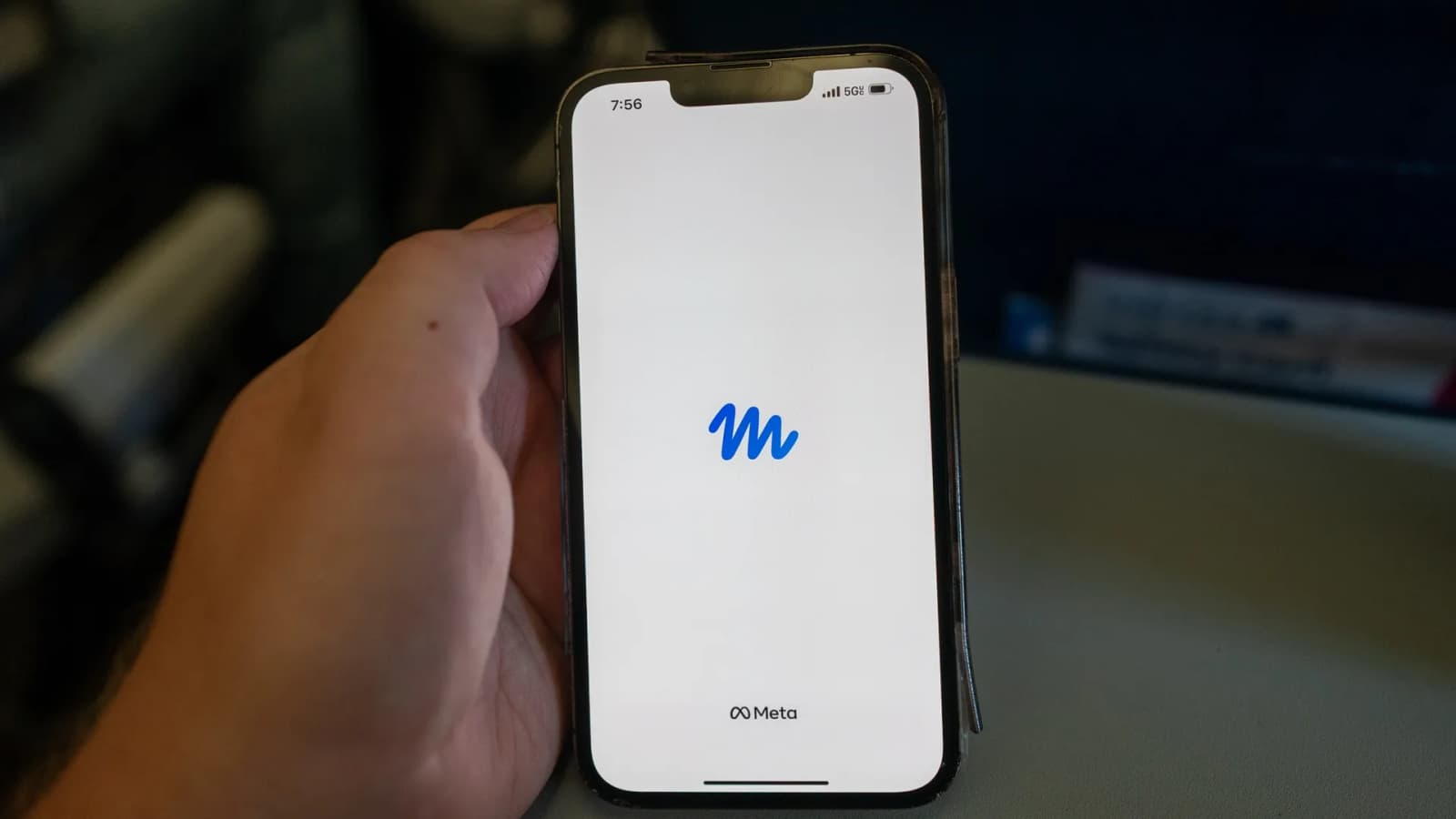
Meta has introduced two new frontier models designed to carry out complex personal and professional tasks using long-term memory, sustained reasoning, and software tools.
The company says the models, Muse Wonder and Muse Wonder Full, deliver state-of-the-art performance across several evaluations covering business automation, coding, contextual memory, and professional work. The announcement did not provide numerical benchmark scores in the supplied text, making it difficult to independently assess the size of the performance gains.
Muse Wonder is available through the Meta Model API and Muse Code, while Muse Wonder Full is available to Muse Code subscribers. Meta plans to integrate Muse Wonder into its consumer assistant, initially for subscribers, and use it to generate digital artifacts and handle tasks requiring more advanced reasoning.
The release follows Meta’s introduction of Muse Spark and comes 14 months after the company began rebuilding its artificial intelligence infrastructure. The new models were trained at its gigawatt-scale Prometheus data center, reflecting Meta’s investment in larger computing systems and more capable models.
Memory guides complex tasks
A central feature of Muse Wonder is Active Memory, which allows the model to retain relevant information across conversations and retrieve it when needed.
Rather than requiring users to repeat earlier instructions, the system is designed to recognize when previously shared details matter to a new task. This could help personal assistants handle work involving preferences, documents and ongoing projects.
We’re excited to introduce the Muse Wonder series with Muse Wonder and Muse Wonder Full, our most capable models yet. Both are frontier models, built to deliver state-of-the-art performance for personal and professional agentic tasks.
Muse Wonder is available today via the Meta… pic.twitter.com/Z9Pdf5USyw
— AI at Meta (@AIatMeta) October 12, 2026
Meta also introduced Active Focus, a capability intended to keep the models working through difficult assignments. The system can try different approaches, respond to unexpected problems, and seek clarification when necessary. It is also designed to request confirmation before taking important actions.
The company evaluated these capabilities using MemoryBench for contextual recall and FocusBench for sustained task execution. It also used AutomationBench-AA to assess business workflows and professional evaluations covering legal and financial tasks.
Coding tests sustained reasoning
Software development is another major focus of the Muse Wonder series. Meta says both models can handle extended coding assignments involving multiple files, changing requirements, and repeated testing.
The company used SWE-Marathon and DeepSWE to evaluate performance on long-running software engineering tasks. These assessments examine whether a model can maintain progress across complicated projects rather than simply produce isolated pieces of code.
MUSE WONDER
muse wonder is the best model in the world for personal agents and professional agents.
we evaluated our model against the best models in the world across agentic and coding tasks, and we think you all will like it. pic.twitter.com/GVH8LOlWzE
— Alexandr Wang (@alexandr_wang) October 12, 2026
Meta also tested how well its models perform on unfamiliar tasks. According to the company, Muse Wonder Full demonstrated stronger generalization than expected from the performance trend established by Muse Spark 1.3.
This suggests improvements may extend beyond the specific tasks emphasized during training, although the supplied announcement does not include enough numerical results to establish the size of that advantage.
Meta demonstrated Muse Wonder creating a playable 3D kitchen game from image inputs and building a personalized running plan through browser and application interactions.
The company also highlighted safeguards for handling private information, resisting malicious instructions, and limiting dangerous uses involving biological and cybersecurity threats.
Meta plans to use Muse Wonder to develop specialized models for its wider product ecosystem, although it has not announced a specific date for broader consumer availability.
Related articles
90-minute delivery from orbit: Ghost cargo pod drops radio and whiskey from 68,500 feet
A bottle of whiskey and a software-defined radio have given Sierra Space’s Ghost cargo vehicle...

21 US military satellites blast at 15,660 mph to hunt missile threats from space
A US aerospace and defense company has recently launched 21 satellites into low Earth orbit,...
World’s largest diesel reactor could turn fuel into hydrogen for army vehicles, camps
Scientists have built a diesel reformer for what they describe as the world’s largest reformer-fuel...
Microsoft’s new Maia 300 packs 96 chips into one 167-kW rack with 40% token efficiency
Microsoft plans to break free from NVIDIA and deploy its next-generation Maia 300 AI accelerator...

Elon Musk has donated over $276 million to Republican midterm efforts
Elon Musk has handed out at least $276 million to Republican groups since July, The New York Times reports, making him both the party's top known donor and the biggest established midterm donor.

Meta has some Wonder Full new AI models
Meta is making up for lost time in the AI race.