
Spirit of Kitty Hawk: US’s most secretive bomber returns to Whiteman Air Force Base
When America owns only 20 of a weapon, losing even one is critical. On Oct....
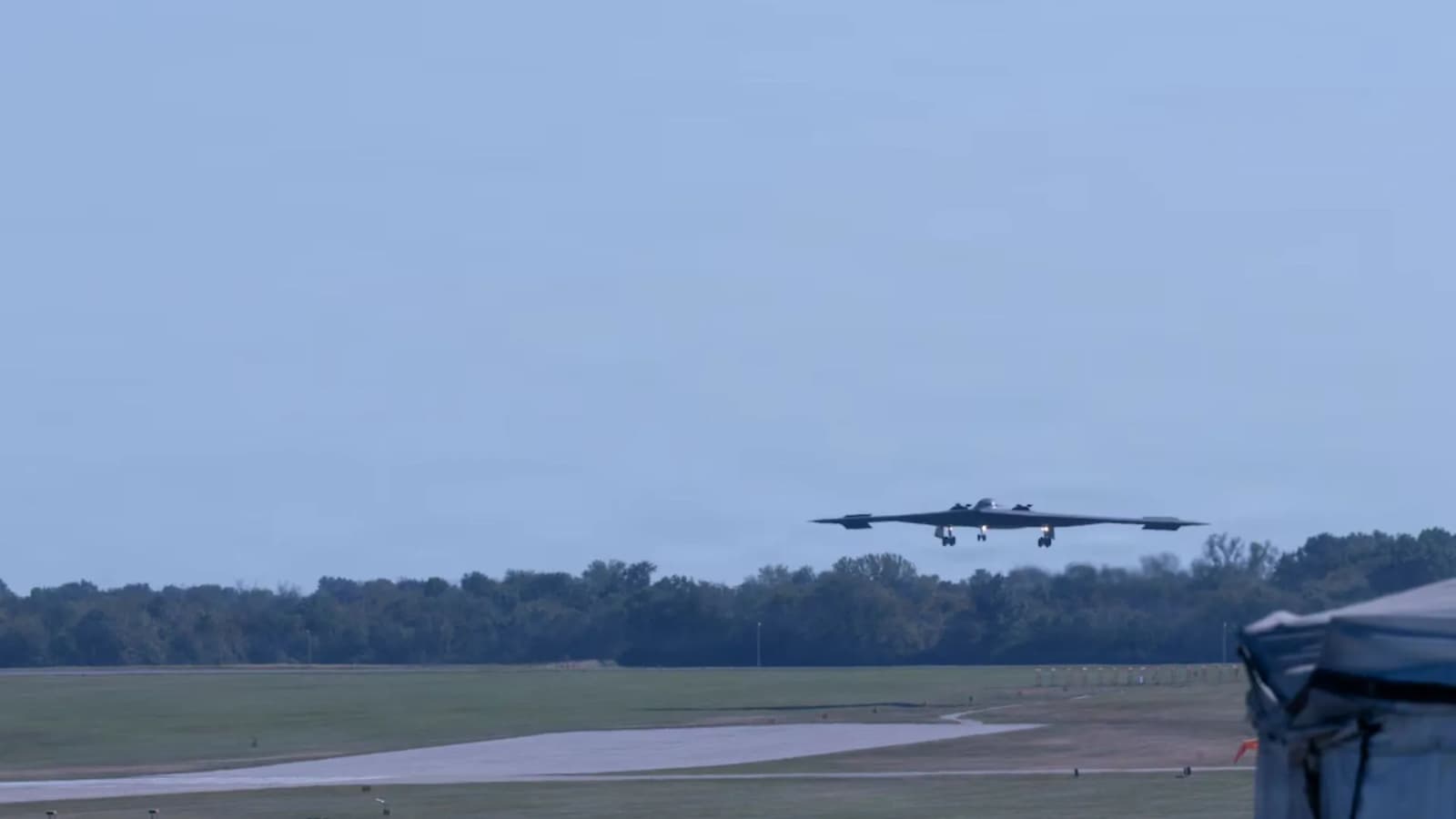
When America owns only 20 of a weapon, losing even one is critical. On Oct. 7, the U.S. Air Force welcomed home one of those irreplaceable assets.
The B-2 Spirit bomber officially touched down at Whiteman Air Force Base. The jet is better known as the *Spirit of Kitty Hawk (*Tail number 93-1086). It returned following heavy maintenance in Palmdale, California, where engineers serviced the stealth bomber.
“The B-2 is a small fleet,” said Lt. Col. Jeffrey Lembrick, Air Vehicle and Systems Management (AVSM), Materiel Leader with the B-2 Program Office. “Every time we return a jet to the field, it represents an additional strategic option available for the President of the United States. When you talk about aircraft availability, one thing we know is that a jet can’t be used if it’s sitting at PDM. So, completing PDM and returning to the field is a big deal.”
Strengthening the fleet
Northrop Grumman Corporation manages the routine maintenance program under the direction of the Air Force Life Cycle Management Center. During this process, technicians perform heavy structural repairs, inspect blade seals, and carefully restore the bomber’s low-observable stealth coatings. These comprehensive updates ensure the aircraft remains combat-ready and retains its stealth capabilities.
Routine inspections uncovered several unexpected mechanical issues during the maintenance cycle. Rather than allowing delays to cascade through the timeline, the maintenance team adapted on the spot.
Technicians prevented schedule delays by swapping parts with an incoming aircraft and manufacturing a new replacement component on-site.
Beyond standard stealth restoration and seal maintenance, the Spirit of Kitty Hawk received a unique structural update this cycle. Technicians replaced its hot trailing edge, a vital assembly engineered to endure severe heat and acoustic vibration from the bomber’s four engines.
“Depot maintenance is designed to find and fix issues before they ever affect a mission, and this cycle proved how robust our inspection process really is,” said Cindy Conner, AVSM Deputy Branch Chief in the B-2 Program Office. “When we encountered any surprise issues, the PDM team didn’t miss a beat. By executing a strategic part swap with an incoming aircraft and manufacturing an additional replacement part right on-site, they kept the schedule moving and returned a combat-ready aircraft to the fleet.”
Stealth restoration complete
Valued at roughly $2.1 billion per aircraft, each B-2 Spirit is an irreplaceable national asset. Operated by a two-person crew, the bomber comes with a dual conventional and nuclear capability with an unrefueled range exceeding 6,000 nautical miles.
Powering the stealth platform are four General Electric F118-GE-100 engines, which generate extreme thermal and acoustic stress that necessitates replacing the hot trailing edge assembly.
Northrop Grumman is developing and flight-testing the next-generation B-21 Raider to replace the aging B-2 fleet. The incoming stealth platform will modernize long-range strike capabilities as existing aircraft gradually phase out.
For now, the Spirit of Kitty Hawk will soon enter the 509th Bomb Wing’s local modification line. Upgrades will focus on advanced communication systems and enhanced stealth capabilities to preserve its long-term combat readiness.
Related articles

US Army modernizes aging rail fleet with new locomotives and track equipment
The US Army is replacing aging locomotives and specialized rail equipment used to move military...


US Navy moves 19,000-ton USS Wyoming to Pacific in major nuclear fleet reshuffle
The U.S. Navy has repositioned one of its newer Ohio-class ballistic-missile submarines to the Pacific...