New bio-inspired channels separate lithium up to five times more selectively in tests
Researchers in the US have developed artificial channels that are up to five times more...
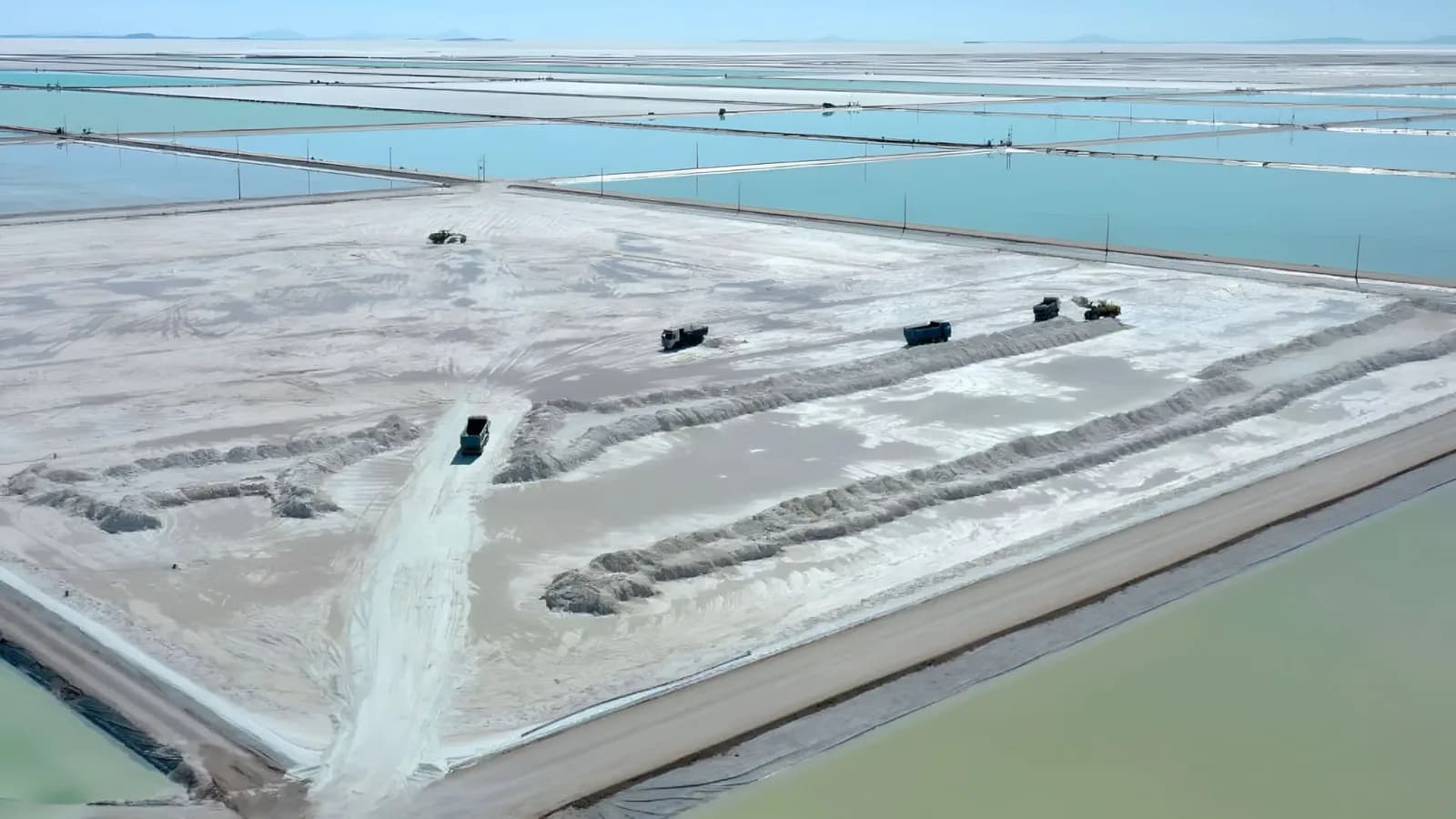
Researchers in the US have developed artificial channels that are up to five times more selective for lithium than other recently developed lithium transporters, potentially offering a simpler way to extract the critical battery material.
The nanoscale channels, developed at the University of Texas at Austin, allow lithium ions to pass through while restricting competing elements commonly found alongside them. The researchers say the channels are among the most selective developed so far.
The technology takes inspiration from biological channels that control the movement of ions and molecules across living cell membranes. By recreating this function in artificial structures, the team aims to separate lithium without relying on conventional extraction methods that can consume substantial energy and produce chemical waste.
Lithium is essential for batteries used in electric vehicles, smartphones and energy storage systems. However, extracting it from underground brines, hard rock and recycled batteries remains challenging because it is often mixed with sodium, potassium, magnesium and calcium.
Tiny channels filter lithium
The researchers developed nanoscale pores designed to favor the movement of lithium ions over other dissolved substances.
The channels use two features to achieve this separation: chemical groups positioned near their entrances and a confined internal structure that influences how ions move through them.
As ions approach the opening, they interact with the chemical groups. These interactions, combined with the restricted space inside the channel, help determine which ions can pass through more easily.
In laboratory experiments, the artificial channels demonstrated lithium selectivity two to five times higher than other recently developed lithium transporters, according to the researchers.
The findings build on the team’s earlier work developing similar technology to separate rare earth elements used in industrial applications.
Manish Kumar, a professor of civil, architectural and environmental engineering and chemical engineering at UT Austin, said the goal is to simplify the recovery of lithium from complex mixtures.
“Our goal is a process that is faster, cleaner and easier to run,” Kumar said.
The researchers believe the approach could eventually reduce the need for harsh solvents in lithium separation. However, the current results demonstrate selective ion transport rather than a complete industrial extraction process.
Scaling membranes for extraction
The next challenge is incorporating the channels into larger membranes capable of processing significant quantities of lithium-containing solutions.
The team is exploring a previously developed membrane material made from interconnected, cell-like layers. These structures can be assembled using lipids or polymer materials and could provide a framework for integrating the selective channels.
The researchers envision a continuous separation system in which lithium-rich solutions pass through membranes that preferentially transport lithium ions.
Such a process could potentially improve lithium recovery from underground brines while reducing the chemical demands of conventional separation methods.
However, further testing is required to establish whether the channels can maintain their performance when exposed to real brines containing multiple dissolved salts.
The researchers also need to determine how effectively the technology can operate at industrial scale. The announcement did not provide commercial-scale recovery rates, energy consumption figures, or operating costs.
Beyond mining, the team sees possible applications in recovering lithium from spent batteries and developing improved separators for future battery designs.
The research was published in theJournal of the American Chemical Society.
Related articles