
New film blocks 99.99% of radar waves, could advance stealth jet technology
A new film, thinner than human hair, has been designed to block 99.9999999 percent of...
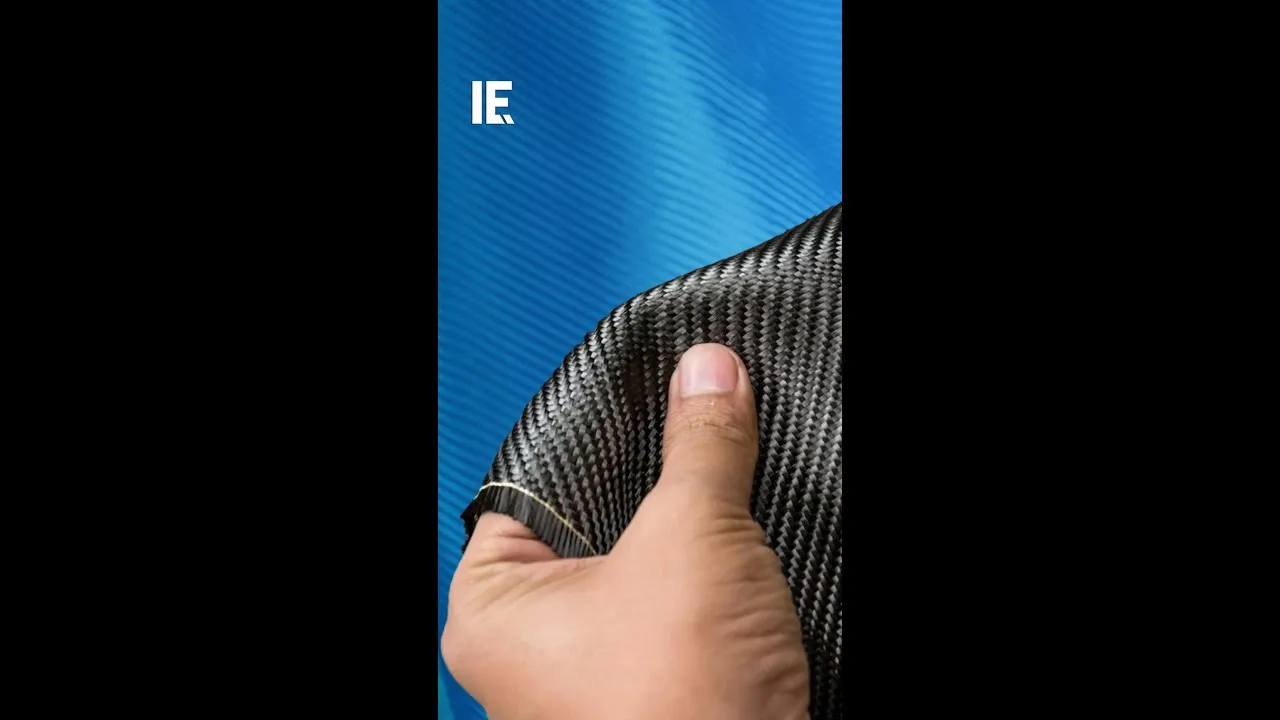
A new film, thinner than human hair, has been designed to block 99.9999999 percent of incoming radar waves. Scientists in South Korea have pulled this off by borrowing an old architectural trick: brick-and-mortar masonry.
In a collaborative study, research teams from the Korea Institute of Materials Science (KIMS) and the Korea Institute of Science and Technology (KIST) revealed an ultrathin hybrid composite film that could advance stealth, aerospace, and everyday electronics.
The key was in combining two advanced nanomaterials that were previously useless on their own.
Brick-and-mortar strategy
Modern devices demand a triple threat: effective electromagnetic shielding to prevent electronic interference, low infrared visibility to hide from thermal sensors, and robust physical durability.
Standard metals are far too heavy, corrode over time, and won’t bend.
To replace metal, scientists turned to carbon nanotube (CNT) fibers. CNTs are light, tough, and conduct electricity brilliantly. Unfortunately, assembling loose, thread-like fibers into large, uniform sheets is difficult, and they glow brightly under infrared thermal sensors.
This issue was solved with the help of MXene. This two-dimensional nanomaterial naturally absorbs infrared light, making it a dream candidate for thermal stealth. But MXene nanosheets are fragile, brittle, and degrade rapidly when exposed to real-world environments.
Neither material could solve the problem alone. Uniting the two materials, however, creates a far more formidable combination.
Led by Dr. Taehoon Kim at KIMS alongside Dr. Seon Joon Kim and Dr. Jaewoo Kim at KIST, the team looked to civil engineering for a way to lock the two materials together. The team chemically modified the surfaces of the CNT fibers with amine groups to force a tight molecular bond with the MXene nanosheets. And then ran the functionalized fibers continuously through a MXene solution and wound them tightly side-by-side.
Impressive performance of film
In this brick-and-mortar architecture, aligned carbon nanotube fibers form the load-bearing structural backbone. MXene nanosheets fill the microscopic gaps between those fibers, locking them in place and preventing slippage under physical pressure. The design also establishes an unbroken electrical network throughout the material.
“The key to this technology is combining nanomaterials with different characteristics like bricks and mortar, preserving the strengths of each material while compensating for their respective weaknesses,” said Taehoon Kim.
The resulting film measures just 17.5 micrometers thick. Interestingly, its performance metrics read like a wishlist for defense contractors.
It delivers exceptional performance across four key areas. The material provides approximately 90 dB of electromagnetic shielding, blocking over 99.9999999 percent of waves in radar and communication bands. Its 1.02 GPa tensile strength matches the mechanical durability of high-strength structural steel.
Moreover, its ultra-low infrared emissivity suppresses thermal radiation, hiding objects from heat-seeking cameras. The material’s resistance to high heat and moisture maintains full operational stability where pure MXene typically degrades.
The film is thin, so it can bend, fold, and twist repeatedly without cracking or losing its conductive pathways.
The military usage of this material could be huge if adapted. Wrapped in this composite, stealth fighters, reconnaissance drones, and military aircraft could cut their weight. At the same time, it could hide their electronic chatter and thermal signatures from enemy radar and heat-seeking systems.
The civilian world stands to benefit just as much. As 5G networks expand and 6G development accelerates, internal electromagnetic crosstalk between components becomes a major issue for hardware engineers. This ultrathin material can line the inside of slim smartphones, smartwatches, wearable health trackers, and foldable tablets. It offers protection without adding bulk or weight.
Related articles
Single-actuator drone modeled on maple seeds flies with 43.5% less error, study finds
A flying robot with just one moving part may sound simple. Controlling one precisely is...
World’s first FDA-cleared self-balancing personal exoskeleton launched, offers hands-free upright mobility
A Paris-based company has announced the U.S. commercial launch of Eve, the world’s first FDA-cleared...

Chinese researchers find link between prenatal rare earth exposure and low birthweight
A study of nearly 4,900 pregnant women in China has found an association between prenatal...
World’s first zero-degradation elastocaloric cooling device maintains 1 million operational cycles
Researchers from the Hong Kong University of Science and Technology (HKUST) have unveiled the world’s...

Beijing to Shanghai in 30 minutes: China ready to test its Supersonic TMS-10 plane
China is moving its next-gen supersonic passenger aircraft research into a more demanding phase, with...

MARTAC expands US drone boat production with 100 more Devil Rays per year
MARTAC partners with SŌLACE Boats to increase production of its Devil Ray autonomous vessels by 100 units per year to meet growing demand from U.S. and allied governments.