
PhotoTat: Switchable tattoo ink lets you hide your body art at work, no laser needed
Engineers have designed a new line of multicolored tattoo inks that switch on and off...
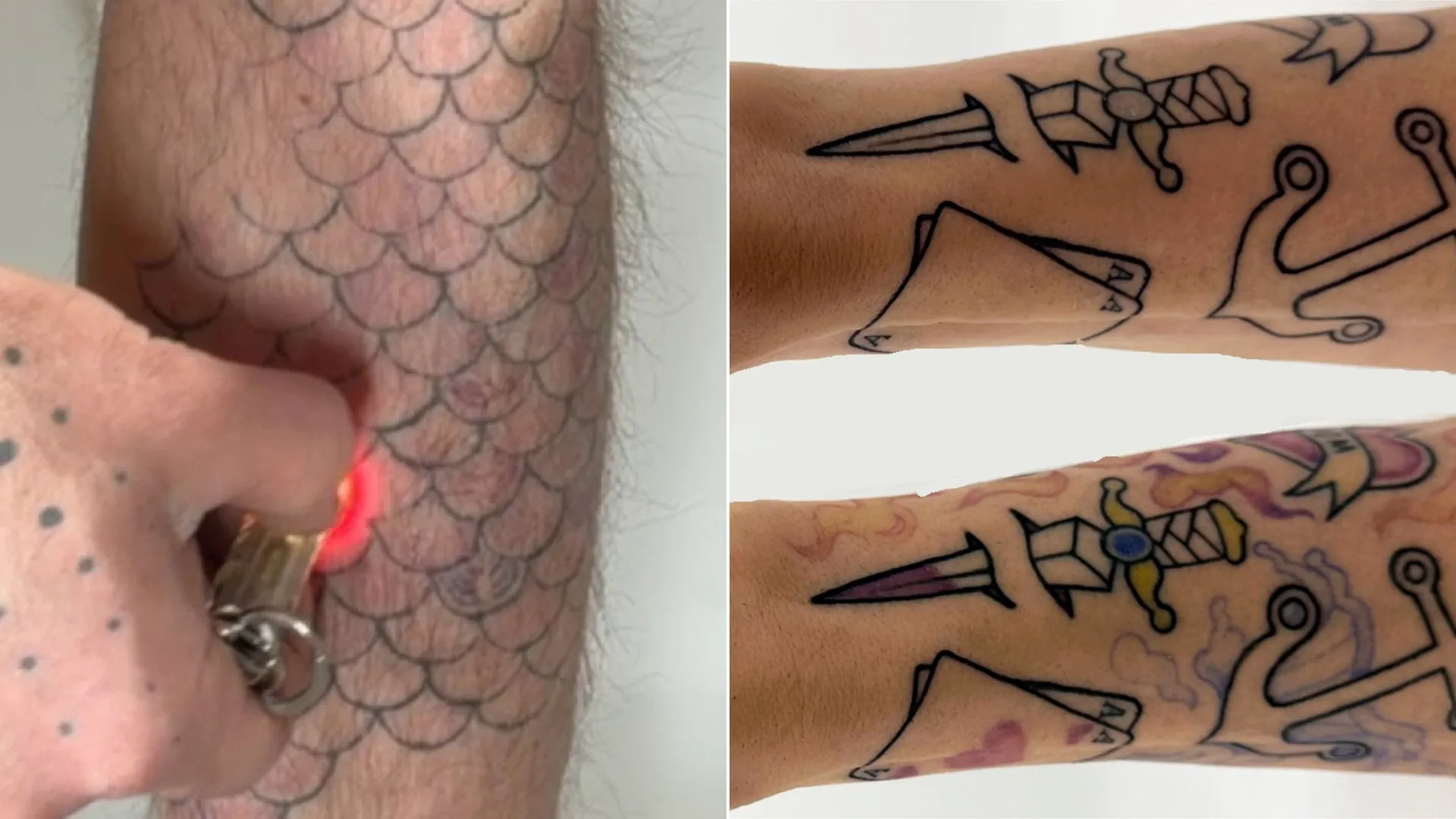
Engineers have designed a new line of multicolored tattoo inks that switch on and off with different kinds of light, a technology that could one day let people hide their tattoos for an important business meeting.
The inks, known as PhotoTat, are described in a study published in the Cell Press journal Matter & Light. Users could even doodle on their own skin using a simple laser pointer, the researchers said.
“Tattooing is a very ancient technology that remains mostly untapped as a platform for today’s technologies,” said lead author Carson Bruns of the University of Colorado Boulder.
How the inks work
PhotoTat inks are made from dyes and a plexiglass-like material that is common in many medical technologies on the market today, including dermal fillers.
The team starts with polymethyl methacrylate (PMMA), which forms incredibly small spheres that look like they are made of glass. The researchers then insert a range of color-changing dyes into the spheres.
“By mixing these primary colors, we can generate a full color image,” Bruns said.
The dyes are normally completely invisible to the human eye. Under ultraviolet (UV) light, they change color within seconds, turning a vibrant blue, magenta or yellow. The colors fade over several hours, but exposure to bright LED light switches them off faster.
“PhotoTat is like a switch. You turn it on with UV light, but you can turn it off again when you go to grandma’s house,” Bruns said.
Medical uses
Beyond cosmetics, Bruns foresees practical applications. Many people undergoing radiation therapy for cancer must get small tattoos on their bodies to help doctors guide the radiation beams. Those markers can be scarring, both mentally and physically.
“They’re not beautiful, and they become a permanent reminder of a traumatic experience,” Bruns said. “With PhotoTat, we could turn an involuntary medical tattoo into something that’s only visible to the doctor when you go in the clinic, and then it can be invisible the rest of the time.”
Not yet available
PhotoTat is not available at any tattoo parlors yet. Bruns and his colleagues hope to keep improving the designs in the coming years, eventually making the inks available to body art fans across the country.
Bruns has not yet determined whether the inks are safe for people. He has, however, tried them on himself. He has a black outline of fish scales on his leg, which he filled in with PhotoTat inks.
With a little light, Bruns can turn those scales red, orange, blue and more, almost like “magical mermaid scales,” he said.
For now, PhotoTat remains unavailable to the public, and its safety for people has not yet been determined. Bruns sees uses ranging from temporary designs and skin doodles to medical markers.
A personal project
The research is a passion project for Bruns, who has many tattoos of his own, including a green lion on his arm.
“I love body art because of how personal it is,” he said.
He also sees the work as a stand against social attitudes.
“There’s a stigma, in science and in many cultures, around body art,” Bruns said. “I’m proud to be pushing against that.”
Related articles


Microsoft 365 Family subscribers will finally be able to share AI benefits
Microsoft bundled its AI-powered Office features into Microsoft 365 Personal and Family subscriptions last year, but it only allowed the primary account holder to access the AI benefits.

US Army’s cheap Blackbeard hypersonic missile gets its first ground launch glimpse
Defense startup Castelion has released what appears to be the first image of its low-cost...

Subsea cables and oil pipelines: The infrastructure linking AI, empire, and occupation
The growing importance of subsea cables in military and economic policy offers an entrypoint into understanding the corrosive, yet dependent, relationship between AI and oil infrastructure
Soft sensor recreates 3D shapes through bending and twisting despite fiber damage
MIT researchers have developed a soft sensor that recreates its own three-dimensional shape as it...
Green hydrogen process reaches 98% efficiency while producing valuable chemicals
A new electrochemical process developed by researchers at the Technion, Israel Institute of Technology, could...