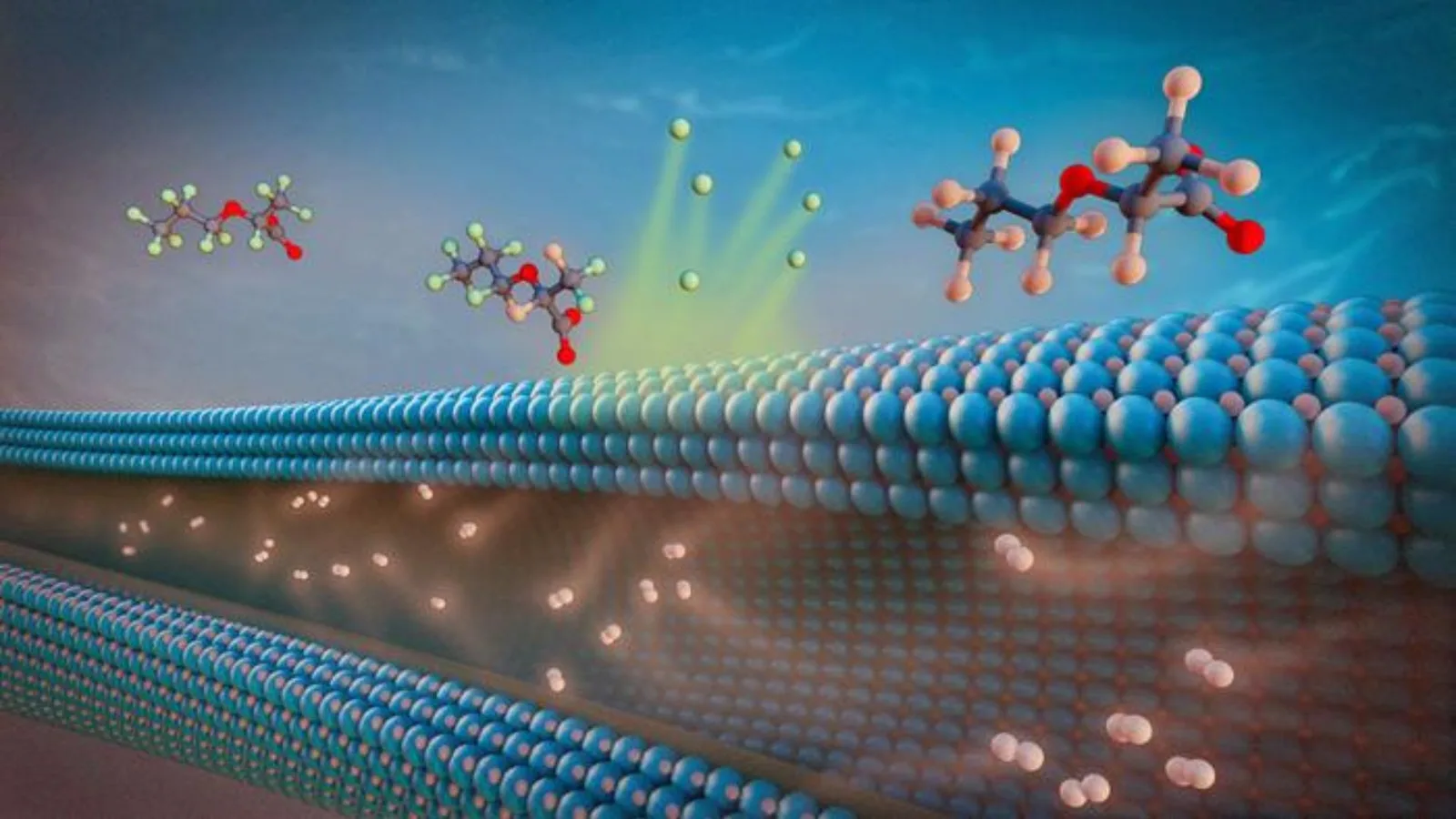
Plastic to diamonds in a flash: Lasers forge 3,000-atom nanodiamonds that survive
Researchers in Germany have used powerful lasers to turn ordinary plastic into tiny diamonds, then...
This story was prepared automatically by software.
Researchers in Germany have used powerful lasers to turn ordinary plastic into tiny diamonds, then caught the crystals intact. The team from the Helmholtz-Zentrum Dresden-Rossendorf (HZDR) and the University of Rostock showed the nanodiamonds survive the trip from extreme pressure and temperature back to ordinary conditions.
Each recovered particle averaged 3 nanometers, three billionths of a meter, and contained roughly 3,000 carbon atoms. The laser method yields high purity, tiny size and closely matched particle sizes that conventional production, including explosions, cannot achieve.
Recreating planetary interiors
The work began with experiments simulating conditions inside Neptune and Uranus, where temperatures reach several thousand degrees Celsius and pressures are millions of times Earth’s atmospheric pressure. Lasers fired at plastic created conditions in which carbon formed diamonds, though the team could initially detect the crystals only briefly.
The team expected nanodiamonds to form, said Dominik Kraus of HZDR’s new HEDI Institute of High Energy Density Physics, but the speed surprised them.
A soft landing needed
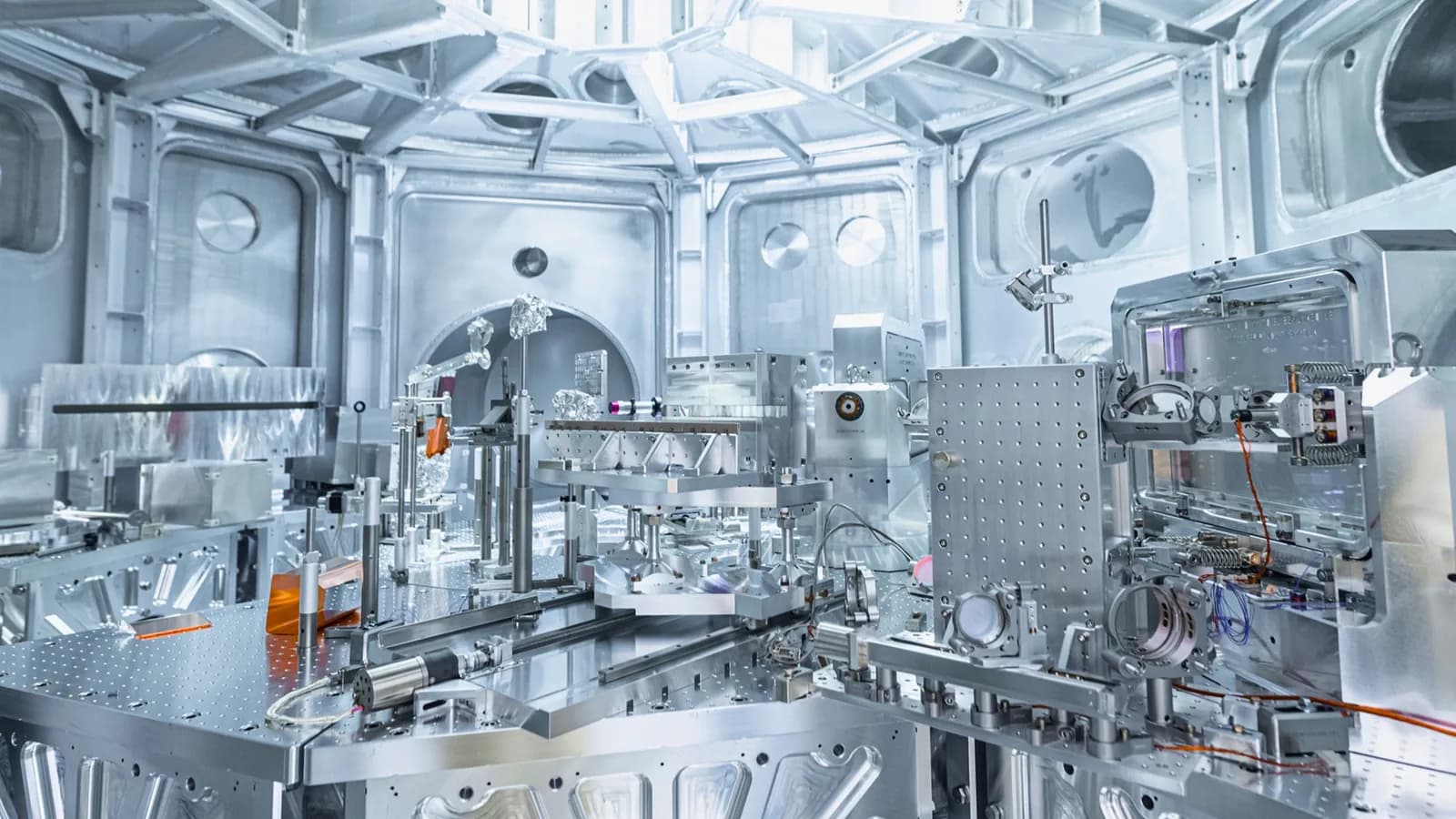
The team recovered the diamonds at the Extreme Light Infrastructure (ELI) south of Prague, a laser facility combining very high pulse energies with a high repetition rate. At its L4n-P3 station, a laser fired three times per minute at a PET plastic film 0.004 inches (100 micrometers) thick. Each pulse sent a shock wave through the film that compressed the plastic, formed nanodiamonds and launched them toward a collection cylinder. In the recovery experiments, plastic was shock-compressed to pressures around 100 gigapascals, or roughly 14.5 million pounds per square inch.
Experimental setup at the L4n-P3 experimental station of the ELI Beamlines facility
When the compression wave exits the sample into a vacuum, it accelerates the diamonds past 22,000 mph (10 kilometers per second), comparable to a meteorite impact. Catching them intact required a very soft medium, so the team used a water-soluble ionic gel that works in a vacuum.
Each laser shot produced about 10 trillion diamonds, yet collecting a few hundred micrograms took roughly 100 shots. That was enough to characterize the particles with an ELMI-MV electron microscope at the University of Rostock that can resolve individual atoms.
Seeing the purified diamonds directly was “a special moment we had been working towards for years,” said Ben Heuser of HZDR, the study’s primary author.
Uses beyond the lab
Hard, stable and heat-resistant, nanodiamonds already appear in grinding and polishing agents. Smaller, cleaner particles of consistent size could widen their use in medicine, materials and energy, including quantum sensors and contrast agents for scans.
Smaller diamonds offer more combined surface area for a given amount of material, which could improve their efficiency as catalysts in processes such as splitting CO2 with sunlight. Starting from plastic also makes it easier to dope the diamonds, or add atoms of other elements, tailoring them for tasks such as improving MRI contrast agents.
Next stop: BC8 carbon
More energy-efficient lasers from fusion research could fire powerful pulses more often, making the process scalable. The researchers aim to reach the milligram range, a quantity comparable to conventional production.
The team also wants to use laser compression to make BC8, a form of carbon that has so far only been predicted theoretically. It is expected to be denser than diamond, similarly hard and less brittle. Forming it requires conditions that do not occur naturally on Earth, so the researchers plan an initial experiment at higher pressures in November.
The study was first published in Diamond and Related Materials.
Related articles