Retired US Navy Fire Scout helicopters turned into flying testbeds for new sensors
The U.S. Army has begun flight testing four MQ-8C Fire Scout unmanned helicopters, repurposing aircraft...
This story was prepared automatically by software.
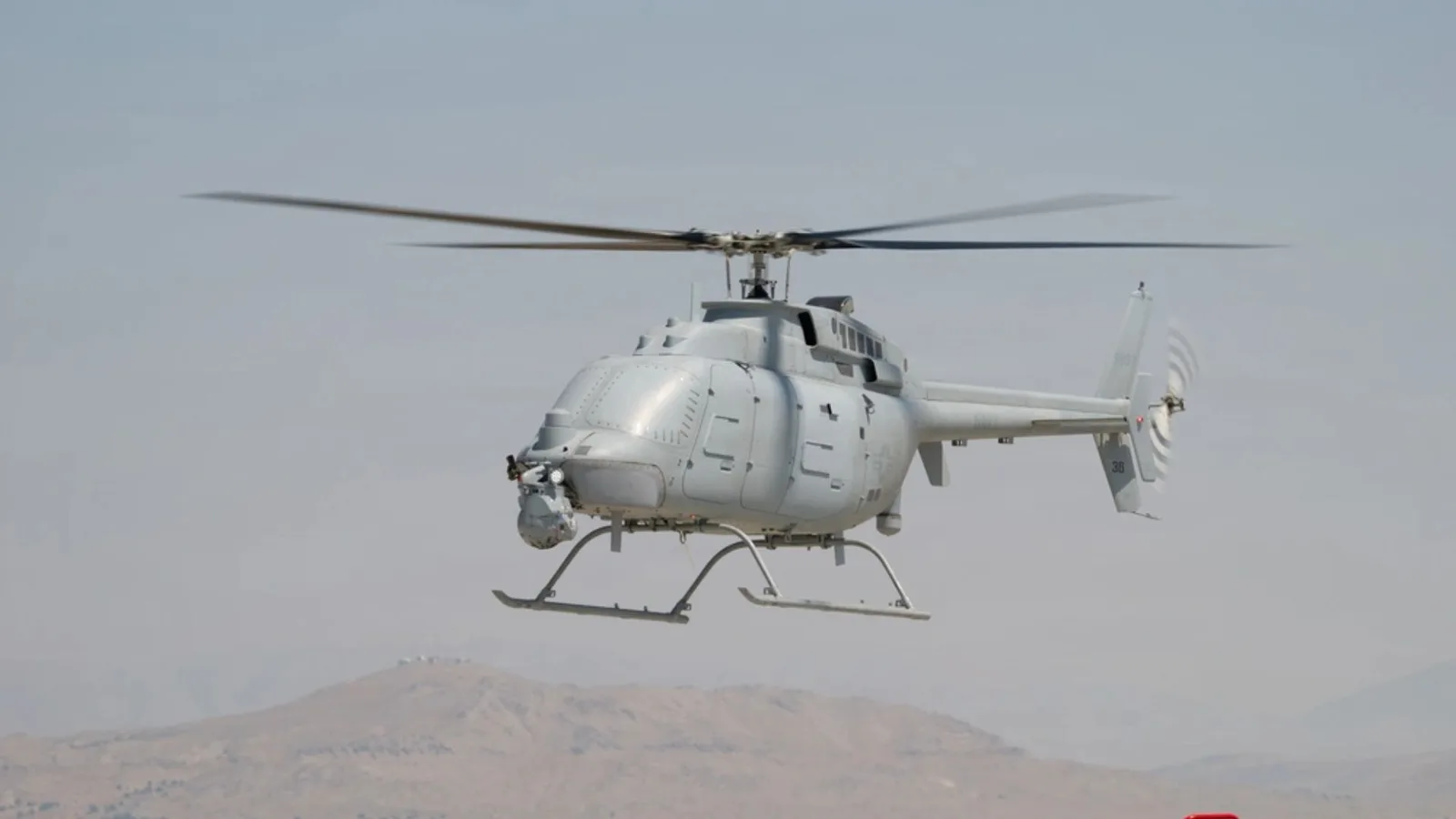
The U.S. Army has begun flight testing four MQ-8C Fire Scout unmanned helicopters, repurposing aircraft retired by the U.S. Navy to test Army sensors while avoiding more than $70 million in procurement costs. The helicopters, originally destined for long-term storage, will help engineers evaluate sensor packages under realistic flight conditions.
The Army’s Redstone Test Center at Redstone Arsenal, Alabama, received the helicopters along with two mobile control systems, spare engines, and support equipment. After completing ground tests in August 2026, the team began flight testing at Dugway Proving Ground in Utah and Redstone Arsenal.
Retired Navy helicopters find a new role
The Navy started retiring its MQ-8C fleet in February 2024, and the last aircraft will leave service by the end of fiscal 2026. The Multi-Mission Tactical UAS program office, called PMA-266, had already started sending aircraft and equipment to the 309th Aerospace Maintenance and Regeneration Group in Tucson, Arizona, often known as the military’s aircraft boneyard.
In November 2024, the Redstone Test Center approached the Navy about using the helicopters as captive-carry testbeds. This method allows engineers to mount sensors on an aircraft and collect flight data without releasing the payload. It also provides a way to evaluate equipment without procuring a dedicated test aircraft.
Army and Navy personnel inspected the helicopters and control systems at Point Mugu, California, in December 2024. The Army formally requested four aircraft, two control systems, spare engines, and support equipment in January 2025.
Transfer recovers equipment and cuts costs
The Navy approved the request in May 2025, and the aircraft and control systems reached Redstone Arsenal by July that year. The program office also worked with Naval Supply Systems Command to recover communications security equipment, including radios, transponders, and modems. The final recovered assets arrived in July 2026.
The transfer saved the Army more than $70 million in procurement costs. The Navy also said the arrangement avoided additional spending on research and development, flight hours, data collection, contracts, equipment sourcing, and manpower.
“Considering where we started—having zero experience with these systems—it’s quite remarkable what has been accomplished. We are certainly thankful for the many people across various organizations that helped us along the way,” said Chief Warrant Officer 4 Taylor Kiel, a test director and experimental test pilot with the Redstone Test Center’s Aviation Flight Test Directorate.
Flight tests prepare crews and maintainers
The ongoing tests will help Army personnel become familiar with the aircraft before they begin sensor evaluation work. The program also gives maintainers practical experience with the helicopters and their associated systems.
The Navy said the transition took 14 months from the Army’s initial request to the start of flight testing.
“Our priority is delivering lethal and ready capabilities to the warfighters,” said Col. Leigh Irwin, PMA-266 program manager. “Repurposing these MQ-8C assets from storage to active testing is a major acquisition win for both services, demonstrating how we can supercharge existing capabilities and increase acquisition velocity to support joint operations.”
MQ-8C brings long-endurance flight capability
Northrop Grumman built the MQ-8C Fire Scout using the airframe of the commercial Bell 407 helicopter. It was designed to operate from Navy littoral combat ships and other vessels that can handle aircraft.
The unmanned helicopter provides surveillance and targeting support, with an endurance of up to 12 hours and a range of approximately 173 miles (150 nautical miles). The Navy achieved initial operational capability with the MQ-8C in June 2019 and purchased 38 aircraft. By 2023, it operated only 10, while the remaining helicopters sat in storage.
The four transferred aircraft are now undergoing flight testing as the Army prepares to use them for sensor development and evaluation.
Source: https://interestingengineering.com/military/us-army-retired-fire-scout-helicopters
Related articles