
SM-6, Sea Venom, and Mk 48 Torpedo: How US-UK sank USS Klakring in Atlantic Thunder 2026
The U.S. Navy and Royal Navy have concluded Exercise Atlantic Thunder 2026, a two-week live-fire...
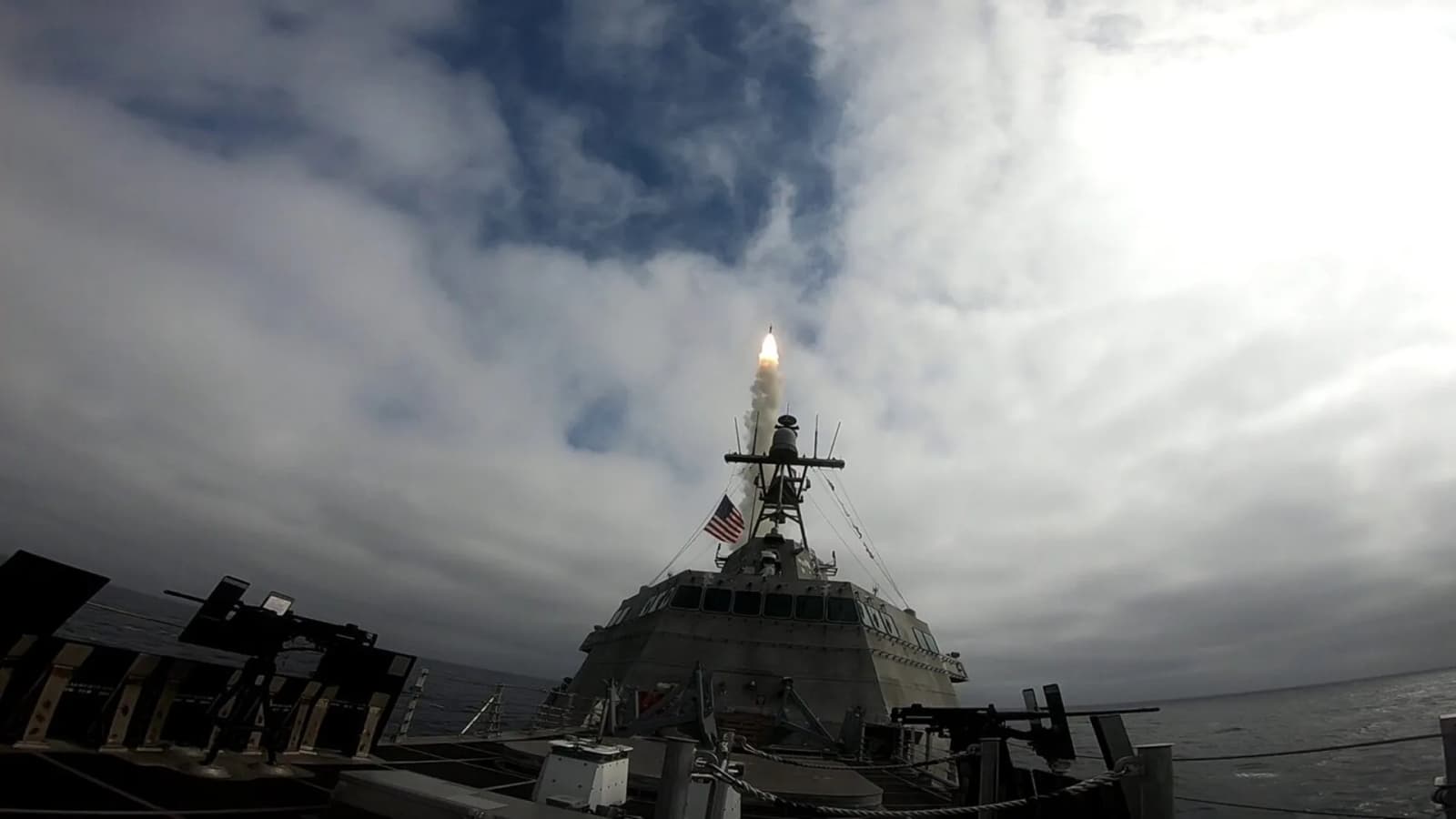
The U.S. Navy and Royal Navy have concluded Exercise Atlantic Thunder 2026, a two-week live-fire exercise off the coast of Scotland that ended with a U.S. submarine putting the final round into a decommissioned American frigate after an organized sequence of missile and torpedo strikes designed to test the full range of allied offensive weapons systems.
The sinking exercise, called a SINKEX, took place from Sept. 14 to 25 in North Atlantic waters near the QinetiQ Hebrides range in northwest Scotland. The target was the ex-USS Klakring (FFG-42), a 4,100-ton Oliver Hazard Perry-class guided-missile frigate commissioned Aug. 20, 1983, decommissioned March 22, 2013, and stored at the Philadelphia Naval Inactive Ship Maintenance Facility before being prepared and towed to the exercise area.
The ship was named for Rear Adm. Thomas B. Klakring, who earned three Navy Crosses commanding the submarine USS Guardfish during World War II.
Longest range first
The attack sequence was deliberate and structured. U.S. Navy Capt. Kelechi Ndukwe, commander of Task Force 65 under U.S. Naval Forces Europe-Africa/U.S. 6th Fleet, said the plan called for starting with the longest-range weapon and working inward.
USS Paul Ignatius (DDG-117), an Arleigh Burke-class guided-missile destroyer, opened the engagement by firing an anti-surface variant of the Standard Missile-6 at the maximum available surface-to-surface range. Ndukwe declined to specify the exact distance, which remains undisclosed.
The SM-6 shot validated a capability the Navy has been expanding from its original air defense role into offensive surface warfare. Earlier exercises, including Valiant Shield 2024, have demonstrated the SM-6’s surface engagement mode against smaller targets, but the Atlantic Thunder SINKEX used a full-displacement frigate hull as the target, providing more robust data on terminal effects.
UK confirms two new ship-killing missiles
Royal Navy frigate HMS Portland (F-79) fired the Naval Strike Missile during the exercise, confirming operational capability for the weapon system that the ship was fitted with in December 2024. A Royal Navy Wildcat helicopter from 815 Naval Air Squadron then launched the Sea Venom anti-ship missile, the second new ship-killing weapon the Royal Navy confirmed during the exercise.
“The successful firing of NSM marks a significant milestone for the Royal Navy, demonstrating our ability to deliver credible, modern maritime strike capability,” said Royal Navy Lt. Cmdr. Louise Kirkaldy, HMS Portland’s Principal Warfare Officer.
Torpedo Finishes the Job
USS Massachusetts (SSN-798), a Virginia-class attack submarine, delivered the final blow. It fired a Mark 48 Advanced Capability Torpedo at the Klakring, which Sixth Fleet said resulted in the final hit and ultimately sank the frigate.
Ndukwe said the exercise was the first time in four years the two navies conducted a live-fire SINKEX together. The last joint Atlantic SINKEX took place in September 2022, when allied forces sank the ex-USS Boone off the Scottish coast.
“Atlantic Thunder demonstrates the unmatched lethality and interoperability of the United States and United Kingdom,” Ndukwe said. “The shared battle damage assessment will ensure that the Navy and our navies will continue to be capable and lethal fighting forces.”
Other units involved included U.S. Navy and Royal Air Force P-8 maritime patrol aircraft, a Royal Navy Wildcat helicopter, U.S. Air Force F-15E Strike Eagles and personnel from U.S. Explosive Ordnance Disposal Mobile Unit 8. The exercise also tested Royal Navy unmanned underwater vehicles in a live environment, according to U.S. Navy officials.
Related articles

Firefox just got a redesign with round tabs, new themes, and Compact Mode
Firefox will look a little different the next time you launch it - more bubbly, with some new pops of color.

Polaroid’s new instant camera has four creative shooting modes you can experiment with
Polaroid announced a new instant camera that lets photographers get more creative and experimental with their shots than just changing the aperture or shutter speed.

Fairphone’s next repairable wireless earbuds will launch on October 14th
Following leaks revealing a major redesign earlier this month and an official teaser posted to X yesterday, Fairphone has shared some exclusive details with The Verge about the first follow-up to its…

Quantum battery: Scientists use charging to balance power, stable energy delivery
A collaboration of researchers from various parts of the world has identified the fundamental limits...

MIT-led team tests wind turbines in air 220 times denser for higher power output
Researchers have used a highly pressurized wind tunnel to study how wind turbine alignment and...
125-million-year-old fossil: Earliest true mammal ever built for swimming
Chinese and international researchers have identified a newly described mammal species that lived about 125...