SpaceX launch to test first-ever in-orbit manufacturing of composite space parts aboard ISS
Space engineering has always been a game of origami. Every satellite, solar array, and space...
Space engineering has always been a game of origami. Every satellite, solar array, and space station module folds tightly enough to survive a violent rocket launch, limiting how large or complex humanity can build beyond Earth.
But now, researchers from the University of Illinois Urbana-Champaign are aiming to transform how space structures are built. The team is gearing up to launch Mission “Illinois” to the International Space Station this Sunday, Nov. 29. It will be launched from Cape Canaveral aboard a SpaceX Falcon 9 rocket at 10:49 a.m. EST.
The experiment aims to prove that structural components can be manufactured directly in orbit. A successful run will mark the first time composite structural parts are fabricated from raw materials in space.
Working without power grid
To overcome a major space challenge, the project seeks to replace the costly, rigid process of launching pre-built structures from Earth with on-demand in-space manufacturing using raw materials.
“Previous efforts of in-space manufacturing have attempted to translate Earth-based concepts into orbit, but we’re making something uniquely suited to the demands of the space environment for the first time,” said Sameh Tawfick, a professor of mechanical science and engineering who leads the mission.
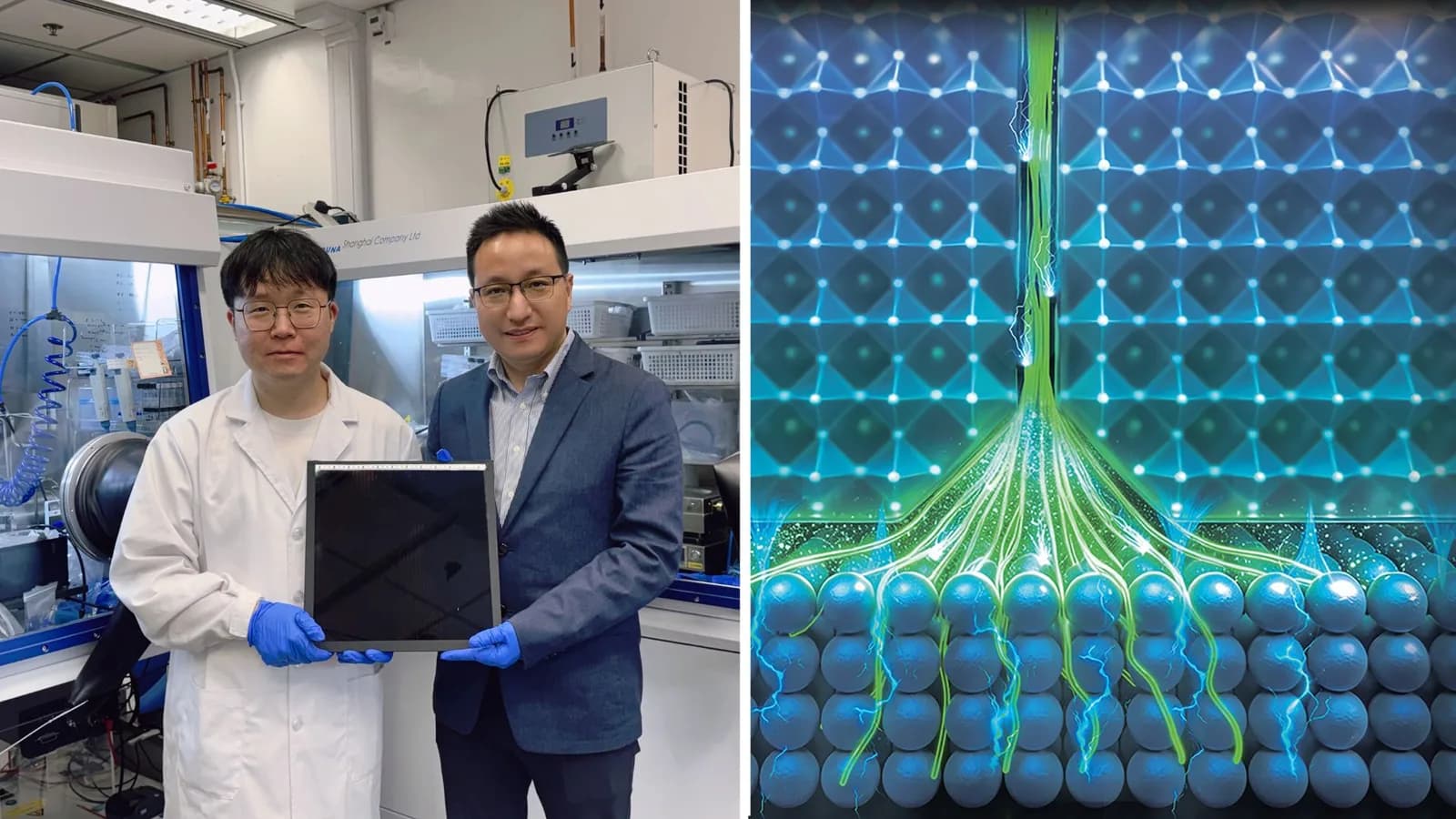
Since power is scarce in orbit, known manufacturing methods requiring massive ovens or heavy machinery to cure industrial plastics are non-starters. The Illinois team solved this problem using a chemical chain reaction called frontal polymerization, pioneered at the university’s Beckman Institute in 2018.
The process is said to be self-propagating. Once a tiny jolt of heat triggers the reaction in a compact, flexible carbon fiber resin, the chemical bonds release their own stored energy. A curing wave then ripples through the material on its own, hardening the soft resin into a rigid composite with minimal external power.
“Space puts very tight constraints on energy, so having something that provides the energy for itself is ideal,” Tawfick said.
Mission will produce hollow tube
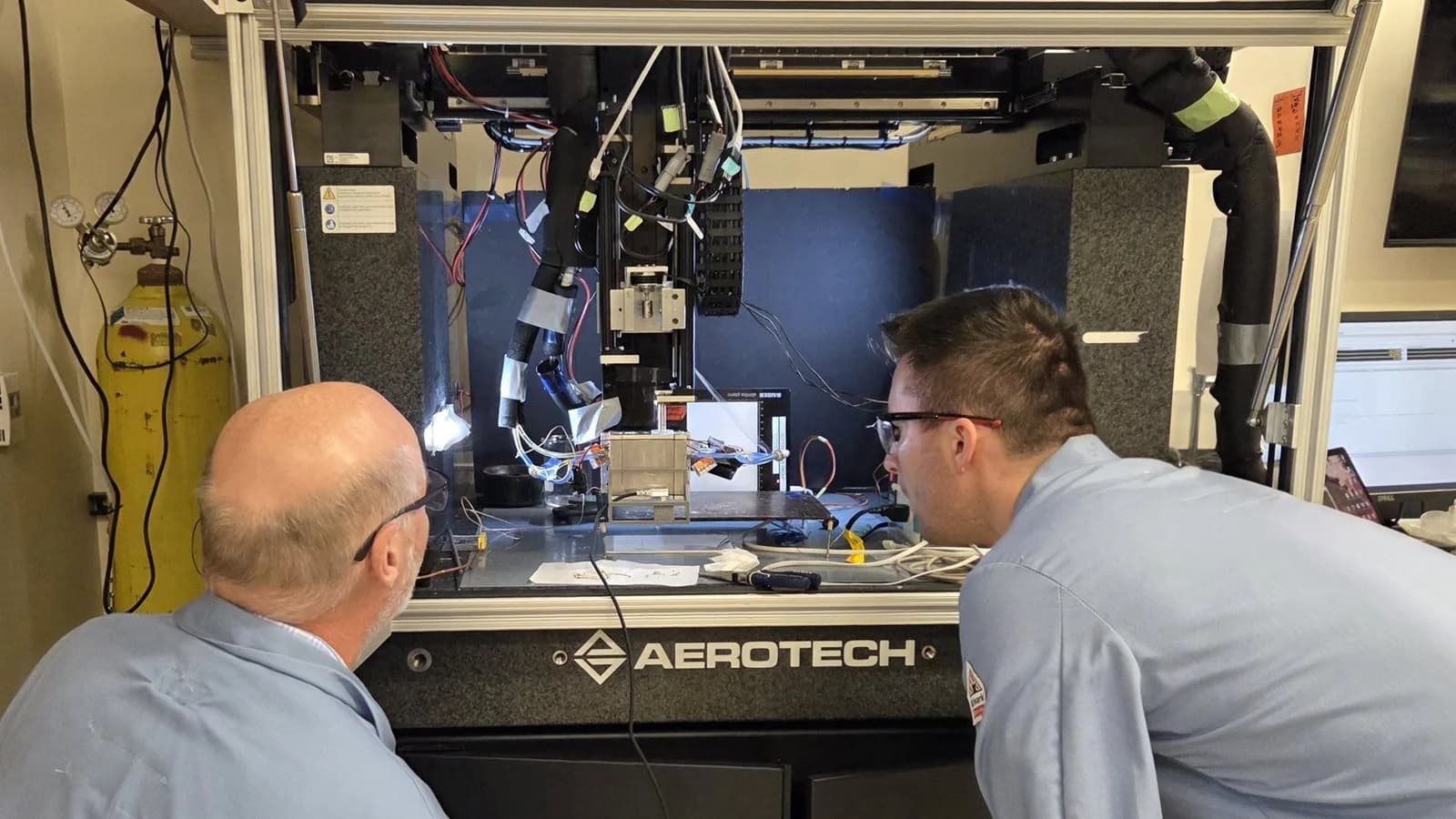
Automated hardware will produce a 16-inch hollow tube, called a longeron, during the mission before returning it to Earth for structural testing.
Getting the technology ready for flight required years of painstaking adaptation across aerospace, chemistry, and materials science labs. Researchers had to design machinery tough enough to survive rocket vibrations and extend the resin’s shelf life from a few hours to several months.
“This is challenging even on Earth, let alone in space with a completely automated process,” Tawfick said. “Throughout the project, we embraced the attitude of taking risks. Whenever we reached a juncture, we always took the riskier path when it could lead to a higher payoff. Even if the result is not what we expect, we will definitely learn something.”
That willingness to gamble caught the eye of the Defense Advanced Research Projects Agency (DARPA), which funded the effort in 2020 under its NOM4D program. Mission “Illinois” acts as a vital companion to Caltech’s DARPA-backed ASTRA experiment, which demonstrated that robots can assemble pre-made trusses in space.
These two technologies point toward a future where astronauts and robots no longer unpack space stations from a box, but manufacture them from scratch.
Source: https://interestingengineering.com/space/composite-space-parts-aboard-iss
Get the latest news delivered to your inbox.
Related articles