US Air Force tests SpaceX capsule for rocket-powered global cargo delivery
The US Air Force is exploring whether rockets could deliver military cargo anywhere on Earth...
This story was prepared automatically by software.
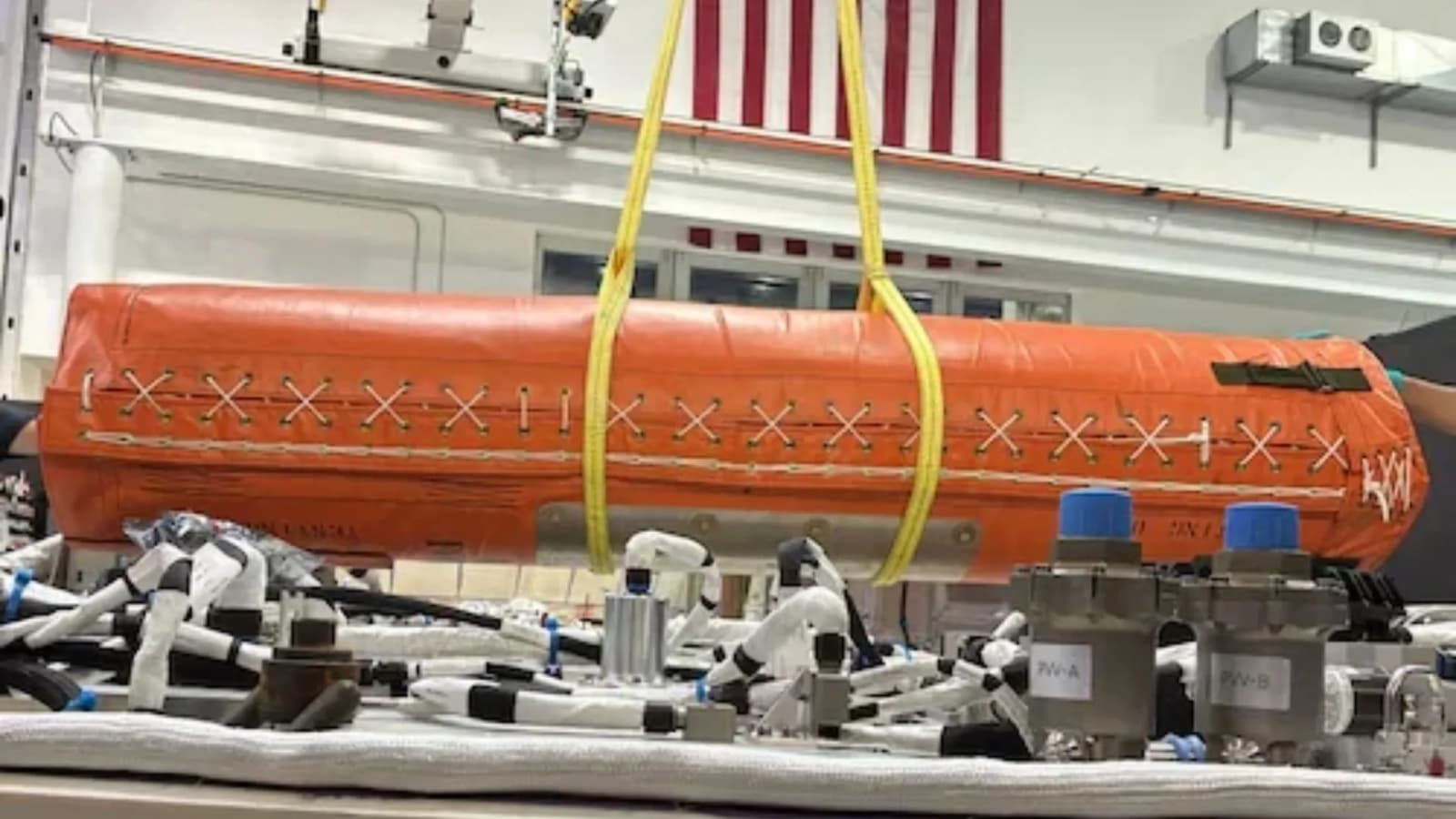
The US Air Force is exploring whether rockets could deliver military cargo anywhere on Earth in a fraction of the time conventional transport takes. On October 20, the Air Force Research Laboratory (AFRL) tested cargo-delivery technologies aboard a commercial SpaceX launch, using a Starfall reentry capsule to study how equipment withstands the journey through space and back into the atmosphere.
The test is part of AFRL’s Rocket Cargo research program, which aims to determine whether large commercial rockets could rapidly transport tens of tons of supplies to locations around the world, including remote sites and areas where conventional aircraft cannot easily operate.
Rather than demonstrating a complete operational delivery system, the latest experiment focused on collecting data about cargo protection during launch and reentry. Researchers loaded the capsule with prototype cargo pods, mission equipment, and sensors to assess the conditions that future payloads would have to survive.
Testing whether cargo can survive launch and reentry
The Starfall capsule carried several experimental cargo pods developed by AFRL to accommodate different payloads. Each pod contained representative mission equipment and environmental sensors designed to measure temperature, shock, and vibration during the journey.
Researchers paid particular attention to electronics and survival equipment, including batteries, a satellite communications-enabled tracker, a reverse-osmosis water desalination system, emergency medical supplies, and survival gear. Engineers also checked whether a UNI-PAC III life raft would fit inside the capsule, potentially allowing it to be included in future tests.
These measurements are important because rocket-based delivery introduces challenges beyond simply reaching a destination quickly. Cargo must withstand the forces of launch, the conditions encountered in space, and the heat and mechanical stresses associated with atmospheric reentry. The equipment must then arrive in a condition suitable for immediate use.
AFRL said the experiment would help researchers understand how to protect sensitive equipment during this process. The agency did not announce a timeline for operational deployment or provide a confirmed delivery time for a future end-to-end mission.
Why the US military is interested in rocket cargo
Rocket Cargo is intended to complement conventional military transport rather than simply replace it. AFRL sees a potential advantage in delivering tens of tons of supplies in a single launch, potentially reaching locations without suitable runways or road infrastructure.
Such a capability could support military operations in contested environments, where transport aircraft and ground supply routes may face threats or logistical constraints. Potential applications also include expeditionary missions, rescue operations, disaster relief, and responses to chemical, biological, radiological, and nuclear hazards.
The concept remains experimental, however. Launch costs, cargo handling, landing locations, reentry safety, and the ability to deliver supplies reliably at scale are among the practical challenges that any operational system would need to address.
AFRL is working with several commercial companies, including SpaceX, Blue Origin, Rocket Lab, Sierra Space, Anduril, Inversion Space, and Outpost Space, to evaluate launch vehicles and reentry technologies.
The latest test is another step toward determining whether commercial space transportation can become a practical tool for military logistics. Right now, the focus remains on gathering data and reducing technical risks before rocket-powered cargo delivery can move from experimental demonstrations toward routine operations.
Source: https://interestingengineering.com/military/us-spacex-capsule-rocket-powered-cargo-delivery
Related articles