
US hypersonic cruise missile built to exceed Mach 5 reaches testing phase in Australia
The U.S. Air Force’s Hypersonic Attack Cruise Missile (HACM) has started flight testing after the...
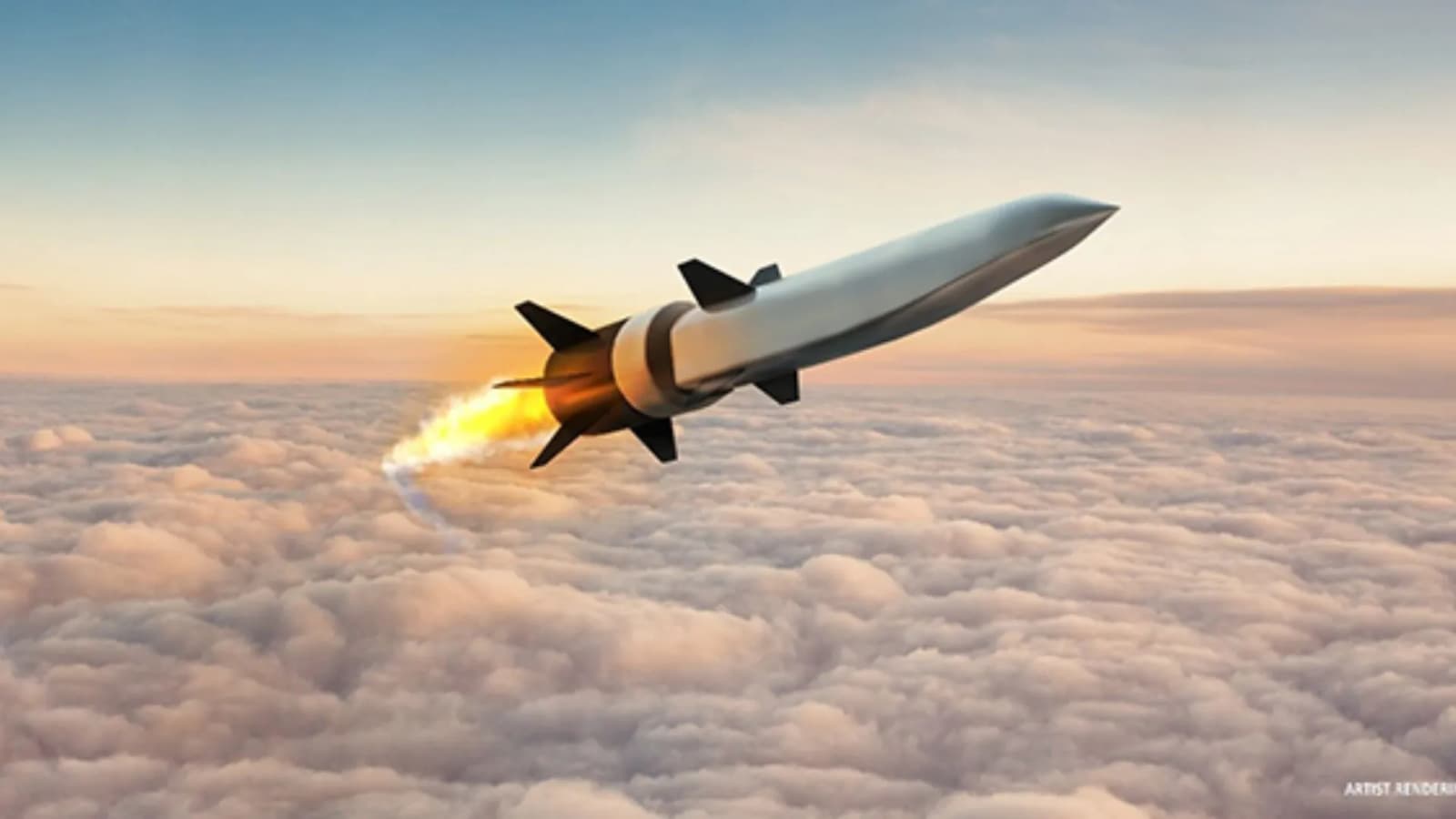
The U.S. Air Force’s Hypersonic Attack Cruise Missile (HACM) has started flight testing after the Royal Australian Air Force released a test unit over an Australian range. A report confirmed this on October 5, 2026, calling it a major milestone for a program that has faced several delays. The Air Force has not said when the release happened or if the missile flew on its own power afterwards.
The development comes as the Air Force works toward a potential rapid acquisition decision in fiscal year 2027. It has also cut the rapid-prototyping campaign from seven flight tests to five.
Australia hosts the test
The U.S. and Royal Australian Air Force are working together on HACM through the Southern Cross Integrated Flight Research Experiment (SCIFiRE), a project built on more than 15 years of partnership.
“The U.S. Air Force, in partnership with Australia, has conducted a flight test of the Hypersonic Attack Cruise Missile (HACM) as part of our continuous work to advance long-range strike capabilities,” an Air Force spokesperson confirmed to The War Zone (TWZ). “This effort is part of the Southern Cross Integrated Flight Research Experiment (SCIFiRE), a collaborative agreement built on more than 15 years of partnership between our two nations.”
The Air Force has not shared the location or date of the test. It is also not clear which aircraft carried the HACM or if the missile’s scramjet engine worked after release. Earlier reports said the RAAF F/A-18F Super Hornet was expected to be used for testing.
Inside the hypersonic design
HACM is based on DARPA’s Hypersonic Air-breathing Weapon Concept (HAWC). In 2022, Raytheon, now called RTX, and Northrop Grumman were chosen to develop the missile.
The weapon uses a rocket booster to reach the speed needed for its scramjet-powered cruiser to operate. The cruiser then separates from the booster and continues toward its target.
“The missile consists of two stages, a rocket booster and a scramjet cruiser, which separates from the booster and eventually dives toward its target,” according to Government Accountability Office (GAO).
HACM is designed for speeds above Mach 5, the standard threshold for hypersonic flight. Its maximum speed has not been disclosed.
The flight schedule slipped
HACM was originally expected to begin flight testing in 2024. The target moved to 2025 and then to fiscal year 2026. A July 2026 GAO report said the program was on track for its first flight test in the second quarter of fiscal year 2026, a period that ended on March 31, 2026.
That planned window has therefore passed. The October announcement confirms that a flight-test release has occurred, but it does not state when the event happened.
“The HACM program is on track to conduct its first flight test in the second quarter of fiscal year 2026, but officials said there is effectively zero margin left in the schedule for the rapid prototyping effort. The program has already descoped the rapid prototyping effort from seven to five planned flight tests,” GAO said in a July report.
Five tests remain
The shortened campaign leaves little room for failure as the Air Force targets a fiscal 2027 procurement decision.
“If a significant flight test failure occurs, it is likely that the program will not be able to complete all five tests within the 5-year rapid prototyping timeframe,” the report continued. “According to the program, completing at least the first three flight tests is critical for informing the Air Force’s decision to initiate a rapid fielding effort and procure HACM in fiscal year 2027.”
The program has also taken risks to preserve its schedule. The confirmed Australian release now moves HACM into its long-awaited flight-test phase, while the Air Force faces the challenge of completing the remaining tests in time to support its 2027 acquisition plans.
Source: https://interestingengineering.com/military/us-mach-5-hypersonic-cruise-missile-tested
Related articles

I can’t use Apple’s new Screen Time on my daughter’s iPhone because my son won’t update his MacBook
After suffering years of frustration with Apple's parental control features, I've been eagerly anticipating the revamped Screen Time that launched last month with iOS 27.

Google is about to remove free access to Gemini Flash and Pro
Starting on October 9th, anyone using Google Gemini on a free plan will be limited to the Flash Lite model.

The Pixel Watch 5 is a better value at $65 off
The Google Pixel Watch 5 is discounted by $60 during Amazon’s October sale, with the 41mm version on sale for $334.99, and the 45mm version for $364.99.
Pentagon bets on lasers and microwaves to strengthen homeland drone defense
The US Defense Department has selected four companies for a pilot program to test directed-energy...

Machine learning powered cat search network helps find missing pets
Cats are famously good at getting into places humans cannot easily reach. Now, in Kazakhstan,...

Kawasaki turns to physical AI to push its Kaleido humanoid toward full autonomy
Kawasaki plans to integrate Japanese physical AI developer Noetra’s physical AI platform into its Kaleido...