
NASA tests new tools to detect 2,000-micron drops that bypass aircraft ice protections
Somewhere between an ordinary cloud and a rain shower lives a hazard that aviation engineers...
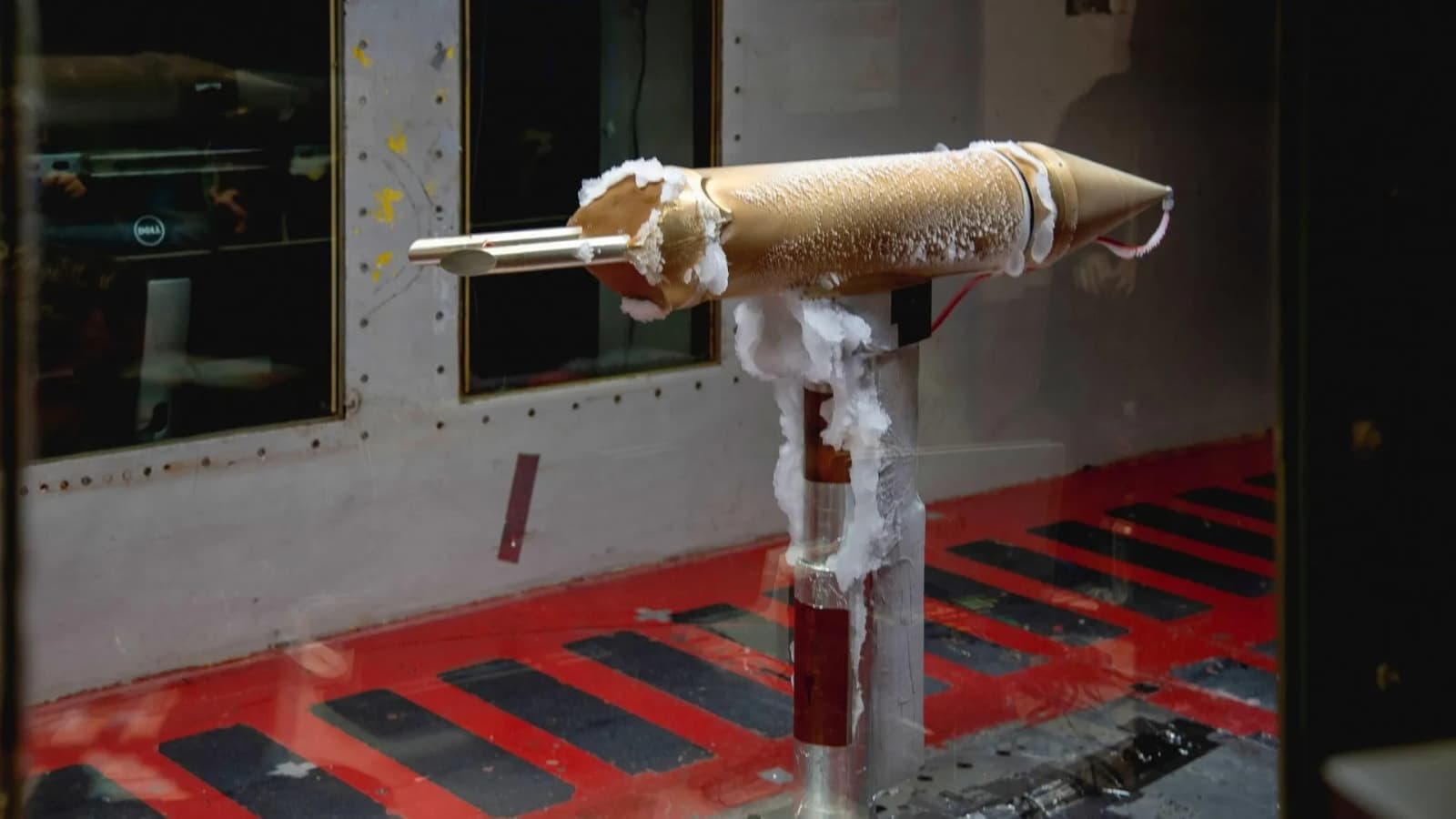
Somewhere between an ordinary cloud and a rain shower lives a hazard that aviation engineers have struggled to fully account for since a 1994 commuter plane crash first brought it to regulatory attention. NASA’s Glenn Research Center is running a new series of tests aimed at improving the industry’s understanding of that hazard and the tools used to design aircraft that can survive it.
The threat is known as supercooled large droplet icing. It occurs when aircraft fly through clouds containing unusually large water droplets that are well below 32 degrees Fahrenheit but have not frozen because they lack the dust or other tiny particles needed to crystallize. The moment those droplets strike an aircraft surface, they freeze rapidly.
Why size matters
Most aircraft are designed and certified against standard icing clouds, where droplets range from roughly 2 to 100 microns in diameter. For reference, a human hair is about 70 microns wide. Those conditions are well understood and aviation engineers have mature tools to model them.
Supercooled large droplets are a different category. They can reach up to 2,000 microns in diameter, a size more commonly associated with freezing rain at ground level. Their mass and momentum carry them past the leading edges of wings and stabilizers and into areas farther aft on the aircraft where conventional ice protection systems do not operate. That means the protections designed for standard icing conditions can leave portions of an airframe vulnerable when large drops are present.
What NASA is testing
In a test campaign conducted at the Icing Research Tunnel at Glenn Research Center in Cleveland, NASA researchers worked with new probes designed to provide better real-time measurement of droplet sizes in the artificially generated clouds inside the tunnel.
The new probes are capable of detecting drops larger than 45 microns and performing real-time analysis of their sizes. Researchers will combine those measurements with results from a separate probe that measures droplets smaller than 45 microns, producing a complete picture of the droplet size spectrum across the full range found in real icing clouds.
NASA described the process of cross-validating the new probes against an older, labor-intensive technique that involves post-processing droplet size image data after a test run. That comparison will allow the agency to confirm how accurately the new probes capture the large-droplet end of the spectrum, which is precisely where the engineering tools used by industry have the most uncertainty.
The broader goal
The test campaign is a milestone for the Subsonic Flight Demonstrator project, part of NASA’s Integrated Aviation Systems Program under the Research and Technology Mission Directorate. NASA said detailed analysis of the collected data is ongoing and that results will be shared with the aerospace community once complete.
The underlying problem the work addresses is that the engineering models industry uses to design aircraft have been well validated for typical icing conditions but face questions about how accurately they capture the physics of supercooled large droplets.
A better-calibrated measurement system inside the tunnel means better-calibrated computer models, which means more reliable design tools for manufacturers developing the next generation of commercial aircraft and for regulators setting the certification standards those aircraft must meet.
Related articles

The planetary wave headed for California isn’t what you think it is
A rather strong "planetary wave" recently slammed into South America and is making its way toward California.
World’s first electron-ion collider receives 45,000-pound magnet storage stands
A US student has designed massive storage stands that are capable of supporting up to...
Astronomers find first second-generation planet formed from white dwarf’s own ashes
Astronomers have identified the first second-generation planet around a white dwarf, a world that appears...
Why plugged-in pickle glows: Engineer burns 100-plus pickles to find answer
A classic classroom demonstration has long puzzled scientists, and a Portland State University engineer now...
Scientists make progress in quantum communication, make 90% identical photons
Researchers from the universities of Basel, Ruhr, and Paderborn teamed up to make a major...

Oregon State’s new MOF turns light and water into hydrogen with no added metal catalyst
Researchers at Oregon State University have created a new class of light-activated materials that can...