
Astronomers find first second-generation planet formed from white dwarf’s own ashes
Astronomers have identified the first second-generation planet around a white dwarf, a world that appears...
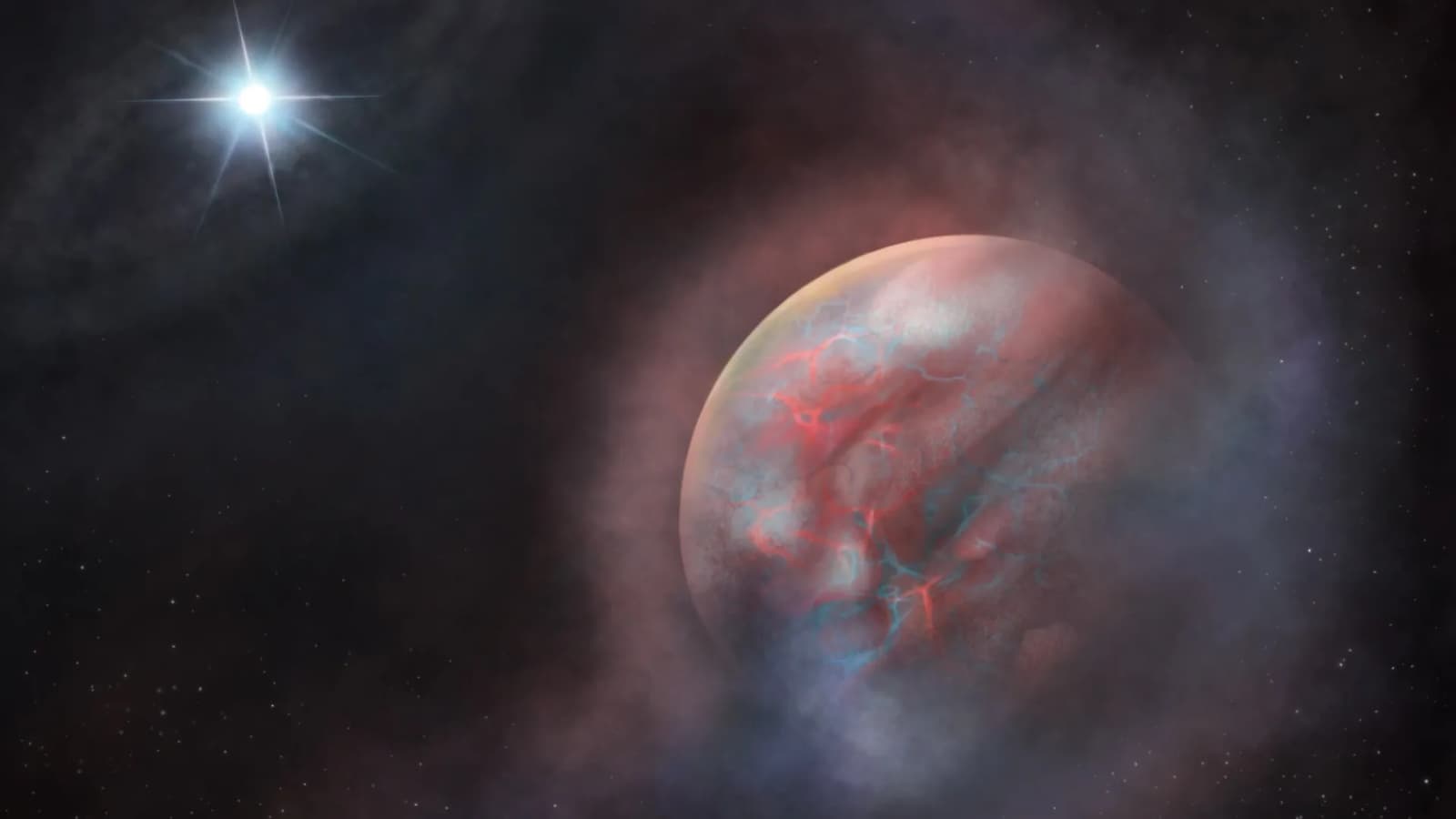
Astronomers have identified the first second-generation planet around a white dwarf, a world that appears to have formed from the remains of its dead star. A team led by the University of Warwick and funded by the European Research Council reported the finding in Nature Astronomy.
Similar worlds have long been suspected around pulsars, but this result suggests planets can also be reborn around white dwarfs, a far more common stellar remnant. First author Jamie Williams, a doctoral student at Warwick, called the find completely unexpected, likening it to a planet resurrected from its own star’s cinders.
Chemical fingerprint of rebirth
White dwarfs are the collapsed cores left behind when stars run out of fuel. They pull in material from nearby planets, and the resulting chemical signal in their atmospheres is typically dominated by rock-forming elements like silicon and iron.
The white dwarf HS 0209+0832 looked different. Its atmosphere holds unusually heavy elements, including zinc, copper and, most notably, niobium at levels more than 1,000 times higher than in the Sun. All of them are forged during the death of a star. It is the first time niobium has been detected in a white dwarf.
Nicholas Stone of the University of Wisconsin-Madison said the pattern is a hallmark of the s-process, a reaction that builds heavy elements inside dying red giant stars. “It’s a chemical signature no ordinary, ‘first-generation’ planet should carry,” he said. That fingerprint steered the team toward a very different kind of planet.
How a disk forms
The team believes the white dwarf is feeding on a newly formed giant planet that condensed from a fresh disk of material created as the star died. Because that disk came from the star’s own expelled material, it would naturally be rich in the unusual heavy elements now seen in the white dwarf’s atmosphere. That is the team’s most likely explanation, and the finding still awaits confirmation.
Building such a disk is hard, Williams said, which helps explain why these planets are so rare. A single, isolated star sheds mass in a roughly symmetrical way, letting the material escape. HS 0209+0832 likely needed a companion star to pull the ejected material back into orbit.
Clues from TESS data
NASA’s TESS satellite supplied further evidence. Researchers detected a faint, regular brightness signal repeating every 4.4 days, consistent with a Jupiter-sized gas giant that is tidally locked in a tight orbit.
At that close range, the planet’s outer atmosphere is expected to boil away under intense radiation. The escaping material would rain onto the white dwarf’s surface and produce the unusual chemical signature.
Searching for more worlds
If confirmed, HS 0209+0832 would be the first white dwarf known to host a second-generation planet. The finding also offers a new way to search for similar worlds: looking for the same carbon and heavy-element signature in the light of other dead stars.
Professor Boris Gänsicke of Warwick, an ERC grantee, said the planet appears to have been assembled from material its own star shed in death. He added that the discovery raises the question of how many more exist, and whether the Sun’s own ashes could one day form a planet.
Related articles
Why plugged-in pickle glows: Engineer burns 100-plus pickles to find answer
A classic classroom demonstration has long puzzled scientists, and a Portland State University engineer now...
Scientists make progress in quantum communication, make 90% identical photons
Researchers from the universities of Basel, Ruhr, and Paderborn teamed up to make a major...

Oregon State’s new MOF turns light and water into hydrogen with no added metal catalyst
Researchers at Oregon State University have created a new class of light-activated materials that can...
A tiny change in crystal size can flip a material’s magnetic ground state
Japanese scientists may have found a surprisingly simple way to predict how some unusual materials...
How electrophoretic e-ink displays create images without a backlight
E-ink displays can look almost suspiciously like paper. They don’t glow like a phone screen,...

SpaceX smashes US record as astronauts reach ISS in just 7 hours and 55 minutes
SpaceX’s latest crewed Dragon mission to the ISS is the fastest on record yet. Its...