
US Navy taps advanced 3D-printed rocket motors for next-generation missiles
The US Navy has awarded two contracts worth a combined $137 million to develop solid...
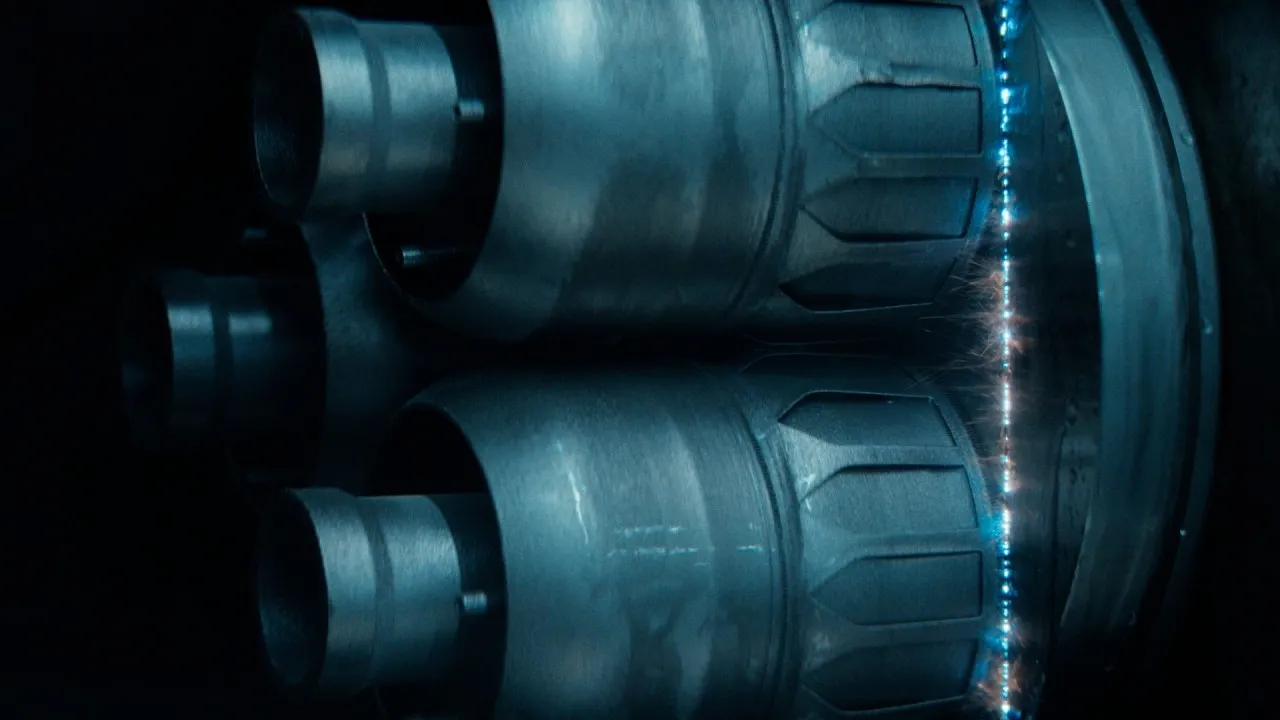
The US Navy has awarded two contracts worth a combined $137 million to develop solid rocket motors for two new missile programs.
The contracts given to Colorado-based aerospace and defense company Ursa Major cover propulsion for a Compact Air-to-Air Missile (CAAM) and the medium-range version of the Naval Modular Missile (NMM).
Contracts include funding of $91 million for the CAAM solid rocket motor and $46 million for the NMM Quad-Pack Medium-Range motor.
The systems are part of the Navy’s efforts to develop new weapons for fighter aircraft and surface ships.
Compact missile motor
The $91 million CAAM contract covers a compact motor for an air-launched missile intended for fighter aircraft and future carrier-based drones. The $46 million NMM contract covers a larger motor for a ship-launched interceptor being developed to eventually replace members of the Navy’s Standard Missile family. The funding comes through the Office of the Under Secretary of War.
For CAAM, Ursa Major is developing a 7-inch (178 mm) solid rocket motor. The diameter is similar to that of the AIM-120 AMRAAM and larger than the 5-inch AIM-9X Sidewinder. CAAM is designed as a short-range weapon that can be carried inside the weapons bays of stealth aircraft, allowing them to carry more air-to-air missiles without increasing their external weapons load.
The motor uses Ursa Major’s Highly Loaded Grain technology, which increases the amount of propellant packed into the motor case. The approach is intended to provide higher energy within the limited volume available in a compact missile.
Ursa Major is also developing the motor using manufacturing methods intended for full-scale production. This could allow the company to transition the design to higher-rate manufacturing after qualification rather than developing a separate production process.
“By investing in CAAM and NMM, the Navy and OUSW are building solid rocket motor capacity now and getting new tactical air and naval capabilities into development sooner,” said Jason Meredith, president, Solid Missile Systems at Ursa Major, in a statement.
NMM gains rocket motor
The second contract covers a 10-inch (254 mm) solid rocket motor for the medium-range NMM. The motor is designed for high-rate production and compatibility with existing Navy shipboard launch systems.
NMM is being developed as a modular naval missile family, with the medium-range version intended to fit four missiles into a single launch cell. This quad-pack configuration is similar to the Navy’s use of the Evolved Sea Sparrow Missile and would allow ships to carry more interceptors within the same launcher capacity.
Ursa Major is using its Lynx manufacturing approach for the programs. The process relies heavily on additive manufacturing, or industrial 3D printing, to produce rocket motor components. The company is developing the motors with production scalability in mind as the US seeks to expand domestic solid rocket motor capacity.
Solid rocket motor manufacturing has historically been concentrated among a small number of major US suppliers, including Northrop Grumman and L3Harris-owned Aerojet Rocketdyne. The Pentagon has been supporting additional production capacity as demand for missile interceptors and other weapons increases.
The new contracts build on Ursa Major’s previous work with the Navy. In July, the service awarded the company $10 million to advance its MK 104 solid rocket motor through critical design review and static-fire testing. The MK 104 powers the Standard Missile-2 and Standard Missile-6 used by Aegis-equipped Navy ships.
In February, Ursa Major also completed a $25 million cost-share program with the Navy and the Office of Strategic Capital. The effort involved designing, building, and static-firing a 10-inch Highly Loaded Grain motor and developing a proprietary solid propellant. The work was conducted with the Naval Air Warfare Center Weapons Division at China Lake and the Naval Surface Warfare Center Indian Head Division.
Related articles

I can’t use Apple’s new Screen Time on my daughter’s iPhone because my son won’t update his MacBook
After suffering years of frustration with Apple's parental control features, I've been eagerly anticipating the revamped Screen Time that launched last month with iOS 27.

Google is about to remove free access to Gemini Flash and Pro
Starting on October 9th, anyone using Google Gemini on a free plan will be limited to the Flash Lite model.

The Pixel Watch 5 is a better value at $65 off
The Google Pixel Watch 5 is discounted by $60 during Amazon’s October sale, with the 41mm version on sale for $334.99, and the 45mm version for $364.99.
US hypersonic cruise missile built to exceed Mach 5 reaches testing phase in Australia
The U.S. Air Force’s Hypersonic Attack Cruise Missile (HACM) has started flight testing after the...
Pentagon bets on lasers and microwaves to strengthen homeland drone defense
The US Defense Department has selected four companies for a pilot program to test directed-energy...

Machine learning powered cat search network helps find missing pets
Cats are famously good at getting into places humans cannot easily reach. Now, in Kazakhstan,...