
US Navy tests drone that lands on moving ships without GPS, human pilot
The U.S. Navy has demonstrated a new way to land drones on moving ships without...
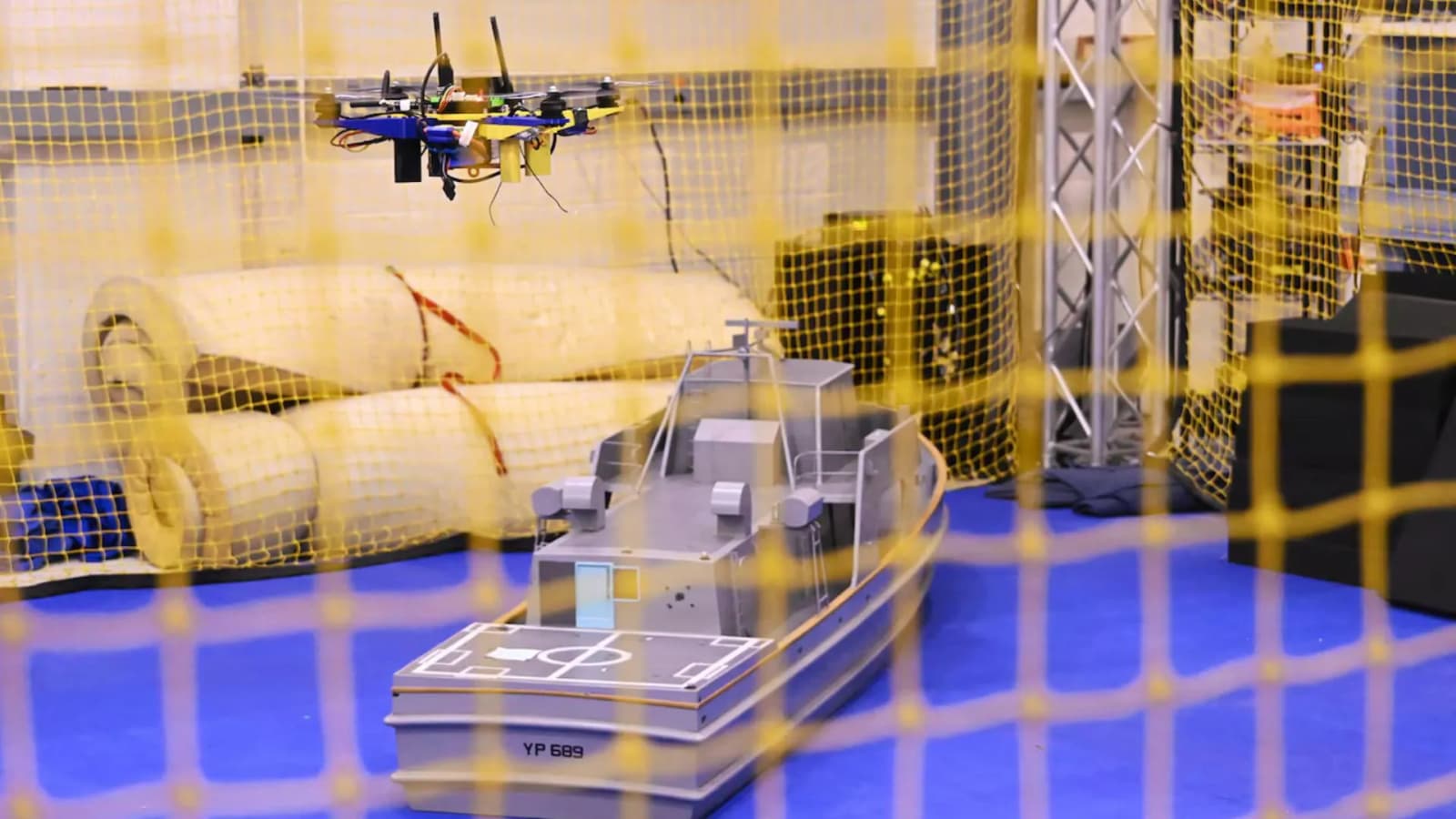
The U.S. Navy has demonstrated a new way to land drones on moving ships without using GPS, satellite navigation, or a pilot. In a recent test, the Naval Air Warfare Center Aircraft Division (NAWCAD) showed a drone carrying out its mission and landing on a moving ship using onboard cameras, motion sensors, and software.
This demonstration could help the Navy fly drones in areas where enemies try to block satellite signals. NAWCAD, located in Patuxent River, Maryland, said the technology is ready for testing on Navy aircraft.
Software guides drones onto moving ship decks
Landing on a moving ship is hard because the deck moves with the waves. In the past, systems used ship-mounted radar, special recovery gear, and changes to the ship to help guide aircraft safely onto the deck.
NAWCAD engineers have developed a software-based approach that uses cameras already installed on the drone. The team at its Maritime Autonomous Guidance-Navigation-Control Intelligent Coupled Systems Lab combined these cameras with guidance, navigation, and control algorithms.
During flight, the software identifies the ship’s shape and visual features to determine its position. It then guides the aircraft toward the deck while predicting the deck’s movement, helping the drone time its landing as the vessel rises and falls.
“In contested areas where satellites and communications are jammed, autonomy gives significant advantage to our sailors,” said Rear Adm. Todd Evans, commander of NAWCAD.
New approach reduces reliance on costly equipment
The Navy’s earlier autonomous shipboard drone landings required additional hardware. In 2006, the RQ-8A Fire Scout made the service’s first autonomous landings on a moving ship aboard USS Nashville, using ship-mounted radar to track the aircraft relative to the flight deck.
The latest approach shifts much of that work into onboard software. It uses commercial-standard cameras, motion sensors, and electronics, potentially reducing the need for expensive radar installations and extensive ship modifications.
The system is also designed to work with nearly any drone flight computer, according to NAWCAD. This could allow the Navy to introduce the capability through software upgrades, including on ships with limited room for additional equipment.
“In a high-end maritime conflict, GPS is the first operational link an adversary attempts to sever,” said Peter Arslanian, a NAWCAD aerospace engineer.
Technology could support larger combat drones
NAWCAD plans to extend the technology to larger uncrewed aircraft, including drones designed to transport supplies to tactical forces. The center is working to transfer the capability to several programs, including the Navy’s Small Tactical Unmanned Aircraft Systems program office and its Collaborative Combat Aircraft program for uncrewed wingmen.
The work could also support DARPA’s EVADE, or Early VTOL Aircraft Demonstration, project. The initiative aims to develop drones that can take off from and land on ship decks without launch or recovery equipment. Five companies, including AeroVironment and Sikorsky, are developing designs for the effort.
Fleet testing is the next step
The Naval Innovative Science and Engineering Program and the Office of Naval Research funded the development. With the flight demonstration complete, the technology is moving toward operational testing on fleet aircraft.
If testing proves successful, the system could give the Navy more flexibility to deploy drones from ships operating in environments where satellite navigation is unreliable or deliberately disrupted.
Source: https://interestingengineering.com/military/us-navy-drone-lands-on-ship-without-gps
Related articles

The Explosive Rise of AI App Spending (2022–2026)
Globally, AI app purchases have grown nearly 200-fold in just four years. See which regions are driving the surge in 2026.

Meta’s new terms may allow it to train AI on news sites for free
Meta's new terms appear to give it permission to crawl and scrape websites "associated" with the businesses that use its platforms - including online publishers, according to a report from Nieman Lab.

iPhone Duo orders are already delayed into 2027
Delivery estimates for the iPhone Duo slipped into next year in less than an hour after Apple opened preorders for it at 8AM ET on Friday.

This stretchy MagSafe storage pouch gives your phone a sizable trunk
There's a new storage upgrade option for smartphones compatible with wireless chargers and other magnetic accessories, but it won't help if you've run out of room for apps, pics, and videos.
30 kW laser air defense system destroys three target drones in latest military test
South Korea’s Hanwha Systems has demonstrated its laser air defense weapons intercepting drones during a...

Two humanoid robots team up to play table tennis doubles, rally for over 10 shots
Researchers have developed PingpongDuo, a robotic framework that enables humanoid robots to play table tennis...