
Scientists smash speed limit in superconductors, probe Cooper pairs
A collaboration of researchers from the Max Planck Institute for the Structure and Dynamics of...
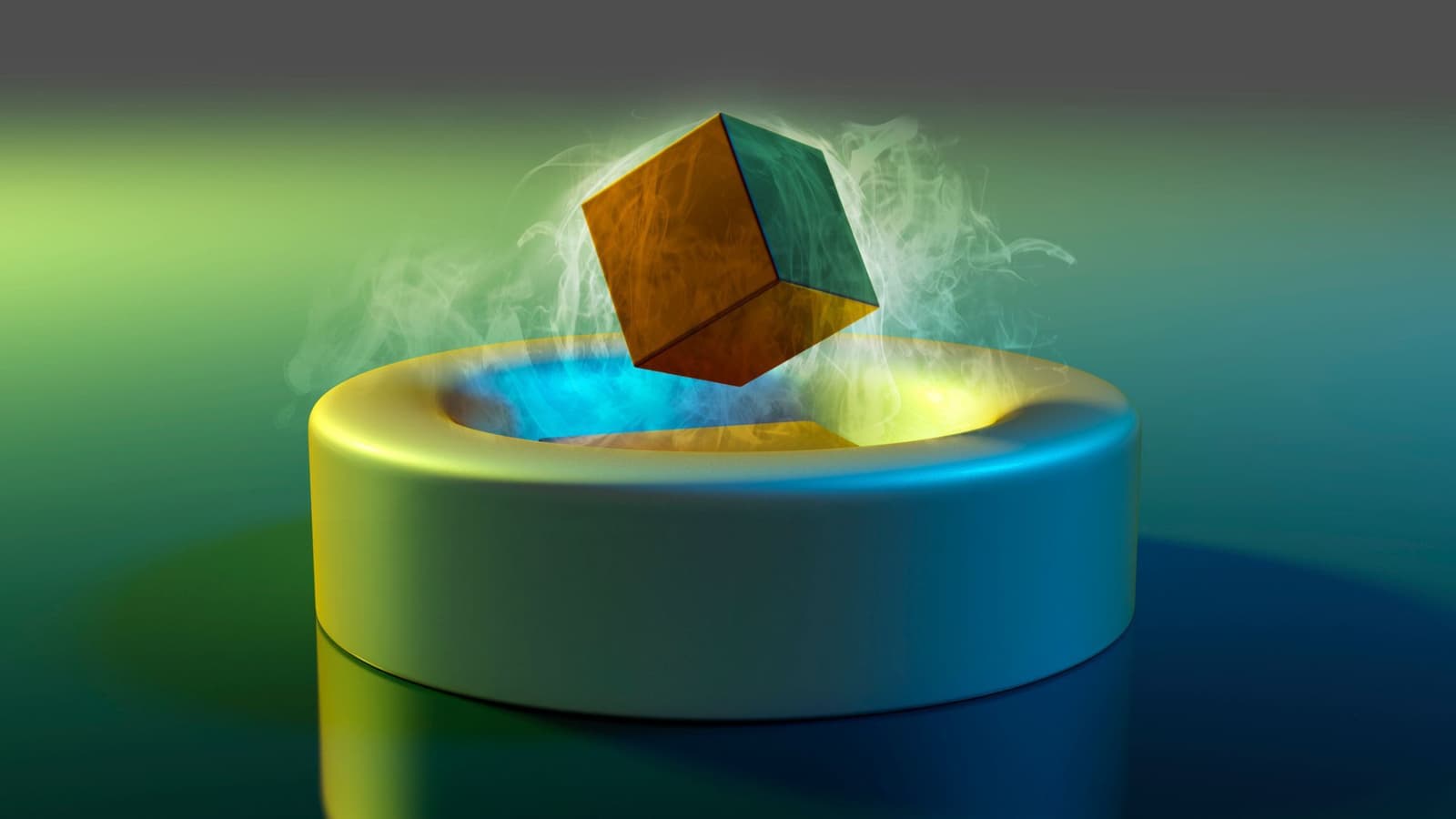
A collaboration of researchers from the Max Planck Institute for the Structure and Dynamics of Matter in Germany, the Shanghai Institute of Microsystem and Information Technology in China, ETH Zurich in Switzerland, and the University of Oxford in the UK has achieved a major breakthrough by smashing the ‘speed limit’ in a superconductor to probe the depairing of entangled pairs of electrons, or Cooper pairs.
Superconductors are materials that can conduct electricity while offering zero electrical resistance and give out a magnetic field when cooled down to temperatures below a certain threshold.
These unique properties have enabled technologies like particle colliders and medical devices such as Magnetic Resonance Imaging (MRI), which sounded like something straight out of science fiction just a century ago.
While we have succeeded in attaining these superconducting states in various materials, scientists are well aware of the fragility of these systems. An increase in temperature or changes in the electric current or magnetic fields are also sufficient to knock the material out of its superconducting state.
Ripping off superconductivity
While magnetic fields and electric current can be measured, there is yet another limit that is difficult to measure, given that it can cause disruptions in just a billionth of a second. This is the depairing limit, where entangled pairs of electrons, also known as Cooper pairs, can be ripped apart, and superconductivity can be lost immediately.
Given the quick pace of disruption caused by crossing the depairing limit, scientists need to be even faster in their investigation to probe if it is being crossed, and the multinational team of researchers figured out a novel way to do so, which was akin to breaching the speed limit on the quick transition that occurs when the limit is reached.
Type II superconductors, which are used for a wide range of applications, are actually a physical compromise. Unlike Type I superconductors, which have fragile magnetic limits, Type II superconductors boast higher limits but thanks to their internal magnetic fields, or quantum vortices, within them that allow electricity to flow and maintain superconductivity even through extreme conditions.
A strong electric current can whip these quantum vortices and generate resistance in the material, thereby bringing an end to its superconductivity. So, the team of researchers decided to use this information to learn more about the depairing limit.
Smashing the speed limit
The team worked with two different types of superconducting materials, niobium nitride (NbN) and a member of the yttrium barium copper oxide (YBCO) family, both of which exhibit high-temperature superconductivity.
NbN is known to have s-wave gap symmetry, while YBCO has a d-wave gap symmetry, which determines how easy it is to rip apart their superconductivity. To outrun the quantum processes that occur within a few billionths of a second, the team built a optical-electrical circuit that surpasses the velocity of tens of kilometers per second at which quantum vortices move by several orders of magnitude.
The researchers found that NbN remained superconducting until the applied current reached a threshold and then abruptly lost its superconductivity. The YBCO material, on the other hand, lost its superconductivity gradually.
The team attributes this different to the gap symmetries of the two materials, where NbN’s energy gap is the same in all directions, while that in the YBCO material varies significantly and therefore cannot be snuffed out in one go.
The difference in the behavior of the two materials gave the researchers a very fundamental understanding of superconductivity, which ultimately boils down to Cooper pairs and their stability.
Exceeding the speed limit of the transition of the superconducting material has given researchers new ways to study and access these properties in the future.
The research findings were published in the journal Nature Physics.
Source: https://interestingengineering.com/science/scientists-smash-speed-limit-superconductors
Related articles

Future US jet engines, power plants to endure extreme heat with stronger metal alloys
US scientists have used tiny defects in crystals to make stronger and more heat-resistant metal...
SpaceX cargo ship delivers over 6,300 pounds of supplies to space station
Orbiting 250 miles above the planet, NASA astronaut Anil Menon marked his 50th birthday in...
Brain organoids ‘read’ Braille with 83% accuracy in biohybrid computing breakthrough
Lab-grown models of the human brain have received touch-sensor signals for Braille letters and responded...
US researchers create on-demand microbubble chip with drug delivery potential
Researchers at Cornell University have developed a chip-based system that creates and controls hydrogen microbubbles...
Google’s quantum chip cuts magic-state errors 40-fold, reaches 99.99% fidelity
In a breakthrough that could help address a major bottleneck in practical quantum computing, Google...

Thwaites Glacier’s projected sea level impact doubles as warm water melts ice below
Researchers have raised a fresh alarm on Antarctica’s Thwaites Glacier, warning that it is melting...