
White House: 11 firms including NVIDIA, OpenAI and Anthropic pledge $2.4B in AI tools and compute for Genesis Mission
At a science summit on October 8, the Trump administration said eleven industry partners will provide $2.4 billion in super-intelligence tools and compute credits for the Genesis Mission Consortium, led by NVIDIA’s $1 billion commitment.
The White House on October 8 announced that eleven industry partners will commit $2.4 billion in super-intelligence (SI) science tools and compute credits to the Genesis Mission Consortium, according to an official fact sheet released at the Science: A New Golden Age Summit. The resources are meant to support more than 15 federal agencies working on National Science & Technology Challenges.
Who is pledging what. Per the White House and reporting by FedScoop and POLITICO, the largest single commitment is NVIDIA at $1 billion, followed by AMD ($500 million), OpenAI ($200 million), Anthropic and Google ($150 million each), AMP and Emerald AI ($100 million each), and AWS, Armada, Crusoe and Micron ($50 million each). POLITICO noted that the totals largely reflect compute capacity, model access and training programs rather than cash grants alone.
Anthropic. In its own announcement, Anthropic said its $150 million, three-year commitment will fund Claude, Claude Code and API credits for several hundred Genesis Mission research projects, plus training and technical support for scientists at more than 15 agencies including NASA, the NIH and the NSF. The company framed the pledge as a deepening of its December partnership with the U.S. Department of Energy.
NVIDIA. NVIDIA described a five-year, $1 billion commitment to put advanced super-intelligence infrastructure in the hands of U.S. higher-education researchers, quantum efforts and cloud providers serving government missions. CEO Jensen Huang called the Genesis Mission a “new golden age of American discovery,” and the company highlighted ongoing work with the DOE on scientific supercomputing at Argonne National Laboratory.
Broader package. The White House cast the pledges as part of more than $6 billion in science initiatives spanning government, industry, academia and philanthropy, including regional SI computing hubs, more than $100 million from NSF and DOE for SI-enabled instrumentation and autonomous labs, and a $1.8 billion virtual-biology data effort involving NIH, DOE and Biohub. The Genesis Mission had already expanded in July to more than 15 agencies with a $5 billion federal commitment, the fact sheet said.
The announcement positions frontier AI and super intelligence as core infrastructure for U.S. federal science—and tightens the policy link between Washington and the largest commercial AI labs.
Related articles

Soft sensor recreates 3D shapes through bending and twisting despite fiber damage
MIT researchers have developed a soft sensor that recreates its own three-dimensional shape as it...

Green hydrogen process reaches 98% efficiency while producing valuable chemicals
A new electrochemical process developed by researchers at the Technion, Israel Institute of Technology, could...

Biohub, DOE, NIH and Meta/DeepMind back $1.8B virtual-biology data push for predictive AI models of disease
On October 7, Biohub said it, the U.S. Department of Energy, the NIH and new partners are committing $1.8 billion in funding, data, compute and measurement technology to build open, AI-ready biological datasets for predictive models of cells and disease.
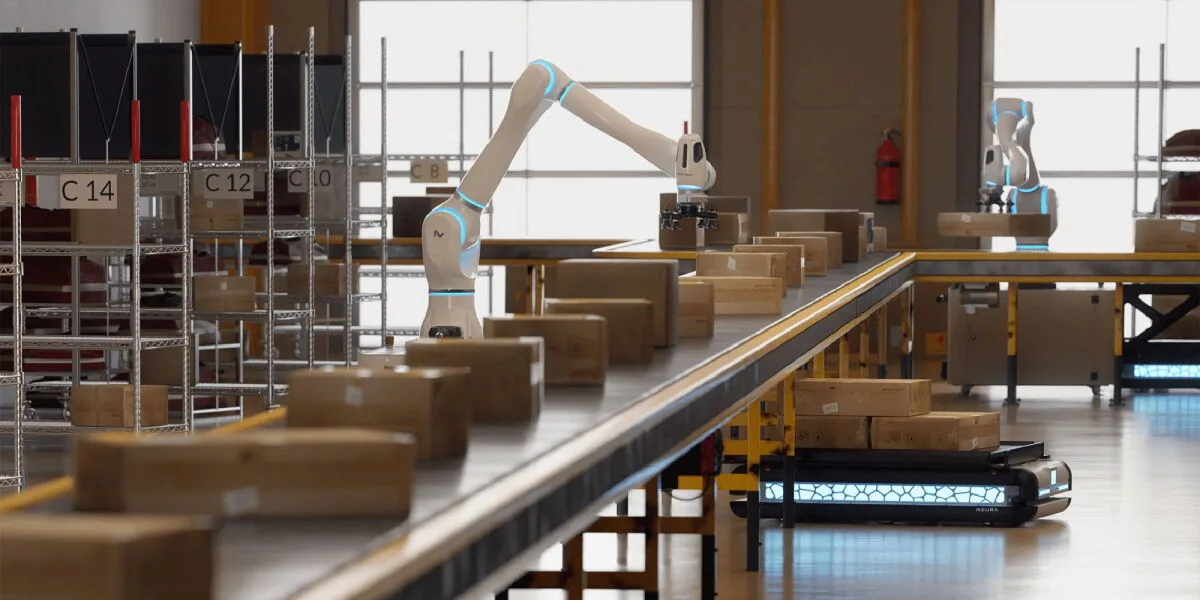
AWS launches open-source Physical AI Toolchain with NVIDIA stack for robotics development
Amazon Web Services on October 8 released an open-source Physical AI Toolchain that ties together synthetic data, training, simulation, validation and edge deployment with NVIDIA’s Isaac and Cosmos software for industrial automation, mobility and humanoid robotics.
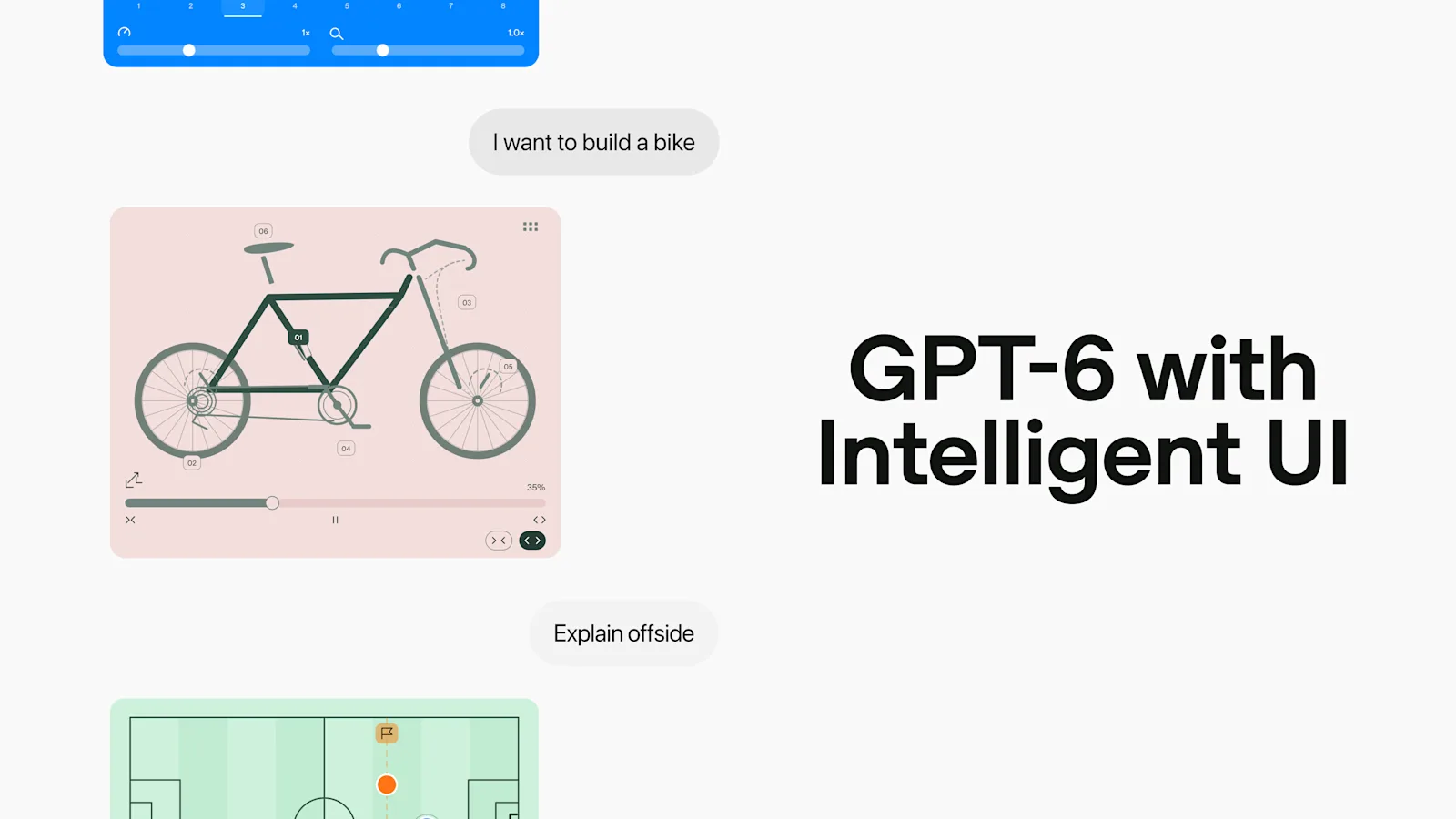
OpenAI rolls out GPT-6 and Intelligent UI in ChatGPT, adding interactive charts, forms and in-chat tools
OpenAI began rolling out GPT-6 with Intelligent UI on October 7 to Plus, Pro, Business and Enterprise users, expanding to Free and Go on October 8, so ChatGPT can answer with interactive graphics, buttons, forms and tools inside the conversation.
Google Cloud launches a unified Gemini agent for enterprise work that plans tasks and connects to business systems
At Gemini at Work 2026 on October 8, Google unveiled a universal Gemini agent that can take objectives, plan work, connect to enterprise systems and return finished results from a single prompt—initially in private preview for businesses.