World’s largest electric ferry starts service on 34-mile South American route
Ocean transportation is entering its green era. The world’s largest battery-electric ship has begun carrying...
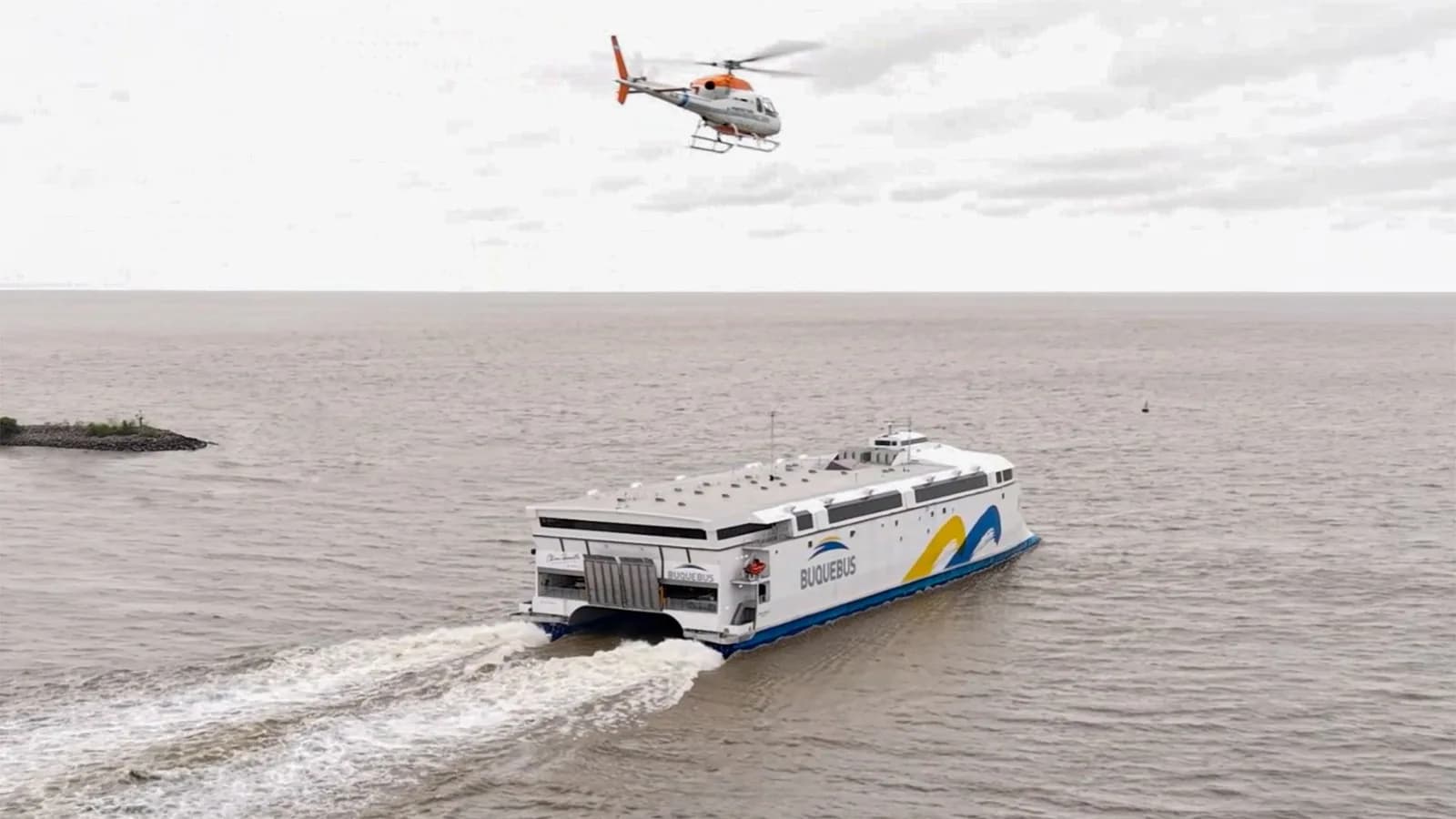
Ocean transportation is entering its green era. The world’s largest battery-electric ship has begun carrying passengers between Argentina and Uruguay, putting a 130-meter (426 feet), fully battery-powered vessel into commercial service.
China Zorrilla, built by Incat Tasmania for ferry operator Buquebus, completed its maiden commercial voyage between Buenos Aires and Colonia across the River Plate (55 km or 34-mile journey). It can carry up to 2,100 passengers and 225 vehicles.
The first passenger crossing followed an official launch ceremony in Buenos Aires on October 21.
Incat Managing Director Craig Clifford, Buquebus representatives, and maritime authorities from both countries attended the event, which marked the completion of years of engineering and construction at the shipbuilder’s Hobart yard.
More than 40 MWh of battery storage
China Zorrilla carries more than 250 tonnes of batteries and has an energy storage system exceeding 40 megawatt-hours. The system supplies electricity to eight electrically driven waterjets that propel the vessel.
Its passenger facilities include a duty-free retail area covering about 2,300 square meters, along with accommodation for travelers making the crossing.
For Incat, the vessel represents the culmination of one of its most technically complex construction projects.
Chairman Robert Clifford credited the Tasmanian workforce with overcoming the engineering challenges of building a battery-powered ship of this size.
“This is a truly historic day for Incat, for Tasmania and for the global maritime industry,” Clifford said.
The vessel also extends the relationship between Incat and Buquebus, the operator that commissioned the ferry for its South American service.
A quieter passenger crossing
Craig Clifford traveled aboard China Zorrilla during its first commercial voyage. He said the absence of familiar machinery sounds and vibration was among the most noticeable differences for passengers.
“What really stands out is the passenger experience. When you’re aboard a vessel of this size, you naturally expect to hear and feel the machinery working beneath you. On Hull 096, that familiar engine noise and vibration simply aren’t there,” Clifford revealed.
Robert Clifford said the vessel’s operation demonstrated that large passenger and vehicle ferries could use electric propulsion in commercial service.
“This ship proves that large, high-capacity commercial vessels can operate on electric power, and that passengers can enjoy a completely different experience in the process, without the traditional diesel-engine noise, vibration or exhaust emissions,” he said.
The comments describe the onboard experience as the ferry moves from construction and commissioning into regular passenger operations.
More electric ferries under construction
Incat is also building three 129-meter battery-electric ferries for Danish operator Molslinjen at its Hobart shipyard. Two additional 78-meter hybrid-electric vessels are under construction there.
Those projects add to the shipbuilder’s work on electric propulsion, with China Zorrilla now carrying passengers after years of construction at the same yard.
For Buquebus, the milestone places the battery-electric vessel on the Buenos Aires–Colonia route, carrying both travelers and vehicles across the River Plate.
“To be here in South America and travel aboard this vessel with passengers for the first time is something very special,” Clifford said in the press release.
Related articles