7 Lockheed Martin developments shaping the next wave of US and allied defense
Autonomous aircraft, drone-killing microwaves, and cheaper missile interceptors featured among Lockheed Martin’s major announcements in...
This story was prepared automatically by software.

Autonomous aircraft, drone-killing microwaves, and cheaper missile interceptors featured among Lockheed Martin’s major announcements in the third quarter of 2026.
The developments span air combat, hypersonic weapons, and the satellite infrastructure that military forces rely on for navigation.
In an October 22 roundup, the company highlighted projects intended to strengthen US and allied capabilities while accelerating production and reducing costs. Some involve new systems still under development, while others expand existing programs.
Here are seven developments from the roundup and what each is intended to deliver.
1. Vectis autonomous aircraft moves toward its first flight
Lockheed Martin’s Skunk Works is expanding production of Vectis with four additional aircraft as the autonomous platform advances toward a planned first flight in 2027.
Building more vehicles will support the program’s development, although the announcement does not establish that the aircraft has completed flight testing or entered operational service.
The company describes Vectis as a survivable and adaptable aircraft for future combat requirements. Its development also reflects an effort to use advanced design and manufacturing methods to shorten the path from an initial concept to a flying platform.
The first flight will be a milestone in establishing how the design performs beyond the development environment.
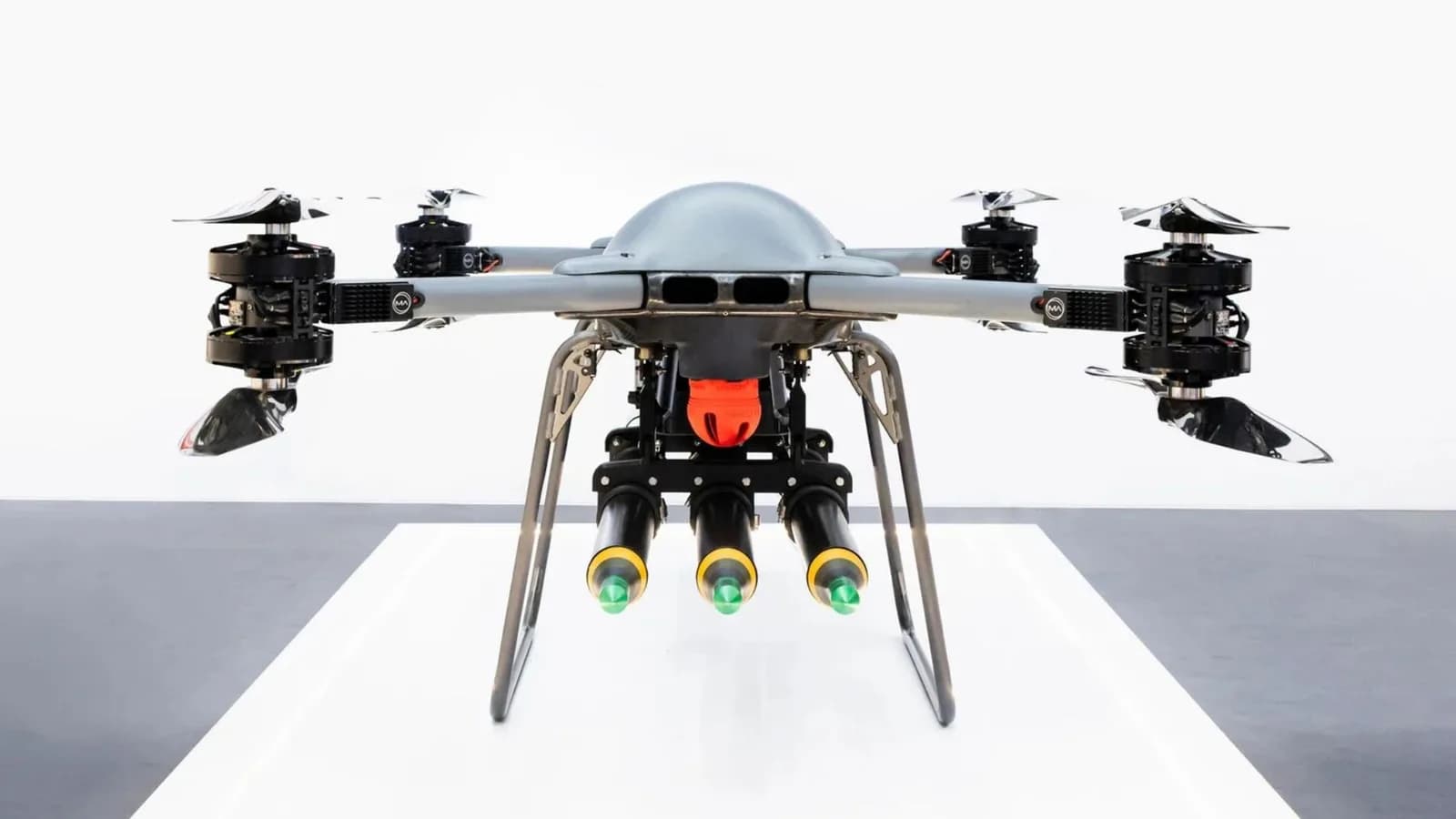
2. MORFIUS X-Rotor takes microwave defense into the air
MORFIUS X-Rotor is an airborne counter-drone system designed to neutralize more than 50 drones during a single flight, according to Lockheed Martin.
Instead of relying on a separate missile for every target, the reusable system carries high-power microwave technology intended to disrupt drone electronics.
This gives it a potential role against swarms that could overwhelm defenses through sheer numbers.
The company presents the platform as a scalable approach to countering increasingly sophisticated unmanned aircraft.
However, the figure describes its intended capability. The roundup does not provide detailed test conditions or establish that the system has achieved the same result against every type of drone swarm.
3. Modular payloads could expand hypersonic missions
Lockheed Martin is investing millions of dollars in a Modular Payload Delivery System intended to turn existing hypersonic technologies into a more flexible family of systems.
The approach centers on integrating different payloads without repeating the full development process for each configuration. If successful, this could reduce the time and expense of adapting hypersonic technology to different mission requirements.
Modularity matters because the usefulness of a high-speed platform depends partly on what it can carry and deliver.
The announcement describes a development investment, with faster integration and lower costs presented as intended benefits rather than completed results.
4. Germany’s first F-35A reaches rollout
Germany’s first F-35A Lightning II was presented in September, marking a manufacturing milestone in the country’s introduction of the aircraft.
The program is intended to strengthen Germany’s air combat capabilities and improve its ability to operate alongside other NATO forces using the F-35.
Operating a common aircraft can support closer cooperation across training, maintenance, and missions. However, a rollout ceremony is one stage in a longer process that also includes acceptance, training, and operational preparation.
The milestone therefore signals progress toward introducing the aircraft rather than confirming that Germany’s F-35 fleet is already ready for combat.
5. AIM-260 agreement targets faster missile production
Lockheed Martin signed a framework agreement with the US Department of War to accelerate production and delivery of the AIM-260 Joint Advanced Tactical Missile.
The company says the weapon is designed to provide greater range and effectiveness against current and emerging threats.
The announcement focuses on production, highlighting the importance of delivering advanced weapons in sufficient quantities alongside developing their capabilities.
However, the roundup does not disclose production targets, delivery schedules, or detailed missile performance figures. It establishes an agreement to accelerate the program without providing enough information to quantify the resulting increase.
6. GPS ground systems receive further modernization funding
Lockheed Martin secured an additional $114 million in US Space Force contracts to modernize the GPS ground segment.
Although GPS is commonly associated with satellites, its operation also depends on infrastructure on Earth. Ground systems support the constellation and help sustain the positioning, navigation, and timing services used by military forces.
The modernization work is intended to improve resilience and reliability.
This makes the investment relevant well beyond navigation alone. Dependable timing and positioning underpin a broad range of military activities, making ground infrastructure an essential part of the wider system.
7. PAC-3 ACE aims to lower interception costs
Lockheed Martin introduced the PAC-3 Adapted Capability Effector, or PAC-3 ACE, as a lower-cost interceptor for a range of air and missile threats.
According to the company, its intended unit cost is less than half that of the PAC-3 Missile Segment Enhancement interceptor.
Built on existing PAC-3 technology, ACE is designed for rapid fielding, with American and European partnerships supporting the effort.
Its proposed cost advantage addresses a practical challenge: maintaining enough interceptors to respond to repeated attacks. The roundup, however, does not establish an operational deployment date.
Together, these developments show an emphasis on expanding capability while improving affordability and production capacity. Their eventual impact will depend on flight tests, integration, manufacturing progress, and delivery to operational forces.
Source: https://interestingengineering.com/military/lockheed-martin-developments-advancing-us-defense
Related articles