Cargo drone built to carry supplies can shoot down enemy drones with laser-guided rockets
A cargo drone designed to carry supplies between ships has demonstrated a very different role:...
This story was prepared automatically by software.
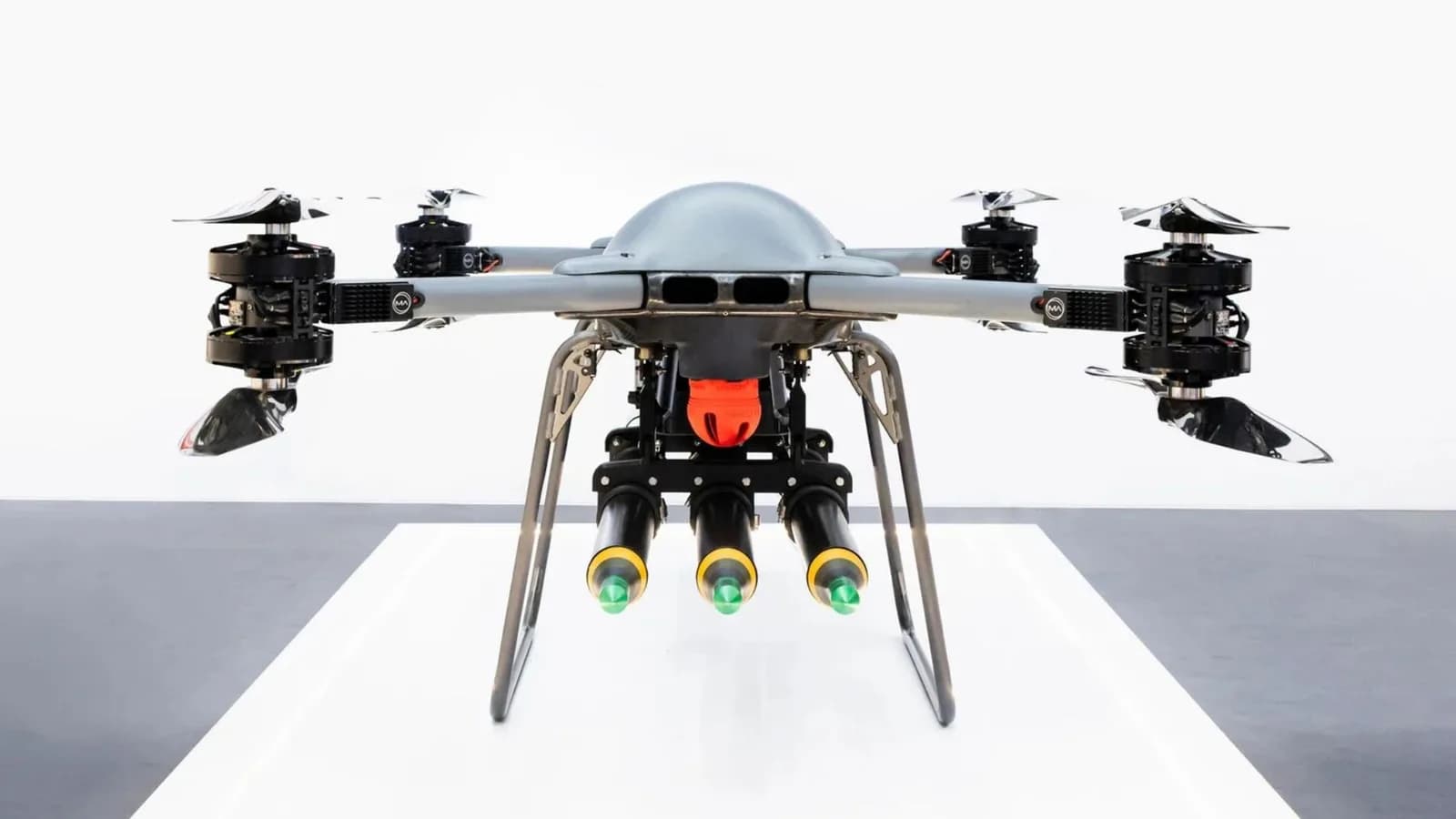
A cargo drone designed to carry supplies between ships has demonstrated a very different role: shooting down enemy drones with laser-guided rockets. BAE Systems says its modified TRV-150 uncrewed aircraft intercepted multiple one-way attack drones during a US military experiment in Florida, showing how a logistics platform could be adapted for air defense.
The demonstration took place at Eglin Air Force Base during the US Office of the Under Secretary of War for Research and Engineering’s Joint Readiness Experimentation exercise in late September. The TRV-150 carried a three-pod launcher equipped with BAE Systems’ Advanced Precision Kill Weapon System (APKWS) rockets and engaged multiple aerial targets in a single mission without landing to reload.
The test highlights a growing effort to counter relatively inexpensive attack drones with weapons that cost less than many conventional air-to-air missiles. It also shows how existing uncrewed platforms could be repurposed to provide additional defensive capabilities without designing an entirely new aircraft.
How a cargo drone became a missile platform
The TRV-150 is a modified version of the T-150, a heavy-lift electric quadcopter developed by Malloy Aeronautics, a BAE Systems subsidiary. The aircraft was originally designed for tactical logistics, transporting supplies to military personnel and vessels rather than engaging aerial targets.
For the latest trials, Maryland-based SURVICE Engineering adapted the platform to meet US Army requirements, while BAE Systems’ FalconWorks division developed and integrated the rocket-launching system. The aircraft carried three pods containing APKWS rockets, allowing it to engage several targets in succession without returning to the ground for reloading.
According to BAE Systems, the demonstration builds on an earlier milestone in July 2025, when an adapted T-150 fired a precision munition for the first time. The latest test expanded that capability by using a production-ready three-pod launcher against aerial targets.
The company has not disclosed the exact engagement distances, the number of rockets fired, or the detailed performance of the interceptions.
Why use laser-guided rockets against drones?
The weapon at the center of the demonstration is APKWS, which converts unguided 2.75-inch (70-millimeter) rockets into precision-guided munitions. The system adds laser-guidance components to existing rocket designs, enabling them to engage designated targets more accurately.
APKWS has been used in several roles, including air-to-surface strikes and counter-unmanned aircraft system missions. Its relatively low cost compared with many dedicated air-to-air missiles makes it attractive for engaging threats that might otherwise require more expensive interceptors.
That cost difference matters because defenders can deploy one-way attack drones in large numbers, potentially forcing them to expend valuable missiles against comparatively inexpensive targets. A platform capable of carrying multiple guided rockets could provide another option for engaging those threats.
The TRV-150’s three-pod arrangement also addresses a practical limitation: the time needed to land, reload, and return to the air. Carrying several rockets lets the aircraft conduct multiple engagements in one sortie, though the number of successful interceptions will depend on the targets, engagement conditions, and available ammunition.
From delivering supplies to protecting ships
The platform already has experience in military logistics. BAE Systems says the T-150 has been used by British forces, including during the Royal Navy Carrier Strike Group’s eight-month Indo-Pacific deployment, when it transported supplies between ships.
Its potential transition into a counter-drone role reflects a broader push to make military uncrewed aircraft more versatile. Rather than treating logistics and air defense as entirely separate missions, the same basic platform could support different tasks through modular equipment and mission-specific configurations.
BAE Systems and SURVICE Engineering now plan to extend the concept to maritime operations, with the aim of helping protect vessels against aerial threats.
Source: https://interestingengineering.com/military/bae-systems-cargo-drone
Related articles